Reliance Industries has welcomed Starlink to India, saying it has never feared competition.
The statement follows Elon Musk’s criticism of Reliance and allegations that the Indian market structure favours the domestic telecom operator.
Starlink, Reliance Jio and Eutelsat OneWeb are seeking to offer satellite communication services in India.
Reliance Welcomes Starlink To India, Says Jio’s Satellite Services Also Await Clearances
In a statement posted on X on Friday, Reliance said India welcomes domestic and foreign investment but stressed that all companies must follow the same regulatory process and comply with Indian laws

Summary
Reliance Industries has welcomed Elon Musk’s Starlink to India, saying it has never feared competition and that its own satellite communication services are awaiting regulatory clearances. The statement comes amid a public exchange between the two companies, with Musk accusing Reliance of opposing Starlink’s entry into the Indian market.
In a statement posted on X on Friday, Reliance said India welcomes domestic and foreign investment but stressed that all companies must follow the same regulatory process and comply with Indian laws.
“In light of recent remarks about Reliance and the Indian market, we wish to place the facts on record,” the company said, adding that the government applies the same process to every applicant, Indian or foreign.
“Jio’s own satellite services await clearances,” it said.

Reliance Says It Has Never Feared Competition
Reliance said competition was central to its approach to the telecommunications market and pointed to Jio’s entry in 2016 as an example.
“At Reliance, we have never feared competition. We see it as the truest test of who serves the customer best,” the company said.
It added that Jio had entered an already competitive telecom market without any customers and had since built a subscriber base of more than 530 million.
“We welcome competition in satellite communications, including Starlink. Every player, Jio included, must serve the people of India and abide by the laws and policies of the land,” Reliance said.
The statement followed Musk’s allegations that Reliance benefited from the existing market structure and that arguments against Starlink’s entry were contradictory.
In a post on X, the SpaceX chief executive criticised what he called the “Internet shills” supporting Reliance, arguing that claims about Starlink’s inability to compete with Jio’s low prices contradicted concerns that it could become too strong a competitor.
Musk maintained that greater competition would benefit Indian consumers by expanding their choices, even if it reduced the profits of existing operators.
Advertisement
“The reality is that competition would greatly benefit the average citizen in India by giving them more choices, as it always does,” he wrote, adding that lower profits would not put Reliance out of business.
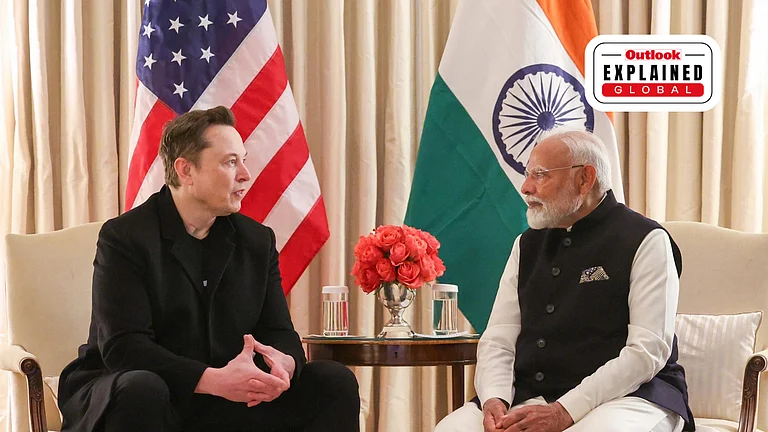
In an earlier post, Musk had directly addressed the government, accusing it of protecting Reliance’s market position and asking Prime Minister Narendra Modi to allow Starlink to compete in India. The government has denied allegations that the company is being discriminated against at the behest of a domestic business group.
Starlink Awaits Regulatory Approval
Union Communications Minister Jyotiraditya Scindia has said there is no question of allowing a monopoly in India’s satellite communication sector. He has also indicated that three entities are in line for final approval to offer commercial services.
Starlink has yet to receive clearance to launch its services in India. A senior government official said earlier this week that the company had not agreed to comply with requirements for domestic infrastructure, including the establishment of local base stations.
Advertisement
According to TOI, Government sources said there was no objection to Starlink launching its services once it addressed security concerns and met the applicable regulatory requirements.
Base stations function as local hubs that connect user devices to wireless networks. Their establishment is intended to help authorities enforce regulatory and security requirements.
Scindia has also said the government is close to taking a final decision on the pricing framework for satellite communication services. All licensed operators must meet the prescribed security conditions before beginning commercial operations.
The three entities seeking to launch satellite communication services in India are Reliance Jio, Eutelsat OneWeb, backed by Bharti Enterprises chairperson Sunil Bharti Mittal, and Musk’s Starlink.
Mittal has said Airtel’s satellite venture, Eutelsat OneWeb, could receive regulatory approval before Starlink because it applied earlier and is further along in the process.
The debate over Starlink’s entry comes as India works towards establishing a regulatory framework for satellite-based internet services, with competition, security requirements, domestic infrastructure and pricing among the issues shaping the sector’s commercial rollout.
Advertisement
Published At: