The VanDyke case raises questions over foreign nationals using Indian territory to support armed conflicts abroad.
The case highlights the legal gap between immigration violations, military assistance and terrorism under UAPA.
India needs to balance prosecution, national security, sovereignty and diplomatic interests within the law.
Opinion | Foreign Fighters, Indian Territory And The Limits Of Law
The VanDyke episode exposes the need for a clearer legal and policy framework distinguishing immigration and border violations, assistance to foreign armed groups, threats to national security and terrorism, writes Dr B. Bala Bhaskar

Summary
The release and departure of American national Matthew Aaron VanDyke and six Ukrainians raise questions extending well beyond their individual cases. The issue lies at the intersection of criminal and counter-terrorism law, immigration, competing legal jurisdictions, sovereignty and diplomacy. At its core is a larger question: how should India deal with foreign nationals who use its territory as a corridor to participate in armed conflicts in neighbouring countries or in other countries?
The foreign nationals allegedly entered India on valid travel documents in December 2025, then travelled through Guwahati into protected areas of Mizoram without the required permits and crossed the India–Myanmar border through an unauthorised route. They allegedly used Indian territory to transport drones and facilitate logistical support before providing military training to armed groups fighting the Myanmar military—activities not permitted under the visas on which they had entered India.
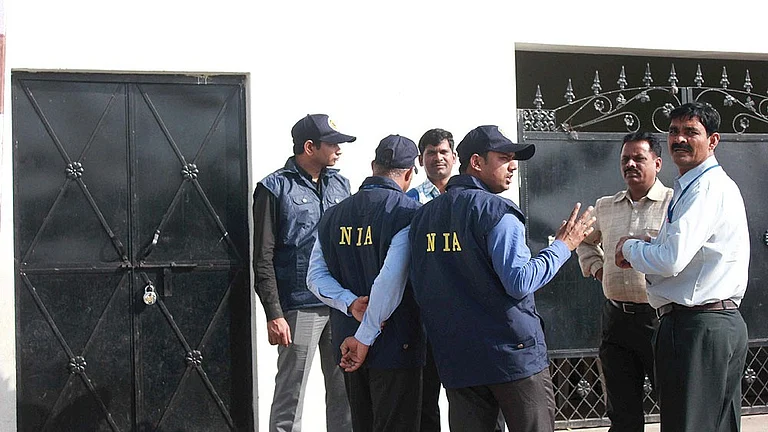
The case was initially investigated by the National Investigation Agency (NIA) under the Unlawful Activities Prevention Act (UAPA). Its September chargesheet, however, invoked the Immigration and Foreigners Act, 2025, while investigation into possible UAPA offences continued. A Delhi court permitted the seven to travel to the US and Ukraine for a month after granting default bail, subject to conditions. That sequence lies at the heart of the controversy.

Crime, Terrorism And The Legal Gap
Illegal border crossing, transporting drones or providing military training to an armed group may constitute serious offences, but do they automatically become terrorist acts? UAPA requires specific ingredients, including the nature, purpose and intent of the alleged acts.
Importantly, UAPA is not confined to terrorism directed against India; its provisions can extend to terrorist acts committed abroad. The question is whether the alleged assistance to Myanmar armed groups meets UAPA’s statutory threshold for terrorism rather than merely constituting unlawful cross-border activity.
The national-security implications become more direct if evidence establishes operational links between these groups and insurgent organisations acting against India. Such a connection could materially alter the case's legal character.
The episode exposes a wider gap. Foreigners may use Indian territory to transport military equipment, provide combat training or assist armed groups abroad without India itself being the immediate target. Such conduct may lie between immigration offences and terrorism while still carrying serious implications for sovereignty and security. India cannot allow its sensitive border regions to become logistics or training corridors for foreign conflicts.
Advertisement

When Nationality And Jurisdiction Collide
Such dilemmas are not unprecedented. India has intervened for Nimisha Priya, sentenced to death in Yemen, and sought the return of Indians recruited into the Russian military during the Ukraine conflict. The United States repatriated citizens detained in Syria and Iraq over alleged ISIS links and prosecuted several after their return. European governments have faced similar cases.
David Coleman Headley offers a significant precedent. A US citizen who conducted reconnaissance for Lashkar-e-Taiba before the 26/11 Mumbai attacks, Headley was sought by India but prosecuted in the United States, where he pleaded guilty and received a 35-year sentence. Under a plea agreement, he secured protection against extradition to India for the offences covered, conditional on his cooperation. Indian investigators were subsequently allowed to question him.
Headley’s offences are entirely different in gravity and circumstances and should not be equated with the present allegations. But his case illustrates a recurring reality: when nationality, territorial jurisdiction and national-security interests overlap, law and diplomacy inevitably intersect. States may protect their nationals abroad, but such protection does not override the jurisdiction of the country whose laws they allegedly violated.
Advertisement
Where Law Meets Diplomacy
The VanDyke episode exposes the need for a clearer legal and policy framework distinguishing immigration and border violations, assistance to foreign armed groups, threats to national security and terrorism. Stretching UAPA beyond its statutory requirements would weaken the law; treating the unauthorised movement of military technology or combat expertise merely as an immigration violation could leave a serious security gap.
The approach should be clear: investigate rigorously, prosecute according to evidence and law, safeguard due process, and use diplomacy to manage competing jurisdictional and sovereign interests.
India need not criminalise every foreign conflict touching its borders, but it cannot allow its territory to become a corridor for other countries’ wars. Where cases straddle criminal jurisdiction and foreign relations, the Ministry of External Affairs must have the necessary diplomatic space to reconcile competing sovereign interests with India’s national interest, while operating within the framework of Indian law.
Advertisement
The Supreme Court has recognised this special domain of executive judgment in foreign affairs, while preserving judicial review. The challenge in cases such as VanDyke is precisely to preserve that balance: law must set the boundaries, but within them, diplomacy must be allowed to work.
(Views expressed are personal)
Published At: