NOAA sees an 81% chance of a very strong El Niño.
India may face weaker monsoon rainfall despite short-term regional recoveries.
Hotter conditions and erratic downpours could intensify weather extremes.
NOAA Warns Of Record El Niño: How It Will Affect India
With an 81 per cent chance of becoming very strong, El Niño could weaken India’s monsoon, worsen heatwaves and put food prices under pressure
.jpg?w=640&h=360&fit=contain&crop=smart "NOAA Warns Of Record El Niño: How It Will Affect India")
Summary
El Niño is strengthening rapidly and could become one of the strongest events recorded since modern observations began. According to the US National Oceanic and Atmospheric Administration (NOAA), there is an 81 per cent chance that the current El Niño will reach "very strong" intensity between October and December 2026.
“There is an 81 per cent chance of a very strong El Niño during October-December that would rank among the largest El Niño events in the historical record going back to 1950,” NOAA said in its monthly bulletin issued on Thursday night.
For India, the warning comes at a crucial point in the southwest monsoon season. Although rainfall has recovered after a weak June, meteorologists say the revival has largely been driven by short-term weather systems rather than a weakening of El Niño. As the Pacific Ocean continues to warm, scientists caution that India's monsoon, food production and heat conditions could still face significant pressure in the coming months.
Why Has NOAA Issued This Warning?
NOAA says the El Niño that developed in June has continued to strengthen and is expected to intensify through the rest of 2026.
In its latest monthly bulletin, the agency said there is an 81 per cent chance of a very strong El Niño during October-December, which would place it among the strongest events observed since 1950.
The agency also noted that the Niño 3.4 index—the key indicator used to measure El Niño strength—has already crossed 1.2°C, placing the event in the moderate category. A reading above 1.5°C is considered strong, while 2°C or higher is classified as very strong.
According to NOAA, there is a 97 per cent probability that El Niño will continue into early spring 2027.

What Is El Niño?
El Niño is the warm phase of the El Niño-Southern Oscillation (ENSO), a naturally occurring climate pattern caused by unusually warm sea surface temperatures in the central and eastern Pacific Ocean.
Advertisement
Scientists officially declare an El Niño when the average sea surface temperature anomaly in the Niño 3.4 region rises above 0.5°C.
ENSO has two opposite phases—El Niño and La Niña. These shifts influence weather across much of the world by altering rainfall, temperatures and atmospheric circulation.
According to the World Meteorological Organization (WMO), El Niño is a natural climate phenomenon, and there is no conclusive evidence that climate change is making El Niño events more frequent or stronger. However, rising global temperatures are amplifying the impacts of these natural cycles by increasing heat and atmospheric moisture.

How Could India's Monsoon Be Affected?
El Niño generally suppresses rainfall over India and has historically been associated with weaker southwest monsoons.
The India Meteorological Department (IMD) has forecast slightly below-normal rainfall across much of the country until July 22. Rainfall during July, the most important month of the monsoon season, is expected to remain below 94 per cent of the Long Period Average (LPA).
Advertisement
However, recent rainfall has improved monsoon conditions after a dry June. According to the IMD, this recovery has been driven by a depression over south Jharkhand and adjoining north Odisha, along with a well-marked low-pressure area over the northwest Bay of Bengal. These weather systems have pulled large amounts of moisture inland, resulting in widespread rainfall across central, western and parts of southern India.
Meteorologists stress that India's monsoon is influenced by multiple climate systems rather than El Niño alone. Along with ENSO, the Indian Ocean Dipole (IOD) and the Madden-Julian Oscillation (MJO) also determine when the monsoon strengthens, weakens or shifts.
The IMD has said the IOD is expected to remain neutral this season, making it unlikely to offset El Niño's influence.
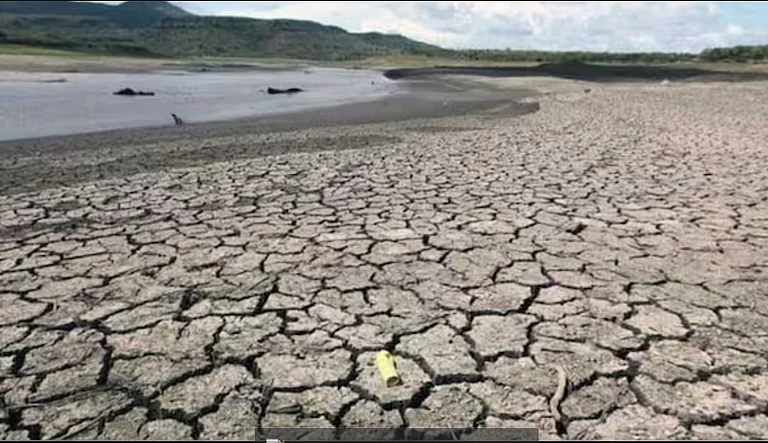
How will it affect India
A weaker monsoon can reduce agricultural output, particularly if rainfall remains below normal during the key sowing period.
Advertisement
Lower rainfall may affect crop production, especially in rain-fed agricultural regions, which can tighten supplies and place upward pressure on food prices.
While the recent revival in rainfall has eased immediate concerns, weather experts say the remainder of the season will depend on how El Niño evolves and whether additional low-pressure systems continue to support the monsoon.
El Niño has an overall warming effect on the Earth's climate. When combined with ongoing global warming, higher temperatures allow the atmosphere to retain more heat and moisture, increasing the chances of heatwaves, droughts and episodes of extreme rainfall.
According to the Ministry of Earth Sciences' Assessment of Climate Change over the Indian Region, heavy rainfall events over central India have become significantly more frequent even as moderate rainfall has declined.
The report estimates that days receiving more than 150 mm of rainfall increased by nearly 75 per cent between 1950 and 2015, indicating a shift towards shorter but more intense downpours.
Advertisement
The Intergovernmental Panel on Climate Change (IPCC) has similarly stated that a warmer atmosphere can hold more moisture, intensifying the global water cycle and making extreme rainfall events more likely.
Scientists therefore caution that India's future monsoons are likely to become more variable, with longer dry spells interrupted by periods of very heavy rainfall.
How Long Will El Niño Last?
NOAA expects the current El Niño to continue through early 2027.
Although the event is currently classified as moderate, forecasts indicate further strengthening during the second half of 2026. The longer warm ocean conditions persist, the greater their influence on global weather patterns.
One benchmark is the 2015-16 El Niño, often referred to as "Godzilla". That event lasted for nearly two years, from 2014 to 2016, with the Niño 3.4 index remaining above 2°C for more than four months.
During that period, India experienced two consecutive weak monsoons, with rainfall remaining well below 90 per cent of normal in both 2014 and 2015.
While forecasters cannot yet say whether the current event will match that episode, NOAA's latest outlook suggests that El Niño is likely to remain an important influence on India's weather well into next year.
Published At: