Aam Aadmi Party (AAP) chief Arvind Kejriwal decided to not appear in the excise case personally or through a lawyer.
Kejriwal have written to High Court Justice Swarana Kanta Sharma, saying they will not pursue their matter in the excise case in her court.
The AAP chief had written a letter where he mentioned the principles of Satyagraha and the teachings of Mahatma Gandhi, saying that his intent is "strengthening of the judiciary and preventing its weakening."
Kejriwal Reaches Rajghat Amid Standoff With Delhi HC Judge in Excise Policy Case
Aam Aadmi Party (AAP) chief Arvind Kejriwal and other party leaders, including Manish Sisodia, reached Rajghat to seek Mahatma Gandhi's blessings on Tuesday amid his decision not to appear in the excise case personally or through a lawyer and follow the path of Satyagraha.

Summary
In a dramatic shift from the courtroom to the sanctuary of Rajghat, Aam Aadmi Party (AAP) chief Arvind Kejriwal and his former deputy Manish Sisodia announced on Tuesday that they would no longer participate in legal proceedings before High Court Justice Swarana Kanta Sharma. Citing a profound loss of faith in the current judicial setup, the leaders have declared a path of "Satyagraha," invoking the spirit of Mahatma Gandhi to protest what they allege is a compromised process.
The morning began with a somber visit to the memorial of the Father of the Nation. Clad in their trademark simplicity, Kejriwal and Sisodia offered prayers and sought "strength for the arduous path ahead." For a party born out of a massive anti-corruption movement, the return to Rajghat felt like a full circle—a tactical retreat from the complexities of the Delhi excise case to the moral high ground of non-violent resistance.
In letters addressed to Justice Sharma, both leaders made it clear that they would not appear personally or through legal counsel. The move is rooted in a startling allegation of conflict of interest. In an affidavit, Kejriwal claimed that the judge’s children are empanelled as central government lawyers, receiving work through Solicitor General Tushar Mehta—the very man representing the CBI against them. Sisodia’s letter was even more biting, stating bluntly that he does not expect justice and that his future, and the "future of your children," effectively rests in the hands of the prosecution.
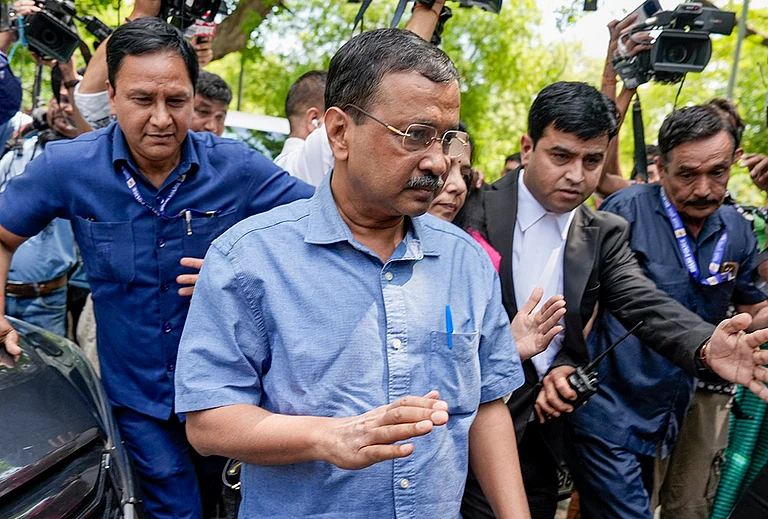
"We respect the judiciary, but circumstances have forced us into this Satyagraha," Kejriwal told a swarm of reporters outside the memorial. His words echoed a deeper frustration within the AAP camp, which has long maintained that the excise case is a politically motivated "witch hunt." By withdrawing their defense, the leaders are gambling on a narrative of martyrdom, choosing to "prevent the weakening of the judiciary" by refusing to participate in what they characterize as a skewed trial.
On social media, the sentiment was equally heavy. Kejriwal posted in Hindi, expressing his unwavering faith that Gandhi’s blessings would keep them steadfast. While the legal implications of boycotting one's own defense are murky and potentially damaging, the political message is crystal clear: the AAP is no longer just fighting a case; they are fighting a system they believe has been rigged against them. As the sun set over Rajghat, the capital remained on edge, watching as one of its most high-profile legal battles transformed into a raw, ideological confrontation.
Advertisement
Published At: