Over 2,500 youths were detained across Kashmir after the Anantnag terror attack.
Security forces demolished homes linked to two alleged local Lashkar-e-Taiba terrorists.
Omar Abdullah warned that mass arrests and demolitions could worsen tensions.
Kashmir Crackdown Explained: Over 2,500 Youths Picked Up, Two Terrorists' Homes Demolished
Head Constable Ashiq Hussain Qureshi was deployed for Amarnath Yatra duty when a lone assailant shot him.

Summary
A police head constable was shot dead at close range in Jammu and Kashmir’s Anantnag district on Wednesday, triggering a sweeping security crackdown across the Valley that has included the detention of more than 2,500 people and the demolition of two residential houses belonging to alleged local terrorists.
Head Constable Ashiq Hussain Qureshi, a resident of Budgam, was posted with the Indian Reserve Police and attached to the Special Operations Group. He was deployed for Amarnath Yatra duty when a lone assailant shot him. CCTV footage reportedly captured the attack.
By early Thursday morning, security forces had demolished houses linked to alleged Lashkar-e-Taiba terrorists Adil Ahmad Thoker and Haroon Rashid Ganai in south Kashmir, according to officials as quoted by The Hindu. The actions, along with the mass detentions, have drawn criticism from Chief Minister Omar Abdullah and former chief minister Mehbooba Mufti, who warned against measures that could amount to collective punishment.

What Happened in Anantnag?
Qureshi was killed in a terror attack in Anantnag while serving on Amarnath Yatra duty. The annual pilgrimage was temporarily suspended because of inclement weather.
CCTV footage of the incident reportedly shows a lone attacker approaching the policeman and firing at him from close range.
Following the killing, Jammu and Kashmir Lieutenant Governor Manoj Sinha chaired a high-level security review meeting in Srinagar. Senior officials from the Army, Jammu and Kashmir Police, the civil administration, Central Armed Police Forces and other security agencies attended the meeting.
Officials said Sinha directed the departments and security agencies to maintain close coordination and ensure the safety, convenience and well-being of Amarnath pilgrims. He also instructed them to take measures to deal with weather-related challenges.
Demolition of Two Houses
At around 3 am on Thursday, security teams reached Guri village and Hassanpora Tawella in Anantnag district, where they demolished two residential properties.
Advertisement
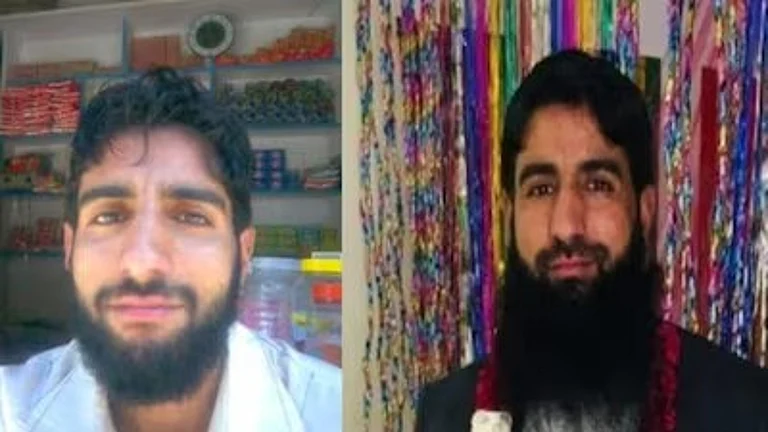
The houses belonged to Adil Ahmad Thoker and Haroon Rashid Ganai, whom officials identified as local Lashkar-e-Taiba terrorists. Officials said Ganai had joined the organisation in 2018.
The demolished structures reportedly included a three-storey house and a single-storey residence. Local residents alleged that security forces asked the occupants to leave before using explosives to bring down the buildings.
The occupants did not comment on the action. Local residents, however, claimed that a nearby mosque and a vehicle were also damaged by the blasts.
The demolitions came a day after the policeman’s killing, though the information released so far does not establish that the two men whose family homes were targeted were directly involved in that particular attack.
How Did the Crackdown Expand to 2,500 Detentions?
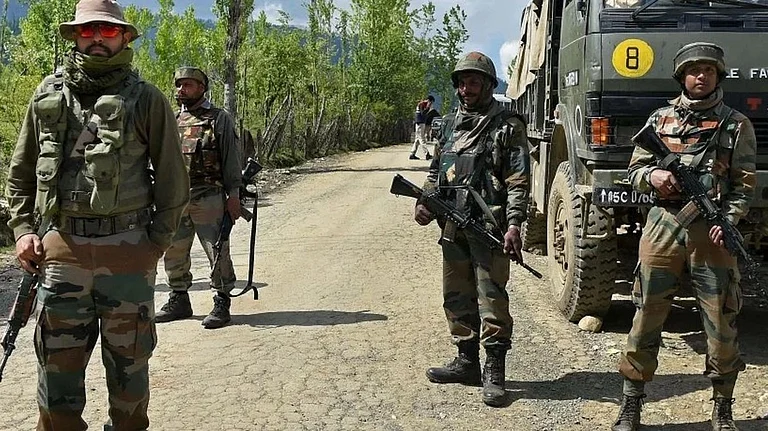
Alongside the demolitions, police launched a large-scale detention operation across all 10 districts of the Kashmir Valley.
Advertisement
Police sources told The Indian Express that more than 2,500 youths had been picked up. The detentions reportedly included more than 700 people from Srinagar, over 200 from Budgam, 178 from Baramulla and more than 100 from Ganderbal.
Dozens of people were also detained across the four south Kashmir districts of Anantnag, Shopian, Kulgam and Pulwama.
The authorities have not publicly provided individual details or the grounds for each detention. The scale of the action has nevertheless prompted concerns that the response could further strain relations between local communities and the security establishment.
Omar Abdullah Opposes The Crackdown
Chief Minister Omar Abdullah said the anger within the police over Qureshi’s killing was understandable, but cautioned that demolitions and mass detentions would not restore lasting peace.
“Terrorism cannot be defeated through bulldozers or mass arrests alone. People are essential for restoring lasting peace. People are angry over the brutal killing of the police head constable. But when thousands of people are detained, that anger gets redirected. We must take our people along in this fight; only then will we succeed,” Abdullah said.
Advertisement
Referring to the Supreme Court’s directions against summary demolition of properties belonging to people accused of crimes, Abdullah said the latest action raised legal concerns.
“I understand the anguish of the police, but the Supreme Court has issued an order stating that summary action of this kind should not be taken. We witnessed a similar situation after the Pahalgam attack and at that time, I had to speak to the Central government to stop this,” he said.
Abdullah also warned that detaining hundreds or thousands of people “will not help improve the situation in J&K but in turn strain it further”.
Similar Pattern Post Pahalgam Attack
A similar pattern of demolitions followed the Pahalgam terror attack in April 2025. At least nine houses belonging to suspected terrorists were reportedly demolished in different parts of the Valley after that attack.
Abdullah said subsequent investigations showed that those involved in the Pahalgam attack were from outside Jammu and Kashmir, despite the demolitions of properties linked to local suspects.
Advertisement
“Such actions go against the spirit of the SC’s directions. After the Pahalgam attack, several houses were demolished, but subsequent investigations revealed that no local resident was involved in the attack,” he said.
According to the chief minister, security operations alone cannot bring the cycle of violence to an end.
“This cycle will not end without taking the people along. To some extent, we may reach that point by use of Police, Army and the CRPF but its true end will come when people rise against this violence, like after Pahalgam last year,” Abdullah said.
What Has Mehbooba Mufti Said?
PDP president and former chief minister Mehbooba Mufti condemned the policeman’s killing but criticised the state’s response.
She described Qureshi’s killing in the line of duty as “a heinous and condemnable act”, but said the large-scale detentions and house demolitions amounted to collective punishment.
“Detaining over a thousand people and demolishing the homes of families of two alleged militants amounts to collective punishment that has no place in a democracy,” Mufti said.
She also questioned the consistency of the government’s position on the security situation in Kashmir.
“If the Government of India itself maintains that militancy has been reduced to near zero it must adopt a more humane and lawful approach towards innocent civilians instead of resorting to tit for tat for an entire community,” she said.
Senior PDP leader Naeem Akhtar also criticised the scale of the crackdown.
“One murder, 2500 detentions, a couple home demolitions. At some crucial level, the belief is that every one of a particular demographic is disloyal, suspect and a potential threat,” Akhtar told as reported by The Hindu.
Published At: