Jaswant Singh Khalra disappeared in 1995 while probing alleged police atrocities in Punjab
Film "Satluj" controversy reignites scrutiny of Akali Dal's role during 1997-2002 Badal government
NHRC recommended ₹27.94 crore compensation to families of mass cremation victims
Jaswant Singh Khalra's Disappearance Returns To Haunt Akali Dal Three Decades Later
Three decades after human rights activist Jaswant Singh Khalra disappeared while investigating alleged police atrocities in Punjab, the opposition is demanding accountability from the Shiromani Akali Dal, as a new political row erupts over the controversial period.

Summary
Thirty years after human rights activist Jaswant Singh Khalra disappeared while investigating alleged police atrocities in Punjab, the Shiromani Akali Dal (SAD) is facing renewed questions over its role during the period of militancy, as opposition parties seize on the issue in the run-up to the 2027 state assembly elections.
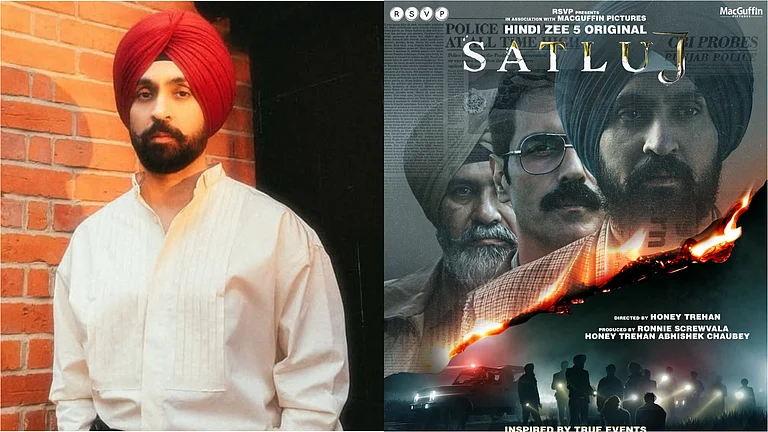
The row was triggered by the controversy surrounding the film Satluj, starring Diljit Dosanjh, which was reportedly removed from the ZEE5 platform after a government takedown request. The film, which touched upon the dark chapter of human rights violations in Punjab during the 1990s, reignited public memory of Khalra's disappearance and the alleged complicity of the state machinery.
The Akali Dal, which was in power in Punjab between 1997 and 2002 under Chief Minister Parkash Singh Badal, has faced persistent allegations that its government shielded police officials involved in Khalra's abduction and the subsequent cover-up. The party has rejected the allegations, maintaining that the matter was fully investigated and that those responsible were held accountable.
Who Was Jaswant Singh Khalra?
Jaswant Singh Khalra was a human rights activist who rose to prominence in the mid-1990s for his investigations into alleged police atrocities in Punjab. He was the general secretary of the Punjab Human Rights Organisation (PHRO) and had documented numerous cases of disappearances and extrajudicial killings during the period of militancy in the state.
Khalra was abducted from his home in Amritsar on September 6, 1995, by men in plainclothes. He was never seen again, and his fate remains unknown. His abduction sparked widespread outrage among human rights groups, including Amnesty International, which issued an urgent action appeal for his release and called for an independent inquiry into his disappearance.
Khalra was allegedly picked up by Punjab police personnel, and despite legal petitions and protests, authorities failed to produce him or provide credible information about his whereabouts. The case became one of the most high-profile human rights cases in India, symbolising the excesses of the state during the turbulent period.
Advertisement
What Was He Investigating In Punjab?
Khalra's work focused on documenting the so-called "encounter" killings and mass cremations of suspected militants in Punjab. He and fellow activists had alleged that police were conducting fake encounters and disposing of bodies in mass cremations without proper legal procedures. Khalra had collected affidavits from families of victims and compiled evidence to challenge the official narrative.
The investigation was deeply sensitive, as it exposed the brutal methods employed by the police to suppress the militancy. At the time, the state was emerging from a prolonged period of unrest, and the government was unwilling to acknowledge the allegations. Khalra's work placed him in direct confrontation with the police establishment, ultimately leading to his disappearance.
His findings later prompted the National Human Rights Commission (NHRC) to take suo motu cognisance of the matter. In a press release, the NHRC recommended compensation of ₹27.94 crore to the families of victims of mass cremations in the state, acknowledging that illegal cremations had taken place and that the state had failed to protect the rights of the victims.
Advertisement
Why Did His Disappearance Become A Major Human Rights Case?
Khalra's disappearance became a rallying point for human rights activists across India. The case highlighted the lack of accountability in the security establishment and the absence of due process in the handling of militancy-related cases. Amnesty International, the People's Union for Civil Liberties (PUCL), and other organisations campaigned for justice, demanding a thorough investigation into his abduction.
The Supreme Court intervened in the case, directing the Central Bureau of Investigation (CBI) to probe the matter. The investigation led to charges against several police officials, though none were ultimately convicted for Khalra's abduction. The case remains unresolved, and Khalra's family continues to demand justice.
The Amnesty International document from 1995 called for urgent action, urging the Punjab government to order an independent inquiry and ensure that Khalra be produced before a magistrate. The document also demanded assurances that Khalra was not being ill-treated and that he be released if no charges were filed against him.
Advertisement
The failure to secure justice in the case has haunted successive governments, and the Akali Dal's role during the period has been a persistent source of political friction.
Why Is The Akali Dal Facing Questions Now?
The renewed scrutiny of the Akali Dal comes amid a politically charged atmosphere in Punjab, as the opposition Congress and the Aam Aadmi Party (AAP) seek to corner the SAD ahead of the 2027 elections. The controversy over the film Satluj has provided an opportunity to revisit the period of human rights abuses, and the Akali Dal's association with the Badal government is being highlighted.
According to the Punjab Vidhan Sabha website, the current political landscape has shifted dramatically since the 1990s, with the AAP consolidating power after the 2022 assembly elections. The Akali Dal, once a dominant force in the state, has struggled to regain its footing, and the Khalra case has become a symbol of its past failings.
Advertisement
Opposition leaders have questioned the party's commitment to justice, pointing to the lack of accountability for Khalra's disappearance. The film controversy has only added to the pressure, as public memory of the incident has been revived. The Akali Dal has defended its record, arguing that the matter was handled appropriately and that the party should not be held responsible for the actions of individual police officials.
How Has Punjab's Political Landscape Changed Since The 1990s?
Punjab's political landscape has undergone a significant transformation since the 1990s. The period of militancy, which peaked in the 1980s and early 1990s, gave way to a fragile peace, but the scars of the conflict remain. The Akali Dal, which had been the dominant political force in the state, saw its influence wane as the Congress and later the AAP emerged as formidable challengers.
The 2022 assembly elections marked a turning point, with the AAP winning a landslide victory and the Akali Dal reduced to a marginal role. The shift in political power has emboldened the opposition to raise uncomfortable questions about the past, including the Khalra case. The SAD, now out of power, has been forced to defend its legacy, and the issue has become a flashpoint in the state's political discourse.
The Punjab Vidhan Sabha, which maintains records of legislative proceedings, reflects the changing political dynamics, with debates on historical issues becoming increasingly frequent. The demand for justice in the Khalra case has been raised multiple times in the assembly, highlighting its enduring political significance.

Why Does Khalra's Legacy Remain Politically Sensitive?
Khalra's legacy remains politically sensitive because it touches upon the unresolved wounds of a painful chapter in Punjab's history. The allegations of state-sponsored violence, extrajudicial killings, and the cover-up of human rights abuses continue to resonate in the state's collective memory. For the Akali Dal, the case is a reminder of the excesses of the Badal era and its failure to uphold the rule of law.
The case also underscores the broader challenges of transitional justice in India, where victims of state violence have often been denied accountability. The NHRC's recommendation for compensation was a belated acknowledgment of the wrongs committed, but it has done little to assuage the families of victims.
For the opposition, the Khalra case is a powerful political tool, allowing them to question the Akali Dal's commitment to human rights and accountability. For the SAD, it is a burden that threatens to undermine its political resurgence. As the 2027 elections approach, the case is likely to remain a contentious issue, shaping the political narrative in Punjab.
Published At: