Punjab battles drug crisis with crackdown, rehabilitation measures, and renewed focus on addiction prevention among youth.
Over 10,000 addicts receive immunity under NDPS Act as government pushes treatment alongside enforcement.
Drone-based cross-border smuggling adds complexity, with Punjab emerging as a key trafficking hotspot.
Punjab’s Drug Crisis: Between Crackdown, Rehabilitation And Cross-Border Smuggling
Governor Gulab Chand Kataria's recent comments have renewed attention on Punjab's anti-drug campaign, rehabilitation efforts, cross-border trafficking and concerns over the role of organised networks

Summary
Punjab’s battle against drugs remains one of the state’s biggest challenges, with concerns ranging from rising addiction among youth to cross-border trafficking networks.
In a recent interview with The Indian Express, Punjab Governor Gulab Chand Kataria said drugs were “among Punjab’s biggest challenges”, claiming that synthetic drugs were destroying families and affecting young people, particularly in border villages.
Kataria said he had undertaken a 17 day foot march to mobilise people against drugs and had repeatedly urged the government to launch a statewide campaign. He also said drug trafficking could not survive without the involvement of elements within the police and administration, adding that government agencies and citizens needed to work together to tackle the issue.

Punjab’s Anti-Drug Campaign
The Punjab government launched the ‘Yudh Nashian Virudh’ (War Against Drugs) campaign in March 2025, combining strict action against drug trafficking with rehabilitation measures for people struggling with addiction.
According to official data, more than 10,000 people accused of drug consumption or possession of small quantities of narcotic substances for personal use have received immunity from prosecution under Section 64A of the Narcotic Drugs and Psychotropic Substances (NDPS) Act.
Since the launch of the campaign, 10,656 people have been granted immunity and admitted to government-run de-addiction and rehabilitation centres, where they are undergoing treatment and recovery programmes.
Enforcement Alongside Rehabilitation
The government’s approach has focused on targeting drug networks while providing treatment opportunities for those affected by addiction.
According to official figures, Punjab Police registered 51,516 FIRs under the NDPS Act and arrested 67,519 people between March 1, 2025, and July 6, 2026. Officials said the campaign follows a twin approach - strict action against drug traffickers and rehabilitation for people battling addiction.
Section 64A of the NDPS Act allows immunity from prosecution to drug addicts charged with consumption offences or possession of small quantities for personal use, provided they voluntarily seek de-addiction treatment.
Advertisement
Officials said beneficiaries undergo medical assessments before receiving individual treatment plans, including detoxification, psychiatric care, counselling, behavioural therapy and relapse prevention.
Punjab Police Director General Gaurav Yadav said the fight against drugs was not limited to arrests but also involved giving people trapped in addiction an opportunity to recover.
Additional Director General of Police, Anti-Narcotics Task Force, Nilabh Kishore, said distinguishing between traffickers and people suffering from addiction was important for rehabilitation and reintegration.

Campaign Under Scrutiny
Launched in March 2025, 'Yudh Nashian Virudh' combines enforcement with rehabilitation. Alongside action against alleged drug peddlers, seizure of narcotics and attachment of properties linked to drug-related offences, the campaign provides treatment through de-addiction centres, counselling and skill development programmes for those undergoing rehabilitation.
The figures come months after the Supreme Court expressed concern over the continuing drug problem in Punjab. In May this year, a Bench led by the Chief Justice of India criticised the state government over its inability to curb the menace, observing that drug abuse and trafficking continued despite enforcement efforts.
Advertisement
The court remarked that action largely remained confined to small peddlers while the larger networks behind the trade continued to operate, and described the human cost of the crisis as alarming.

Cross-Border Smuggling
Punjab’s location along the Indo-Pakistan border has added another layer to the drug challenge, with authorities reporting a rise in drone-based smuggling attempts.
According to the Narcotics Control Bureau’s (NCB) 2025 report, authorities detected 305 drone-based drug trafficking cases along the Indo-Pakistan border in 2025 and seized 468 kg of narcotics. The quantity seized was nearly 98 per cent higher compared with 2024.
Punjab accounted for 298 of these cases, with authorities recovering 461 kg of narcotics, including nearly 450 kg of heroin, over 9 kg of methamphetamine and 2.65 kg of opium.
The NCB said drone-assisted smuggling has increased sharply over the past five years - from three cases involving 10 kg of narcotics in 2021 to 305 cases in 2025.
Advertisement
A Multi-Layered Battle
Punjab’s drug crisis is driven by multiple challenges -rising addiction among youth, organised trafficking networks, alleged institutional links and the growing use of drones for cross-border smuggling.
While the government’s anti-drug campaign combines enforcement with rehabilitation, tackling the menace will require sustained coordination between law enforcement agencies, administration and communities.
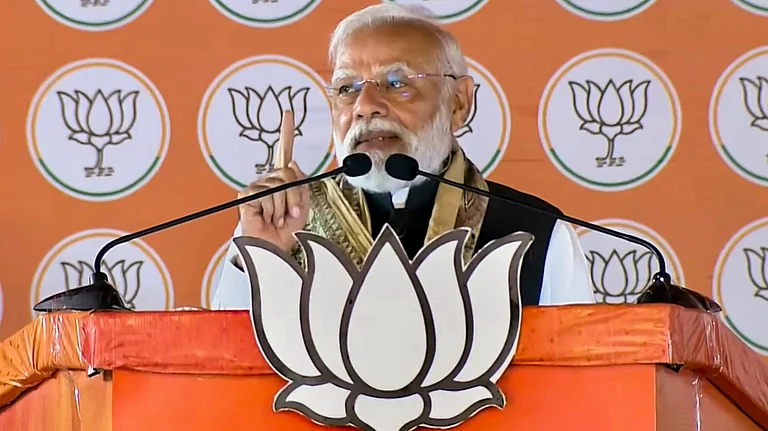
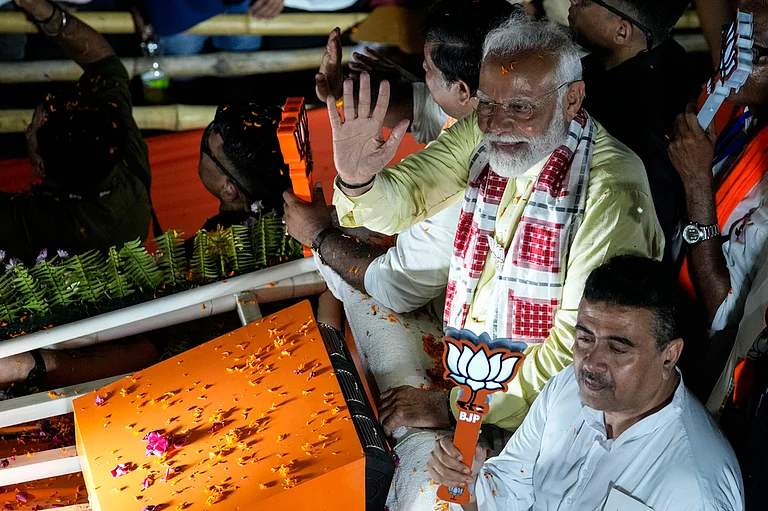
The issue has also triggered a political debate, with Prime Minister Narendra Modi accusing the AAP government of failing to curb drugs and corruption during his recent Punjab visit.
Published At: