25 people flagged by FRS were already in jail when identified at Jantar Mantar.
2,873 people were flagged by Delhi Police during the student protests.
The findings raise questions over facial recognition reliability and police verification.
Jantar Mantar Protest: 25 People Flagged by Facial Recognition Were in Jail for Rape, Murder
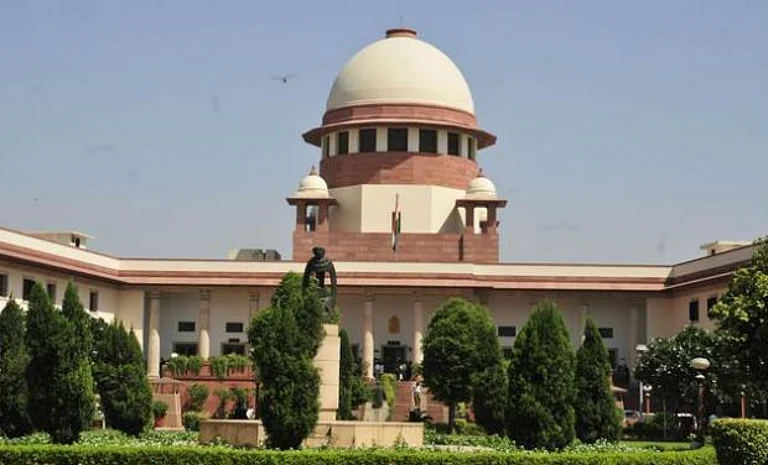
The Supreme Court on Tuesday quashed all FIRs related to the students’ exam-leak protests but allowed the government to proceed against the 2,873 people Delhi Police claimed had criminal records and were identified by its Facial Recognition System (FRS) at Jantar Mantar between July 20 and 26

Summary
At least 25 of the 2,873 people identified by Delhi Police’s facial recognition system as having criminal antecedents at the Jantar Mantar student protests were already in jail when they were flagged, an investigation of police, prison and court records by The Indian Express has found. The finding raises questions over the reliability of the facial recognition-based identification even as the Supreme Court has allowed the government to proceed against those identified, subject to further verification.
The Supreme Court on Tuesday quashed all FIRs related to the students’ exam-leak protests but allowed the government to proceed against the 2,873 people Delhi Police claimed had criminal records and were identified by its Facial Recognition System (FRS) at Jantar Mantar between July 20 and 26.
Police have maintained that no action will be taken solely on the basis of a facial recognition match and that every identification will first undergo “field verification”.

25 People Flagged By FRS Were In Jail
An analysis of the 2,873 names listed in the police affidavit focused on people linked to serious offences, including murder, attempted murder, rape and offences under the Protection of Children from Sexual Offences (POCSO) Act.
Of the 205 people in this category, the records show that 17 accused of murder, four accused in rape cases — including two POCSO cases — and four facing attempted murder charges were lodged in Delhi prisons when the FRS identified them at Jantar Mantar, the report siad.
The report added that among those identified was Yogesh alias Raju, who was arrested in connection with the murder of gym owner Nadir Shah in Greater Kailash-1. Police records describe him as an alleged sharpshooter associated with the syndicates of gangsters Lawrence Bishnoi and Hashim Baba. He was arrested following an exchange of fire in which he sustained a gunshot wound to his left leg.
Advertisement
According to the Delhi Police affidavit, 2,402 people were identified through its biometric database, Crime Kundli, while another 471 were identified through criminal records.
The affidavit, however, does not clarify whether all 2,873 people were accused, convicted or merely named in criminal cases.
How Reliable Is Delhi Police’s Facial Recognition System?
Delhi Police’s FRS detects faces in images and compares them with photographs stored in police databases. However, a match does not by itself establish a person’s identity or prove that the individual was present at the protest.
The police had stated in response to a 2022 RTI request that it considered an FRS match “positive” when the system showed an accuracy rate of 80 per cent.
The reliability of such systems can vary depending on factors including camera angle, lighting, image quality, masks, the algorithm used and the database against which faces are compared.
Advertisement
Delhi Police has now stressed that no action will be taken solely on the basis of an FRS result, the report said.
“After the said face is recognised, there is a field verification done with respect to the individual concerned,” the police said in its Supreme Court affidavit, adding that action would be taken only if verification established that the person was actually present at the protest site.
The affidavit said the system was used to identify people whose faces matched records in official police databases. It also claimed that the records generally related to people facing serious offences rather than petty violations.
The data in the report showed that Delhi’s North district recorded the highest number of identified individuals at 285, followed by Outer with 257, North West with 256 and North East with 174. Other districts and police units, including East, South West, Railways, Shahdara, Central, South-East, West, Dwarka, Crime Branch, IGI Airport, Metro and Special Cell, also featured in the list.
Advertisement
The findings are likely to add to scrutiny of the police’s use of facial recognition at protests, particularly as authorities begin the field-verification process following the Supreme Court’s ruling.
Published At: