Supreme Court questioned whether English can be classified as “non-indigenous” under CBSE’s three-language policy.
Justice Joymalya Bagchi said English’s historical roots in India may require constitutional examination.
The court also raised concerns over student pressure, teacher availability and school infrastructure.
'Is English Foreign Or Indigenous?' Supreme Court Raises Question Over CBSE's 3-Language Rule
Justice Bagchi questioned the terminology used in the policy and said English’s position in India could not be examined in the same way as that of an ordinary foreign language

Summary
The Supreme Court on Thursday questioned whether English can be treated as a “non-indigenous” language under the Central Board of Secondary Education’s revised three-language policy, observing that its long history and widespread use in India may require closer constitutional examination.
A three-judge Bench comprising Chief Justice of India Surya Kant and Justices Joymalya Bagchi and V. Mohana was hearing petitions challenging the CBSE’s decision to make three languages compulsory from the 2026-27 academic year, with at least two required to be Indian languages.
The policy is being introduced as part of the CBSE’s alignment with the National Education Policy (NEP) 2020 and the National Curriculum Framework for School Education, 2023.
According to legal news website Bar and Bench, Justice Bagchi questioned the terminology used in the policy and said English’s position in India could not be examined in the same way as that of an ordinary foreign language.
“We have to examine the issue as to the extent to which English can be considered a non-indigenous language...I personally have serious reservations about the expression 'native'. It has a very colonial connotation. It should be 'indigenous',” Justice Bagchi said, according to Bar and Bench.
Court Questions Classification Of English
During the hearing, petitioners argued that treating English as a non-native language was creating difficulties for students required to choose languages under the new framework.
Additional Solicitor General Aishwarya Bhati, appearing for the CBSE, told the Bench that English enjoys constitutional recognition but could not automatically be categorised as a native language.
“English is an official language under the Constitution. That status no one can take away… it’s not treated like a foreign language, but it can’t be treated like a native language also. Language is the vehicle of a culture,” Bhati said.
Justice Bagchi said the question required examination in light of English’s historical presence and its contemporary use across India.
“The other point is the expression 'native language'. That raises a deeper question: whether we consider English a native language or a foreign language. That perhaps requires a constitutional analysis, having regard to our historical experience and the fact that States have English as an official language,” he said, according to Bar and Bench.
Advertisement
In a further exchange, Justice Bagchi said the court would have to consider “the extent of its roots into Indian society” while examining whether English could constitutionally be classified as non-indigenous.
When Bhati pointed out that “non-native” was terminology drawn from the NEP, Justice Bagchi responded: “That is why the framers of the new policy ought to have been conscious of the words they choose.”
Concern Over Pressure On Students
The Bench also said the broader objective of the three-language policy was not in question, but raised concerns about the manner and timing of its implementation.
“There is no doubt that sooner or later, it has to be introduced. There is nothing wrong with that. But how it is to be streamlined so that whatever impediments or blockades are coming up, you may find a solution to those,” the Bench told Bhati, according to PTI.
Advertisement
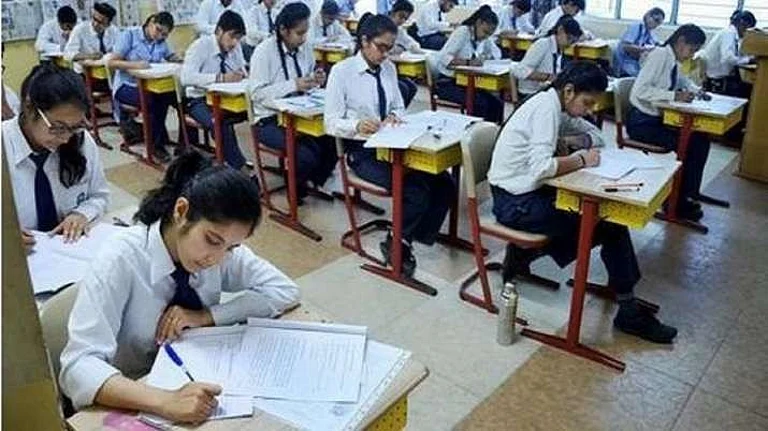
The court stressed that students should not be placed under unnecessary pressure during the transition.
“We don't want the children to come under any pressure,” CJI Kant said.
The Bench suggested that the CBSE examine whether the current Class 6 batch could be given some relief while schools build the necessary teaching infrastructure.
“If you have chosen Class 6 as the starting point, you may consider giving a reprieve to Class 6 students of this year. You can introduce it from next year,” the court observed.
Court Flags Teacher And Infrastructure Gaps
The judges also raised questions about whether schools have enough qualified teachers to offer the range of languages envisaged under the policy.
Justice Bagchi noted that although students may theoretically have several language options, implementation could vary considerably across schools because of differences in staffing and infrastructure.
“You would have to give some time not only for the students but also for the infrastructure of schools to come on par,” he said.
Advertisement
He also referred to shortages of qualified language teachers, including those meeting B.Ed requirements, and asked whether the roll-out could be reconsidered to allow schools more time to comply.
The court further asked the Centre and CBSE to consider at what stage a third language should first be introduced.
“Another thing which needs to be looked into is where do you draw the line. Whether it is Class 6, Class 4 or Class 3. You can take a call depending on the curriculum and where the choice between two and three languages is first introduced,” the Bench said.
What Does The CBSE Policy Say?
Under a CBSE circular issued on May 15, the study of three languages — designated R1, R2 and R3 — becomes compulsory for Class 9 students from July 1, 2026, with at least two required to be “native Indian languages”.
Advertisement
Students wishing to study a foreign language can choose it only as the third language after taking two Indian languages, or as an additional fourth language.
“With effect from July 1, 2026, for Class IX, the study of three languages (R1, R2, R3) shall be compulsory, with at least two languages being native Indian languages,” the circular said.
Until dedicated R3 textbooks become available, Class 9 students are to use the 2026-27 Class 6 R3 textbooks for their selected language.
The CBSE has also said there will be no Class 10 board examination for R3, with the stated aim of reducing pressure on students. Schools were directed to update their language offerings for Classes 6 to 9 on the OASIS portal by June 30.
Matter To Return To Supreme Court
The Supreme Court had agreed on May 27 to examine the challenge to the policy and issued notices to the Centre, CBSE and NCERT.
During Thursday’s hearing, Bhati told the Bench that she would seek instructions on the court’s suggestions, including possible relief for the current batch and issues relating to language classification and school infrastructure.
The Bench has posted the matter for further hearing after 10 days.
Published At: