India and Iran have demonstrated not merely in rhetoric but in practice that no global power can ignore their independent and self-generated influence in regional and world affairs.
In both India and Iran, despite the coexistence of followers of different faiths, religion plays a decisive role in political, cultural, and civilisational orientations.
Both India and Iran, rather than placing exclusive emphasis on the modern nation-state, employ the concept of civilisation as a unit of identity.
Iran and India: Cultural Diplomacy On The Path Of Civilisationalism
The true point of connection between Iran and India is not politics, but civilisation, culture, art, and spirituality.

Summary
Iran and India are lands of art, wisdom, epic tradition, and mysticism—heirs to ten-thousand-year-old civilisations upon the earth. Fortuitously, through most periods of history, they have lived side by side in sustained cultural and civilisational exchange. Beyond the shared traits of these two Eastern lands, even today parts of eastern Iranian culture are scarcely distinguishable from the cultures of northern and western India, and many Indian cities and regions still bear reminders of Iranian culture and Iranian names.
The Persian language, still the official language of Iranians, owes a significant portion of its growth and vitality to eight hundred years of devotion and literary efforts by Indians. If two thousand years before Christ the Aryan culture and creed mingled with the culture of India, forging an inseparable bond between the two lands, then after the advent of Islam it was again the Iranians who brought the new faith to India imbued with an Sufi spirit and Iranian character.
This intermingling is so meaningful that any serious historian seeking to properly understand either India or Iran must inevitably study the histories and myths of both peoples together. Although British colonialism wounded the linguistic bond between these two lands, and nearly eighty years of separation along with a generational divide has reduced that ancient neighbourhood in the minds of today’s youth to a faint and fading memory, India still remains for Iranians a land full of undiscovered mysteries, while the people of India continue to hold a remarkable affection for Iranian culture and the Iranian people.
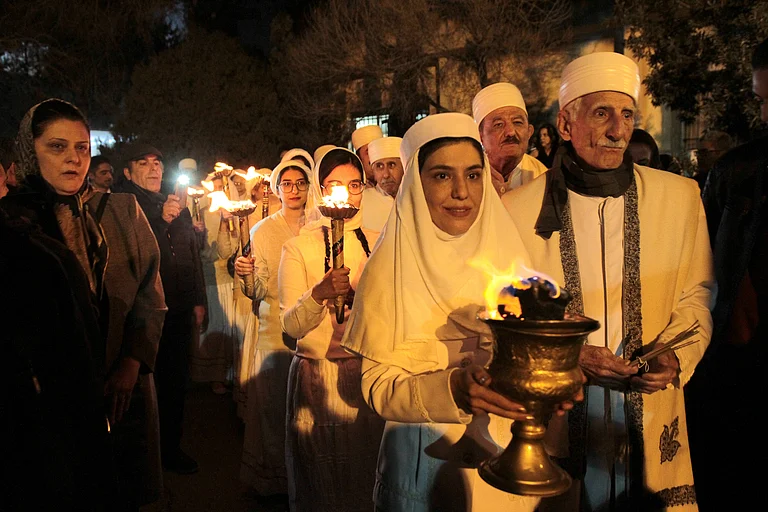
Therefore, whenever we speak of the future of cultural relations between the two countries, we must always remain mindful of this precious, radiant, and shared civilisational inheritance. We should know that we were neither the initiators of this path, nor can any end to this relationship ever truly be imagined. As Prime Minister Narendra Modi stated in Tehran in 2016: “India and Iran are not new friends; our friendship is as old as history.” If, in redefining the cultural relations of our two countries, we ignore this common historical legacy, we will suffer greatly.
Advertisement
Yet the cultural and political transformations in the systems of governance of India and Iran over recent decades have also generated new resources for thinkers and cultural policymakers in both nations, and opened fresh opportunities. To neglect these opportunities and remain content merely with historical nostalgia could equally lead to stagnation and weakness in the future of bilateral cultural ties. Without digression, we may observe from the clearest official documents and the statements of senior leaders in both countries that India and Iran fortunately share common ground on several vital cultural and civilisational principles.
In Iran, beyond the works of the great founder of the Islamic Revolution, Imam Khomeini(r.a), and the statements of martyred Ayatollah Khamenei, the most important published document in this regard is the 2019 manifesto issued on the fortieth anniversary of the Islamic Revolution under the title The Second Phase of the Islamic Revolution.

Advertisement
This significant declaration outlines the future movement of the Islamic Republic toward progress on the basis of clear principles and ideals: justice, freedom, spirituality, ethics, independence, dignity, rationality, fraternity, historical and civilisational self-awareness, movement toward a new Islamic civilisation, independence from foreign domination, and steadfastness before great powers. These are among the key elements that illuminate Iran’s cultural and civilisational policy horizon for decades to come.
Throughout his long years of leadership, martyred Ayatollah Khamenei, through a deep understanding of Iranian civilisation, culture, and society, grounded in universal human values while preserving national independence and self-confidence and emphasising the role of youth in shaping the future, established a civilisational outlook rooted in national and religious traditions over Iran’s cultural governance. Himself a foremost religious scholar, an accomplished authority on the history and literature of nations and peoples, and the author of numerous works, he played a fundamental role not only in politics but in the revival of Iranian culture and civilisation.
Advertisement
Readers of this essay may today observe clear signs of the formation of this distinctive spirit and exemplary self-confidence among Iranians in the war recently imposed upon Iran. Men, women, and lion-hearted children who, despite the martyrdom of their leader and amid war-time conditions, have for two months continuously appeared in the streets, standing upon the shoulders of their national and religious heroes, relying upon their faith and revolutionary convictions, displaying to the world the chivalric courage and splendour of their many-thousand-year-old civilisation.
In India too, after years of struggle against colonialism and British plunder, and after decades of perseverance, stability, and progress, what has increasingly occupied the minds and language of its leaders is the question of national and historical identity and the great rooted civilisation of the Mahabharata—as a means of liberation from the colonial legacy and movement toward indigenisation and empowerment in every sphere. From the writings of Vinayak Damodar Savarkar to the guidance of Mahatma Gandhi, the valuable works of Jawaharlal Nehru and Maulana Abul Kalam Azad, the speeches of Prime Minister Modi, and major cultural policy documents such as the Cultural Vision 2047, all emphasise unity and coexistence among religions, preservation and revival of India’s ten-thousand-year civilisational heritage, and transforming this valuable identity into global cultural power. It is an identity extraordinarily diverse and plural, which despite all differences of language, ethnicity, religion, and sect, rises from the heart of Greater India and proclaims the historic grandeur of Bharat.
Advertisement
Accordingly, when one considers the declared cultural policies of both nations, it becomes clear that India and Iran share horizons in the following areas:
1. Civilisationalism
Both India and Iran, rather than placing exclusive emphasis on the modern nation-state, employ the concept of civilisation as a unit of identity. Thus, movement according to the logic of the civilisational state is among the foremost cultural commonalities of the two countries. The strength of this approach lies in its inclusiveness—opening the civilisational framework to subcultures, ethnicities, religions, and traditions, while moving beyond social and cultural fault lines in governance.
2. Historical and Identity Self-Awareness; Indigenisation of Governance Models
India and Iran, by emphasising a return to historical roots, revival of indigenous identity and culture, independence, dignity, resistance to foreign domination, solving problems from within, and reliance upon domestic capacities, can both be understood within post-colonial frameworks that reject pre-packaged Western prescriptions.
3. The Role of Religion in Culture and Governance
In both India and Iran, despite the coexistence of followers of different faiths, religion plays a decisive role in political, cultural, and civilisational orientations. Though followers of religions in both countries enjoy genuine freedoms—not merely performative Western liberties—the Hindu religion/culture as a foundation of Indian national identity, and Islam as a foundation of Iran’s socio-political order, have given both lands a deep bond with religious spirituality. Thus, the governance systems of both countries have not embraced hard Western secularism. Exchange of experience in applying religious teachings to governance and social formation deserves serious official attention.
4. Power Orientation and National Independence
India’s aspiration to become a major global power, alongside Iran’s emphasis on dignity, strength, and independence, shows that both countries are pursuing the project of the “strong independent state” through reliance upon their own internal and indigenous capacities. India and Iran have demonstrated not merely in rhetoric but in practice that no global power can ignore their independent and self-generated influence in regional and world affairs.
Despite all these opportunities, certain harmful factors remain that can damage the strong cultural relations between the two lands. These include:
A generational gap that has weakened among youth a precise historical understanding of their own national identity and that of neighboring peoples;
Excessive political sensitivities and securitised perceptions of cultural, religious, and artistic activities.
Over-politicisation and excessive state control of cultural programmes, with insufficient regard for private-sector capacities;
Neglect of the destructive role of rival or hostile political forces that do not tolerate cordial Iran–India relations.
Without exaggerating these negative factors or dismissing them as insignificant, strategies must be devised so that the opportunities arising from the shared ground of these two civilisations are strengthened in the best possible manner and do not remain mere slogans. We must strive to turn every political gap into a cultural bridge, and with a realistic understanding of the foreign-policy constraints of both countries, while drawing upon their shared civilisational vision and the vast capacities of cultural, academic, intellectual, and spiritual networks, design and implement a networked, non-confrontational, multilayered cultural diplomacy. Such diplomacy should pursue several major objectives:
1. Civilisational Diplomacy
To improve the civilisational image of Iran in India and of India in Iran. By doing so, both countries will be introduced not merely as political actors, but as a shared cultural-civilisational source.
2. Redefining the Iran–India Bond for a New Generation
We must move beyond historical nostalgia toward effective contemporary relations. Digitisation of cultural content and cooperation with cultural influencers in both countries can help achieve this goal.

3. Building a Sustainable Intellectual Network
Establishing centres for “Iranian and Indian Civilisational Studies” and “India–Iran Friendship and Academic Associations” in leading universities of both countries can cultivate a new generation of scholars capable of guiding future relations on the right path.
4. Linguistic and Literary Diplomacy
Using university capacities to strengthen Persian, Hindi, and Sanskrit departments; holding joint literary festivals; faculty and student exchanges; participation in book fairs and publishing markets; supporting translation of literary works; and creating professional links between literary journals and magazines.
5. Religious and Spiritual Diplomacy
Moving from ideological confrontation toward interfaith and inter-sectarian dialogue, utilising the rich religious diversity of both countries, is both beneficial and necessary. Topics such as spirituality, comparative mysticism, Indo-Iranian monotheism, Sufism, and rapprochement among Islamic schools of thought are suitable subjects for conferences and dialogue circles. The moderate spirit of Shi‘ism and Iranian Sufism, alongside the peaceful temperament of the Hindu tradition, can facilitate this path. The civilisational vision of figures such as Vivekananda and martyred Ayatollah Khamenei illuminates this avenue and demonstrates that religious diversity not only does not damage national cohesion, but can guarantee the continuity of civilisational bonds among peoples without political interference.
6. Artistic and Media Diplomacy
Art and media find their own path among kindred civilisations before any political or geographical boundaries. Organising Iranian and Indian film weeks in major cities, joint productions in music and cinema, presence of films and series on digital platforms, and encouraging artists and media figures to travel between the two countries for international cultural events can help project a beautiful, lasting, and artistic civilisational image of both nations.
7. Strengthening Non-Governmental Cultural Networks
At times when governments or political parties may render cultural relations fragile and subordinate to short-term interests, NGOs and private artistic, religious, and intellectual networks—such as think tanks, artistic and cultural institutions, and private art-market actors—play a highly significant role in sustaining multi-layered cultural ties between the two peoples.
As a final conclusion, I recall Nehru’s phrase in Glimpses of World History, where he described India’s architectural masterpiece, the Taj Mahal, as “the manifestation of the Iranian spirit in an Indian body.” Though the Taj Mahal is the resting place of political rulers of that era, and though an Iranian-born queen and an Indian king lie buried there, what remains for the world today is not the ambitions and political conflicts of rulers, but a stirring love story and the grandeur of Indian and Iranian art and architecture.
It is therefore no exaggeration to say that the true point of connection between Iran and India is not politics, but civilisation, culture, art, and spirituality.
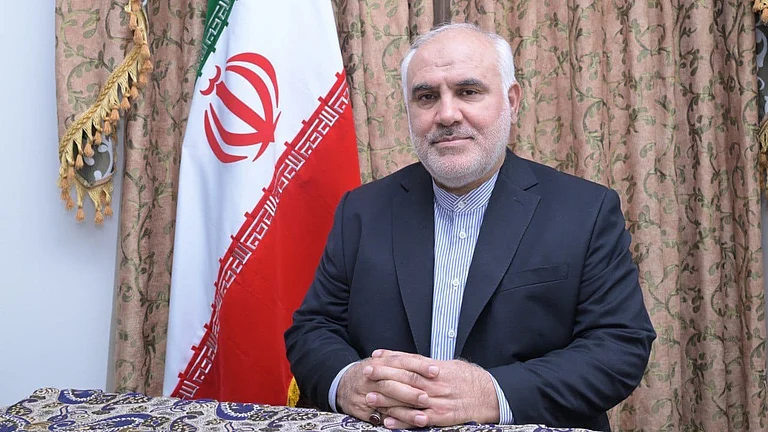
Dr. Fariduddin Faridasr is Cultural Counsellor of the Islamic Republic of Iran and Head of Iran Culture House, New Delhi . He is also Prof. of Cultural Management and the Philosophy of Religious Arts in Iran.
Published At: