PM Modi will flag off India’s first hydrogen train on July 17.
The 10-coach train will run on the 89-km Jind-Sonipat route.
Hydrogen fuel cells generate electricity, with water vapour as the by-product.
India's First Hydrogen Train Is Here: How It Works And What It Means For Indian Railways
Prime Minister Narendra Modi will flag off India’s first hydrogen train on the Jind-Sonipat route, marking a major step towards cleaner, diesel-free rail travel.

Summary
Prime Minister Narendra Modi is set to flag off India's first hydrogen-powered train in Jind, Haryana, on July 17, marking the country's entry into a small group of nations experimenting with hydrogen-powered rail transport. The launch is expected to be one of the key highlights of the Prime Minister's visit to Haryana, where he will also inaugurate several infrastructure projects.
The hydrogen train represents Indian Railways' latest push towards cleaner transport as it seeks to reduce dependence on fossil fuels and support India's broader goal of achieving net-zero carbon emissions. Unlike conventional diesel locomotives, the train generates electricity using hydrogen fuel cells and emits only water vapour during operation.
Indian Railways will use the Jind-Sonipat route as a pilot project to assess the technology before deciding whether to expand hydrogen-powered services.
What is India's Hydrogen Train?
According to Indian Railways, the new train is among the world's longest and most powerful hydrogen-powered trainsets.
The Broad Gauge train consists of 10 coaches, including eight passenger coaches and two driving power cars. It has been fully designed and developed in India and is powered by a hydrogen fuel-cell propulsion system with an installed capacity of up to 2,400 kilowatts.
The train can carry at least 682 passengers and will operate on the 89-km Jind-Sonipat section under Northern Railway. It has a maximum operational speed of 75 kmph and is expected to make two round trips daily, covering about 356 km while consuming nearly 300 kg of hydrogen.
The project, approved by Northern Railway during 2020-21, began taking shape after Hyderabad-based Medha, a supplier of propulsion equipment to Indian Railways, received the contract in April 2022.
Following the successful completion of trials, the Ministry of Railways granted operational approval for the train on May 22.

How Does Hydrogen Train Work?
Unlike diesel trains that burn fuel to power an engine, hydrogen trains generate electricity through hydrogen fuel cells.
Advertisement
Inside the fuel cell, hydrogen reacts chemically with oxygen from the air to produce electricity. That electricity powers the train's motors, while the only direct by-product of the reaction is water vapour.
Because no diesel is burned during operation, hydrogen fuel-cell technology significantly reduces greenhouse gas emissions and air pollution compared with conventional locomotives.
However, hydrogen presents its own engineering challenges. Since the gas is highly flammable, it must be stored under very high pressure and handled through specialised infrastructure.
To support operations, Indian Railways has established an indigenous hydrogen storage and refuelling facility at Jind. The Petroleum and Explosives Safety Organisation (PESO) has granted the required licence for storing and dispensing compressed hydrogen gas.
The facility includes hydrogen compression systems, a standby compressor and dedicated technical support equipment.
Safety systems such as hydrogen leak detectors, flame detectors and continuous monitoring sensors have also been installed throughout the storage and dispensing infrastructure.
Advertisement
Why Is It Different From Diesel And Electric Trains?
Hydrogen trains combine some advantages of both diesel and electric trains while avoiding some of their limitations.
Diesel trains depend on fossil fuels, producing carbon emissions and air pollutants. Electric trains are cleaner at the point of use but require extensive overhead electrification infrastructure, which can be expensive to install on every railway route.
Hydrogen trains generate their own electricity onboard using fuel cells, allowing them to operate on non-electrified routes without burning diesel.
Their principal emission is water vapour, making them a cleaner alternative for routes where electrification is not economically feasible.
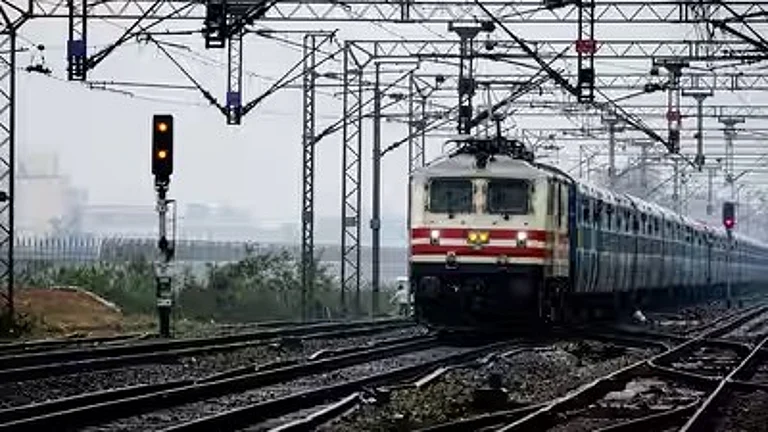
Where Will It Run First?
The hydrogen train will initially operate on the Jind-Sonipat section in Haryana under Northern Railway.
The 89-km route has been selected as the pilot corridor for India's first hydrogen-powered passenger service.
According to Indian Railways, the train will carry at least 682 passengers, operate at a maximum speed of 75 kmph and complete two round trips every day.
Advertisement
The supporting hydrogen refuelling and storage infrastructure has also been established at Jind specifically for the pilot project.
Why Is India Investing in Hydrogen Rail?
The government says the project reflects Indian Railways' broader strategy to adopt cleaner technologies and improve energy efficiency.
According to the government, the hydrogen train supports India's objectives of environmentally sustainable transportation while contributing to the country's long-term clean energy and net-zero carbon goals.
Globally, only a handful of countries have introduced hydrogen-powered trains.
French rolling stock manufacturer Alstom first showcased the technology at a transport exhibition in Berlin in 2016. Its Coradia iLint entered passenger service in Germany in 2018 as the world's first hydrogen-powered passenger train.
Since then, Japan, China and the United States have also launched hydrogen train projects, although most services continue to operate on relatively short routes as the technology develops.

Advertisement
Can Hydrogen Replace Diesel Trains?
Although hydrogen-powered trains are attracting growing interest worldwide, the technology is still evolving and has not yet been deployed widely for long-distance passenger or freight transport.
Indian Railways has not announced additional hydrogen train projects beyond the Jind-Sonipat service.
Officials have indicated that the future expansion of hydrogen-powered rail services will depend on the performance of the first train after it enters commercial operation.
For now, the project serves as a pilot to evaluate operational efficiency, safety, maintenance requirements and overall feasibility before any larger rollout is considered.
If successful, however, hydrogen-powered trains could offer Indian Railways a cleaner alternative for routes that are difficult or uneconomical to electrify, reducing dependence on diesel while supporting the country's transition towards low-carbon transportation.
Published At: