The theft of a 25,000-volt railway wire in Bihar disrupted train services and highlighted a recurring pattern of infrastructure theft.
Railway thieves commonly target overhead wires and signalling cables for valuable copper, often selling them through scrap networks.
Similar incidents in Bihar, Tamil Nadu and Karnataka have delayed trains and disrupted railway operations in recent years.
How Thieves Stole 100 Metres Of 25,000-Volt Railway Wire in Bihar And Why It Keeps Happening
The theft occurred around 3.05 am between Tehta and Jehanabad stations in the Gaya-Patna section. While the incident may appear unusual, railway infrastructure theft has become a recurring challenge across several states

Summary
Train services on Bihar's busy Gaya-Patna rail section came to a halt for nearly three hours early on Thursday after thieves allegedly cut and stole around 100 metres of a 25,000-volt overhead electrical (OHE) wire between Tehta and Jehanabad stations.
According to East Central Railway Chief Public Relations Officer (CPRO) Saraswati Chandra, the theft occurred around 3.05 am and disrupted train operations on one of the state's key rail corridors. "The thieves cut a 25,000-volt OHE wire (roughly around 100 metres) at 3.05 am between Tehta and Jehanabad stations in the Gaya-Patna section, disrupting train services. Affected down trains were operated under single-line working," Chandra told PTI.
Railway engineers restored the damaged line and declared the section fit for operations at 6.26 am. The Railway Protection Force (RPF) has recovered the stolen wire and launched an investigation.
While the incident may appear unusual, railway infrastructure theft has become a recurring challenge across several states, targeting everything from overhead electrification equipment to signalling cables and copper wiring.
Why Are Railway Wires Targeted?
The primary attraction is not the wire itself but the metal inside it. Copper remains one of the most valuable scrap metals in India, making railway cables and signalling equipment attractive targets for organised theft networks. In many cases, thieves burn insulated cables to extract copper before selling it through illegal scrap channels.
Investigations into several recent cases indicate that stolen railway property is often disposed of through local scrap dealers, making the scrap trade an important link in the theft chain.
Earlier this week, the Railway Protection Force arrested four people at Arakkonam railway station in Tamil Nadu for allegedly stealing copper wires from railway signalling systems. During questioning, the accused allegedly told investigators they had been selling the stolen copper to a scrap merchant in Tiruttani. The thefts had reportedly delayed train movements between Arakkonam-Tiruttani and Arakkonam-Katpadi before they were detected.
Advertisement
A similar pattern emerged in Karnataka in May this year when the RPF in Mysuru detected the theft of a 19-core railway signalling cable. According to South Western Railway, the accused admitted that they had stolen around 15 metres of signalling cable while working as labourers on a nearby water pipeline project. Investigators later recovered burnt cable remnants and nearly five kilograms of copper wire after the accused allegedly burnt the insulation to extract the metal.
How Can Thieves Steal Live Railway Wires?
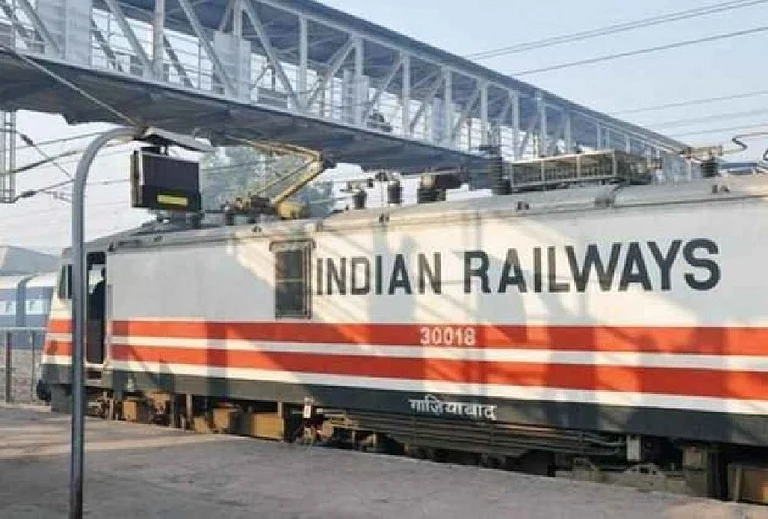
The theft in Bihar involved a 25,000-volt overhead electrification wire that supplies power to electric locomotives.
Ordinarily, touching a live OHE line is extremely dangerous and can be fatal. Railway authorities have not disclosed how the Bihar theft was carried out or whether the line had been de-energised before the wire was cut.
Advertisement
However, previous investigations suggest that organised gangs often strike during the early hours of the morning when train movement is relatively lighter and exploit isolated stretches of track. In the 2024 Fatuha case, reported by Live Hindustan, thieves allegedly attached a saw to a bamboo pole to cut nearly 39 metres of overhead wire without climbing directly onto railway structures.
The precise methods vary from case to case, but investigators believe many such thefts involve prior reconnaissance and knowledge of railway infrastructure.

A Problem Seen Across States
The Bihar incident is only the latest in a series of thefts affecting railway operations. According to Live Hindustan, signal cables were stolen near Danapur station in May 2026, delaying around a dozen trains, including the Humsafar Express and the Shramjeevi Express.
In July 2024, around 39 metres of overhead electric wire were allegedly stolen near Fatuha railway station, disrupting traffic on the Patna-Jhajha section for nearly two hours.
Advertisement
In another case in April 2024, an attempted theft between Chanpatia and Sathi stations on the Narkatiaganj-Muzaffarpur section reportedly caused an overhead electric wire to snap, affecting train movement for almost five hours while restoration work was carried out.
These incidents show that thieves are targeting multiple parts of railway infrastructure rather than a single type of equipment.
More Than Just Theft
The consequences extend far beyond the value of the stolen material. Overhead electrification wires supply electricity to locomotives, while signalling cables control train movements and communication between stations. Damage to either system can slow trains, force single-line operations or require complete suspension of services until repairs are completed.
In Thursday's Bihar incident, railway authorities operated down trains through single-line working until engineers restored the damaged overhead equipment.
Apart from delays, such incidents also create operational challenges for railway staff, increase maintenance costs and carry significant safety risks if damaged infrastructure is not detected immediately.
Advertisement

How Is Indian Railways Responding?
The Railway Protection Force has stepped up surveillance in several divisions through patrols, intelligence gathering and special investigation teams. Arrests in Tamil Nadu and Karnataka this year followed targeted investigations after repeated thefts were reported.
Indian Railways has also expanded CCTV coverage, increased night patrols and coordinated more closely with local police in vulnerable sections. Investigators are increasingly focusing on scrap dealers and illegal recycling networks that provide a market for stolen railway material.
Despite these efforts, recurring cases across Bihar, Tamil Nadu and Karnataka suggest that organised theft remains a persistent challenge. As railway electrification expands across the country, protecting critical infrastructure has become as important as building it, with every theft carrying consequences that extend well beyond the loss of a few metres of wire.
Published At:
Tags