Chinese Foreign Ministry spokesperson Guo Jiakun warned that bilateral cooperation must not target third parties or patch up exclusive small groupings.
Prime Minister Narendra Modi and Japanese Prime Minister Sanae Takaichi signed major economic, defence, and critical mineral partnerships during their summit.
The joint India-Japan statement expressed serious concern over maritime security in the East and South China Seas, opposing unilateral attempts to alter the status quo.
India-Japan Cooperation: Beijing Warns Against Third-Party Targeting In Bilateral Pacts
The warning followed Thursday's summit talks, where Prime Minister Narendra Modi and Japanese Prime Minister Sanae Takaichi unveiled major economic, defence and energy partnerships
Summary
Newly announced bilateral initiatives between India and Japan drew a cautionary response from China on Friday, with Beijing warning that such partnerships must not target third parties. Chinese Foreign Ministry spokesperson Guo Jiakun said that cooperation should build regional trust rather than stoke division.
The warning followed Thursday's summit talks, where Prime Minister Narendra Modi and Japanese Prime Minister Sanae Takaichi unveiled major economic, defence and energy partnerships.
Takaichi's visit to India was closely watched by Beijing, as China's remarks arrive amid intense regional scrutiny regarding geopolitical alliances that Beijing perceives as exclusive groupings.

Beijing Opposes Exclusive Blocs
Guo directly addressed queries regarding the newly formed India-Japan cooperation on critical minerals, which aims to strengthen supply chain resilience. The spokesperson warned against alliances isolating other nations.
"Such cooperation should not target any third party or harm the interests of any third party, still less be used as an excuse to patch up exclusive small groupings and stoke division and confrontation," Guo said.
He also emphasised the need for open trade networks. "It is the common responsibility of all countries to keep the global industrial and supply chains safe and stable. All parties should champion openness and cooperation and play a constructive role in the process," Guo added.
India, Japan Deepen Ties
During their Thursday summit, Modi and Takaichi established an economic partnership framework. The two leaders also agreed to co-develop military hardware under a new defence pact, alongside measures to expand energy networks and mitigate future oil shocks.
The resulting joint statement also highlighted maritime security as a primary concern. Both leaders expressed "serious concern" over the situation in the East China Sea and the South China Sea.
India and Japan formally opposed unilateral actions that endanger freedom of navigation while also rejecting attempts to alter the regional status quo by force.
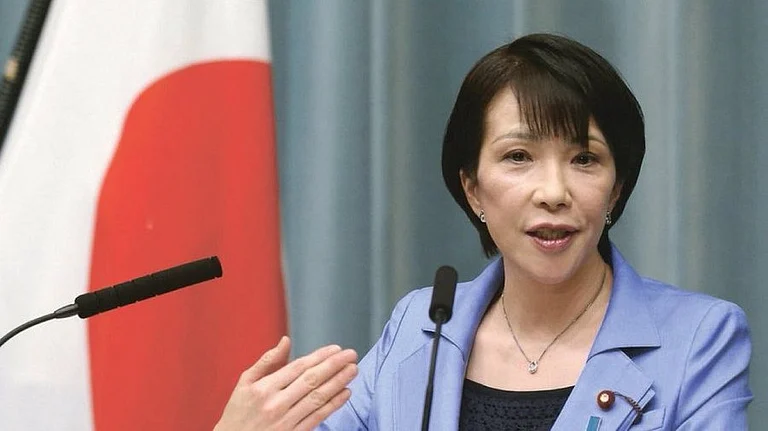
Sino-Japanese Tensions Deepen
Takaichi's visit to India coincided with severe friction between Tokyo and Beijing. Bilateral relations hit their lowest level in years following her November 2025 remarks that Japan could respond militarily if China attacked Taiwan, comments that had drawn a sharp response from China.
Advertisement
The Chinese government classifies the self-governed territory of Taiwan as a renegade province. Beijing asserts it will absorb the island, deploying military force if required.
In response to geopolitical pressures, China has restricted rare earth exports to Japan, India, the US and several other countries as leverage to widen its trade interests. Beijing controls around 70 per cent of worldwide mining operations and almost 90 per cent of their processing.
These essential minerals power the manufacture of defence hardware, wind energy equipment, electronics, automobiles and a range of modern gadgets.
Published At: