The Jamui incident has renewed scrutiny of sexualised imagery and women’s representation in Bhojpuri popular culture and entertainment.
A 2024 study examined the depiction of women, sexual objectification, gendered representation and gender-based violence in Bhojpuri cinema.
Bhojpuri stars have faced criticism over double-meaning songs, while some performers have acknowledged concerns about vulgarity and commercial pressures.
How Jamui Incident Puts Bhojpuri Industry’s Sexualised Imagery Under Scrutiny
Cinema and literature often reflect aspects of society and the recent Jamui incident has renewed scrutiny of sexualised imagery, double-meaning lyrics and women’s representation in Bhojpuri culture

Summary
A video showing two minor students allegedly being harassed by a group of men in Bihar’s Jamui has brought renewed attention to the case and a wider debate over the portrayal of women in Bhojpuri popular culture.
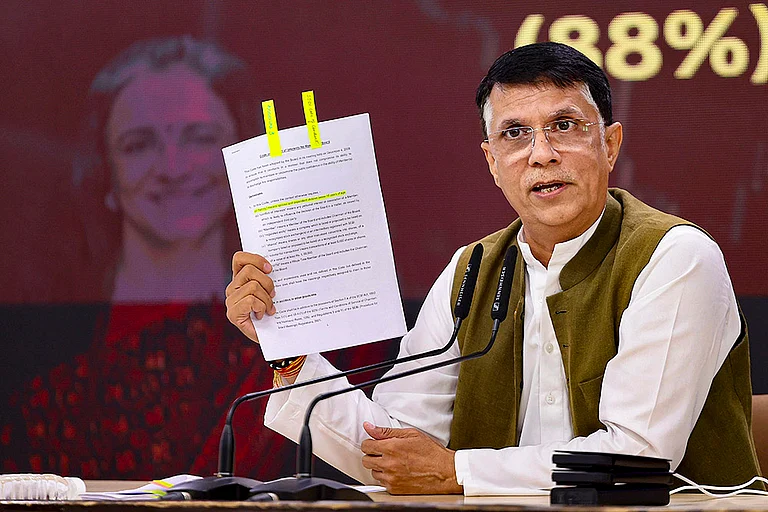
Congress leader Abhishek Manu Singhvi has described the incident as a warning of a deeper social crisis and called for a sustained social movement in Bihar. In a post on X, Singhvi said the Bhojpuri entertainment ecosystem, including figures such as Nirahua, Pawan Singh, Manoj Tiwari and Ravi Kishan, should “introspect” over what he described as the persistent sexualisation and objectification of women.
Singhvi also linked the incident to concerns over the normalisation of “toxicity and masculinity”, while arguing that political power brings cultural responsibility. He said Bihar’s women should not face moral policing and misogyny.
The incident took place on September 19 when the minors were returning from Madwa Pahad, police said. The group allegedly stopped and chased them. Around seven people have been identified and three arrested. An FIR has been registered under POCSO and the Bharatiya Nyaya Sanhita, while an SIT has been formed.
The Jamui case itself does not establish any connection between the accused and Bhojpuri music or cinema. However, the incident and its circulation online have brought renewed attention to a longer-running debate over sexualised imagery, double-meaning lyrics and the representation of women in Bhojpuri popular culture.

A Debate That Predates The Jamui Incident
The concern over vulgarity and double-meaning songs in Bhojpuri music is not new. In March 2025, the Bihar Police ordered a crackdown on the public broadcasting of what it described as obscene Bhojpuri songs. An order issued on March 7 directed senior police officers to conduct special campaigns and register FIRs against the public broadcasting of such songs.
The order, issued by Bihar ADGP for Weaker Sections Amit Kumar Jain, said such songs undermined the safety and dignity of women. It directed police officers to identify cases and take action under Section 296/79 of the Bharatiya Nyaya Sanhita and other relevant provisions.
Advertisement
The order came days after a controversy over rapper Yo Yo Honey Singh's Bhojpuri song Maniac.

The Maniac Controversy
In March 2025, actress Neetu Chandra Srivastava filed a public interest litigation in the Patna High Court against Maniac, alleging that its lyrics promoted obscenity, objectification and the derogatory portrayal of women.
The petition sought directions to modify the lyrics and regulate similar songs. Chandra also called for measures against what she described as misogynistic narratives in Bhojpuri music.
The petition named singer and composer Yo Yo Honey Singh, co-artists Leo Grewal and Ragini Vishwakarma, along with T-Series, Google and YouTube as respondents.
Chandra also called for a ban on obscene songs in Bhojpuri and Hindi, saying such content made women uncomfortable in public spaces and could affect young people.

What Research Says About Women In Bhojpuri Cinema
The debate has also been examined academically. A 2024 study published in Anvesak, titled "Picturization of Women in Bhojpuri Cinema: A Sexual Objectification or Idealization?", examined the portrayal of women in Bhojpuri cinema.
Advertisement
The study by Dr Sangya Pandey and Prachi Raj looked at the depiction of women, sexual objectification, gendered representation and gender-based violence in Bhojpuri cinema.
The researchers examined four films - Ganga Maiya Tohe Piyari Chadhaibo, Balam Pardesia, Sasura Bada Paisawala and Baap Ji, and argued that women in Bhojpuri films have often been portrayed in secondary roles, dependent on male characters.
The study also examined the way women are presented through traditional roles, sexuality, clothing and ideas of honour. It argued that female characters are often placed between two contrasting categories — the traditional woman considered respectable and the modern woman associated with negative traits.
At the same time, the study noted attempts within Bhojpuri cinema to portray women as independent and capable of making their own decisions. The researchers concluded that the industry needs more diverse representations of women and greater attention to the stereotypes through which female characters are portrayed.
Advertisement

Folk Tradition To Commercial Music
The question of vulgarity in Bhojpuri music is, however, more complicated than simply separating songs into obscene and non-obscene categories.
As Outlook India has reported earlier, Bhojpuri music has a long tradition of eroticism, double entendre and songs dealing with desire, marriage and relationships.
In an analysis published in the context of the film Chamkila, Dr Ajay Kumar Yadav argued that there are different layers of obscenity in Bhojpuri songs and that not every use of sexual imagery or double meaning should automatically be treated as vulgarity.
Yadav cited Khesari Lal Yadav's Sej Par Kekra Sange Ladab, Sainya Arab Gaile Na as an example of a song in which sexual desire is expressed through metaphor and double entendre.
He compared such expressions with erotic imagery in older Indian literary traditions, including Jayadeva's Gita Govinda, and argued that the cultural context and language in which desire is expressed influence how it is perceived.
Advertisement
The same analysis, however, also acknowledged that some Bhojpuri songs employ a lewd male gaze and reinforce misogyny and sexism.
When Double Meaning Becomes The Issue
One distinction therefore runs through the debate, whether double meaning itself is the problem, or whether the manner in which women are represented is the greater concern.
Bhojpuri songs have traditionally included themes of desire, marriage, separation and extra-marital relationships. The economic migration of men from the Bhojpuri-speaking region has also influenced songs about husbands working away from home and women expressing loneliness or sexual desire.
The cultural argument is that such songs can give women a voice in expressing desire. The criticism is that other forms of Bhojpuri music reduce women to their bodies and reinforce sexist ideas. That distinction has also emerged in public discussions around the industry.
The Stars Who Became Part Of The Mainstream
The debate over Bhojpuri music also involves some of the industry’s most recognisable performers, several of whom later entered mainstream politics. Manoj Tiwari, Ravi Kishan and Dinesh Lal Yadav, popularly known as Nirahua, emerged as major Bhojpuri performers before entering electoral politics and Parliament. Pawan Singh and Khesari Lal Yadav have also remained prominent names in Bhojpuri music and cinema.
A 2023 Bihar government warning on obscene Bhojpuri songs mentioned Manoj Tiwari, Khesari Lal Yadav, Nirahua and Ravi Kishan while discussing the circulation and popularity of such songs. It also referred to Pawan Singh and Akshara Singh in the context of Bhojpuri music being circulated in Bihar and eastern Uttar Pradesh.
The performers have also taken different positions on the question of vulgarity. In an interview in 2024, Ravi Kishan expressed regret over some of his early Bhojpuri work, including the song Lehnga Utha Deb remote se. He said that at the beginning of his career he sometimes accepted what producers offered without reading or thinking about the content, and described his participation as a mistake.
Manoj Tiwari, meanwhile, has acknowledged concerns over vulgar Bhojpuri songs but argued that singers and lyricists could not be held solely responsible. As Outlook India reported earlier, he pointed to the role of the market and music companies in driving such content. He also rejected the characterisation of some of his own songs as double-meaning and argued for a distinction between romantic and vulgar songs.
Pawan Singh and Khesari Lal Yadav belong to a later generation of commercially successful Bhojpuri performers. Actor Shilpi Raghwani, in a later interview, argued against judging the entire industry on the basis of the work of a few artists, reflecting the disagreement within the industry over double-meaning songs and the boundaries of vulgarity.
The movement of these performers from Bhojpuri entertainment into politics has brought the industry into a wider public space. Manoj Tiwari, Ravi Kishan and Nirahua have entered Parliament, while Pawan Singh has also entered electoral politics. Their careers now span music, cinema and public life, making the debate over Bhojpuri popular culture extend beyond entertainment to questions of representation, language and the social attitudes reflected in popular media.
Published At: