Himachal Pradesh has had the lowest rainfall this November in over a century.
The maximum temperature recorded in Shimla was 21.6. Earlier in 2016, the mercury had risen to 22.3 degrees.
The lack of rainfall is affecting the apple production in the state.
Himachal Feels The Heat As “Warm Winters” Affect Crop Production
Himachal Pradesh has received the ninth-lowest rainfall in November 2025 for the past 124 years.

Summary
While Delhi, India’s capital, is experiencing one of its worst periods of air quality, the hills are experiencing a “spring” in the winter. Snowless peaks, stressed orchards, and dried-up streams—the traditional water channels, called khuls, and unusually warmer days.
“This is no longer an aberration but a stark marker of a deepening climate imbalance being noted in the Himalayas. As a result, the crops and fruits—especially our apple-based economy—along with farmers’ livelihoods, are clearly at risk,” says Harish Chauhan, orchardist and convenor of the Seb Kisan Manch, a proactive collective of hill farmers.
The scientists at the Indian Meteorological Department (IMD) further substantiate the view with data.
“Himachal Pradesh has received the ninth lowest rainfall (1.0 mm) in November 2025 since 1901, with the previous same rainfall record in 1983 and 2021. The highest rainfall ever recorded in November since 1901 was recorded in the year 1925 (88.5 mm),” said Sandeep Sharma, a scientist at Shimla Weather Station.
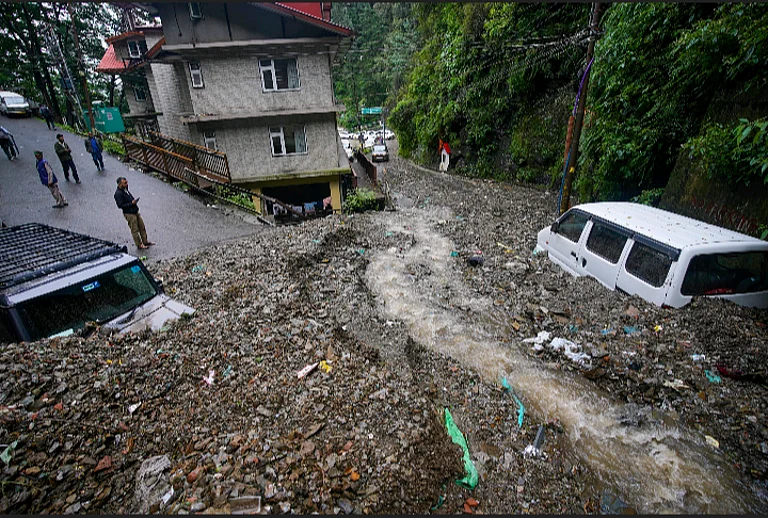
In fact, Himachal Pradesh has received a significant deficit in precipitation (-95 per cent), with 1.0 mm of actual rainfall against 19.7 mm of normal rainfall in November across all its districts. Further, dense fog was observed for nine days in Mandi and seven days in the Bilaspur districts of the state.
Sharma admits that winter heat records—the time when Shimla and the higher hills should be receiving snowfall—are being broken in many districts. For example, Solan, the mid-hill district and gateway to the high hills of Kinnaur and Lahaul-Spiti, recorded the highest temperature so far in December.
The mercury here reached 28.5 degrees Celsius.
Earlier, in the year 2016, the highest maximum temperature of 28.0 degrees was recorded in Solan. On the other hand, Shimla and Manali also recorded the highest December temperatures in nine years. The maximum temperature recorded in Shimla was 21.6. Earlier in 2016, the mercury had risen to 22.3 degrees.
Advertisement
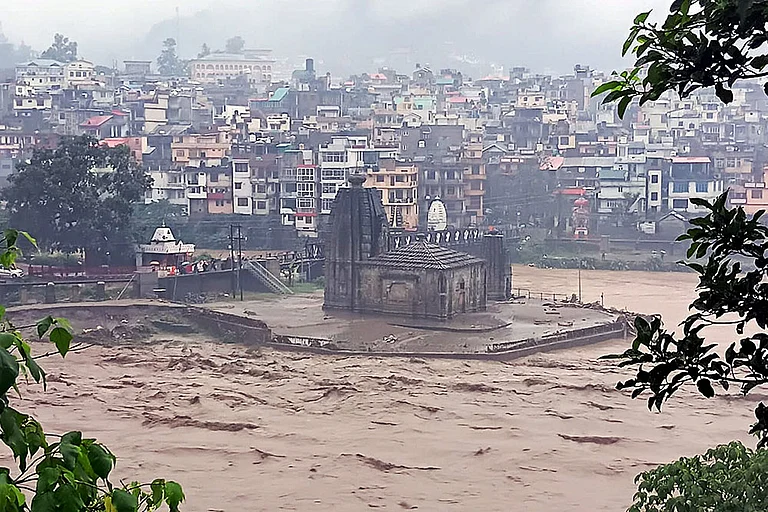
Himachal Pradesh is facing a worrying winter climate anomaly, marked by prolonged dry spells, negligible rainfall, and a lack of snowfall. “Unusually high daytime temperatures in the winter days are certainly unusual, reflecting the state’s fragile ecological balance,” laments climate activist Suresh Rana.
Harish Chauhan explains the scenario in simple words. “Winter rains and snow are critical for replenishing groundwater, sustaining orchards, and maintaining soil moisture for the upcoming fruit season,” and adds, “But, after 2017-18, when we witnessed a slight snowfall, in the following years, including this time, a familiar white cover on the higher reaches of the Chanchal mountains, Rohtang, and Dhauladhar is missing. Warmer, almost spring-like days have replaced the chill of winter.
Apple production in Himachal Pradesh has remained static since 2010, the year of the highest-ever output of five crores apple boxes. Now, it's between two and a half to three crores annually.
Advertisement
Due to warm conditions and a declining pattern of chilling hours, the apple belt is already shifting to the higher hills. The farmers are compelled to look for new low-chill apple and stone fruit varieties in Shimla, Mandi, Sirmaur, Kinnaur, and Chamba. The rising temperature has also affected fruit quality and increased the risk of pests and diseases. Bees, which play an essential role in pollination, have become vulnerable to the change in temperature.
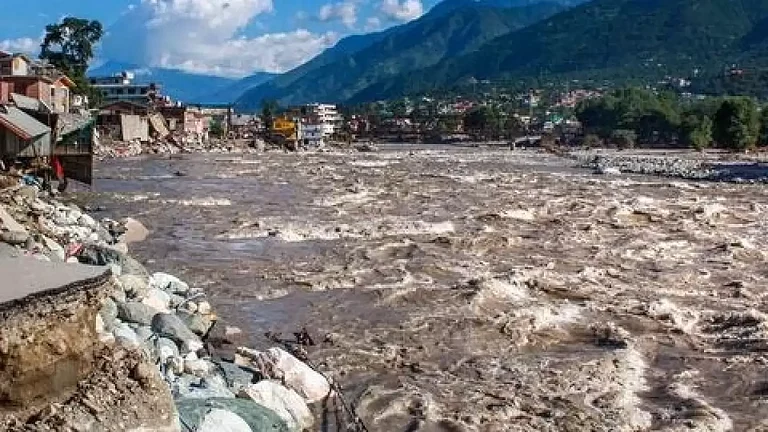
Districts like Solan, Hamirpur, Sirmaur, Kangra, and Bilaspur, known for cash crops and off-season vegetables such as peas, potatoes, cauliflower, and others, have been impacted by changing weather patterns.
“Springs and natural water sources, lifelines for hill agriculture, are drying up earlier than usual, compounding rural distress,” admits Kishori Lal, Congress MLA from Baijnath in Kangra.
But Harish Chauhan, who recently also attended a meeting of environmentalists on the growing risks of disasters in the Himalayas, addressed by a BJP veteran Murli Manohar Joshi, believes what Himachal or Uttarakhand is experiencing is not an isolated event but universal. Delhi’s air quality is the worst, and Punjab and Haryana are facing a severe agrarian crisis.
Advertisement
Experts blame changes in the weather, large-scale deforestation, and the construction of four-lane roads, highways, hydroelectric power projects, and massive construction along rivers, highways, and in towns, including Shimla. Vehicular pollution is highest in some of the cities where people used to breathe fresh air and go for long, refreshing strolls in the early morning hours.
Shimla, once a delight for visitors and its natives, has seen the reckless felling of the green deodars—tall, majestic trees offering significant environmental benefits, purifying and supporting local ecosystems—which have fallen prey to multi-story concrete buildings, inviting disaster. The landscape and skyline of Shimla have changed significantly in the past two decades.
After the state government notified the new Shimla Development Plan and the Supreme Court gave its green signal, there has been a massive spurt in construction activity, including in the town's greenbelt and core Shimla areas—a dangerous sign indeed, given that a hill town has already exceeded its carrying capacity.
Advertisement
“This is why Shimla’s snowfall has not only been delayed by at least two to three months but has also shrunk to brief, erratic spells. Winter rains have become a rarity, and rising temperatures are making winters noticeably warmer—a serious warning signal for the region’s fragile ecology, water security, and the livelihoods that depend on a stable mountain climate,” sums up Dr Suresh Attri, a climate change scientist.
Published At: