Stalin criticised Vijay’s Karnataka outreach, saying he stood isolated without Tamil Nadu political consensus.
DMK demanded an all-party meeting, arguing legal measures remained crucial in the Cauvery dispute.
Mekedatu project tensions continued as Tamil Nadu opposed Karnataka’s proposed reservoir construction.
'Chief Minister Stands Isolated': Stalin Slams Vijay Over Cauvery Talks With Karnataka
DMK chief M K Stalin criticised Vijay’s outreach on the Cauvery dispute, urging political consensus and an all-party meeting before engaging Karnataka

Summary
DMK president M K Stalin on Saturday criticised Tamil Nadu Chief Minister C. Joseph Vijay over his handling of the Cauvery water dispute. Stalin said the Chief Minister had isolated himself by pursuing talks with Karnataka without first building political consensus in Tamil Nadu. He also called for an all-party meeting on the issue, as India Today reported.
"The Chief Minister sought to go it alone, and now stands isolated," Stalin wrote on X.
Stalin said political parties and farmers' organisations had earlier cautioned Vijay against seeking talks with Karnataka over the Mekedatu project. He argued that such discussions were unlikely to produce results.
He also said Tamil Nadu's previous experience had shown that legal remedies remained the most effective way to pursue the state's interests in the Cauvery dispute. He alleged that Karnataka had repeatedly failed to release Tamil Nadu's due share of water and treated the state only as an outlet for surplus flows.
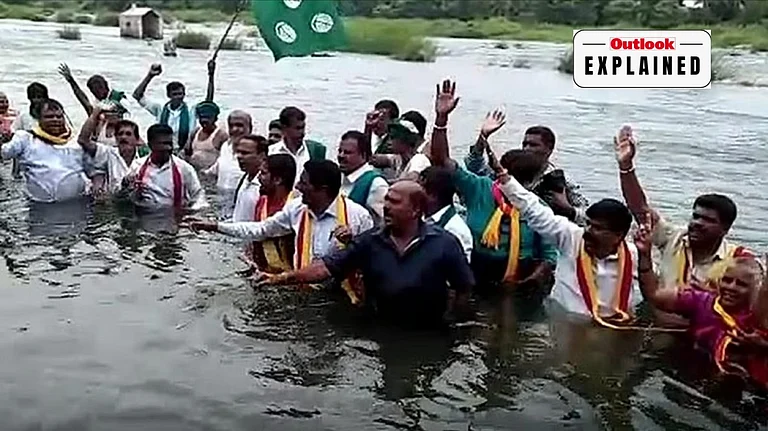
Stalin Calls For Political Consensus
Taking a swipe at the Chief Minister, Stalin said Vijay appeared to believe that a personal visit to Karnataka would enable him to "bring back the Cauvery waters".
"Perhaps the new Chief Minister of Tamil Nadu believed that if he personally visited Karnataka, he could bring back the Cauvery waters with him. Ignoring our repeated warnings, he initiated efforts to visit Karnataka," Stalin said.
According to Stalin, Karnataka later indicated there was no need for Vijay's visit after the Cauvery Water Management Authority (CWMA) directed the state to release water to Tamil Nadu.
He said this was exactly the situation that political parties and farmers' groups in Tamil Nadu had warned about.
"At least from now on, the Chief Minister should approach the Cauvery issue, an issue of survival for Tamil Nadu, through consultation and consensus," Stalin said.
Advertisement
Stalin also contrasted Vijay's approach with that of Karnataka Deputy Chief Minister D K Shivakumar, who convened an all-party meeting on 2 August.
"After telling the Tamil Nadu Chief Minister not to visit, the Karnataka Chief Minister has now convened an all-party meeting on August 2, demonstrating through his actions that political unity exists in his state," Stalin said.
He then questioned when Vijay would convene a similar meeting in Tamil Nadu.
"When will the Tamil Nadu Chief Minister convene an all-party meeting? Can it be done, or can it not?" he asked.

DMK Mouthpiece Criticises Proposed Talks
Stalin's remarks came a day after the DMK's party newspaper Murasoli criticised Vijay's proposed outreach to Karnataka.
In an editorial published on 31 July, the newspaper argued that talks would do little to safeguard Tamil Nadu's interests in the Cauvery dispute.
The editorial alleged that Vijay wanted to hold discussions only to demonstrate that his government had acted on the issue. It also remarked that a visit to Karnataka might help the Chief Minister "shoot a video in front of a dam" but would not benefit Tamil Nadu's farmers.
Advertisement
The editorial further alleged that the TVK government had failed to strongly confront the Congress government in Karnataka and accused both sides of misleading farmers through negotiations.
"The Tamil Nadu Chief Minister must refrain from holding talks with Karnataka in a manner that compromises Tamil Nadu's rights," the editorial said.
It also linked the dispute to the political relationship between the TVK and the Congress, noting that Karnataka is governed by the Congress while the Vijay government in Tamil Nadu depends on the party's support.
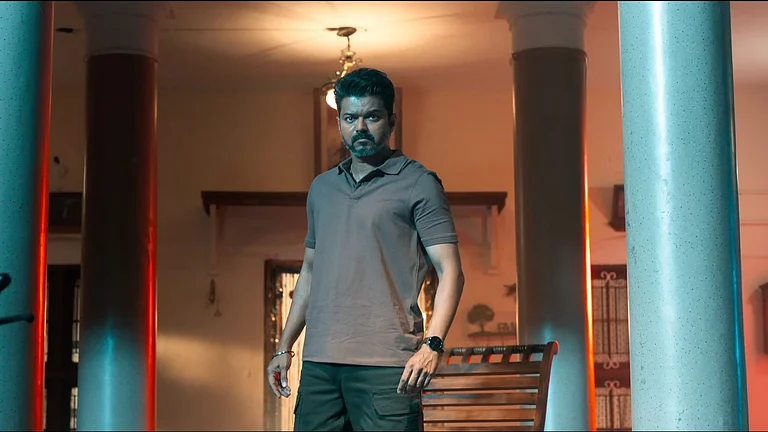
Mekedatu Project In Focus
The latest political exchanges come amid continuing differences over Karnataka's proposed Mekedatu project.
The Vijay government recently passed a resolution in the Tamil Nadu Assembly opposing the proposal.
Karnataka has maintained that the reservoir is intended to meet Bengaluru's growing drinking water needs and generate hydroelectric power. It has also argued that the project will not affect Tamil Nadu's share of Cauvery water.
Advertisement
The project proposes a reservoir across the Cauvery near its confluence with the Arkavathi River in Ramanagara district. It is designed to supply drinking water to Bengaluru and generate 400 MW of electricity.
Earlier, Vijay wrote to Prime Minister Narendra Modi seeking rejection of Karnataka's Detailed Project Report for the Mekedatu project. He reiterated Tamil Nadu's opposition to any new storage structure on the Cauvery without the consent of downstream states.
Why Is Karnataka Opposing The Release?
Karnataka has argued that deficient rainfall has left reservoirs with inadequate inflows and that priority must be given to drinking water, agriculture and livestock.
Deputy Chief Minister D.K. Shivakumar has said earlier, the State will challenge the CWRC's direction before the Cauvery Water Management Authority after consultations with the Advocate General, legal experts and senior officials.
He maintained that the "rain god has not been kind" and pointed out that the CWRC had rejected Tamil Nadu's earlier requests for water release on two occasions before issuing the present direction.
Advertisement
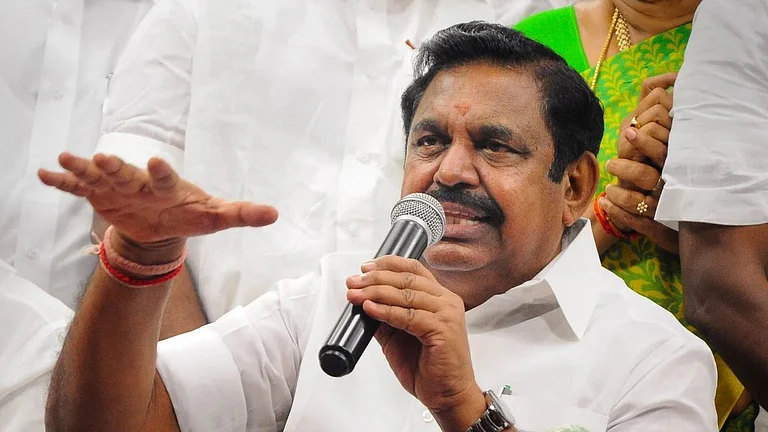
Supreme Court's 2018 Verdict
The Supreme Court's judgment of February 16, 2018 modified the Cauvery Water Disputes Tribunal's 2007 award.
The Tribunal had allocated 419 TMC of water to Tamil Nadu, 270 TMC to Karnataka, 30 TMC to Kerala and seven TMC to Puducherry, with 14 TMC reserved for environmental protection.
The Supreme Court increased Karnataka's share to 284.75 TMC while reducing Tamil Nadu's allocation to 404.25 TMC. Tamil Nadu was also permitted to extract 10 TMC of groundwater, while the allocations to Kerala and Puducherry remained unchanged.
The court also held that Karnataka's drinking water requirement must be placed "on a higher pedestal".
Published At: