Conflict Armament Research says intercepted shipments from China contained components that could support the Houthis’ efforts to assemble advanced ballistic missiles.
The components reportedly point towards a missile based on Iran’s Kheibar Shekan design, which has a reported range of around 2,000 kilometres.
The report does not establish that the Houthis have completed the missile or that the Chinese government authorised the shipments.
Yemen’s Houthis Seek Chinese Missile Components As Regional Tensions Rise: Report
Yemen’s Houthi movement is reportedly seeking Chinese-made components to assemble an advanced ballistic missile modelled on an Iranian design, raising concerns about its weapons capabilities and regional security

Summary
Yemen’s Iran-backed Houthi movement is seeking Chinese-made components to develop an advanced medium-range ballistic missile, potentially modelled on Iran’s Kheibar Shekan, according to a report released on Wednesday by Conflict Armament Research (CAR), a UK-based organisation that investigates weapons supplies in conflict zones.
The findings suggest the group is seeking to expand its ability to manufacture and assemble sophisticated weapons inside Yemen rather than relying solely on complete weapons supplied from abroad.
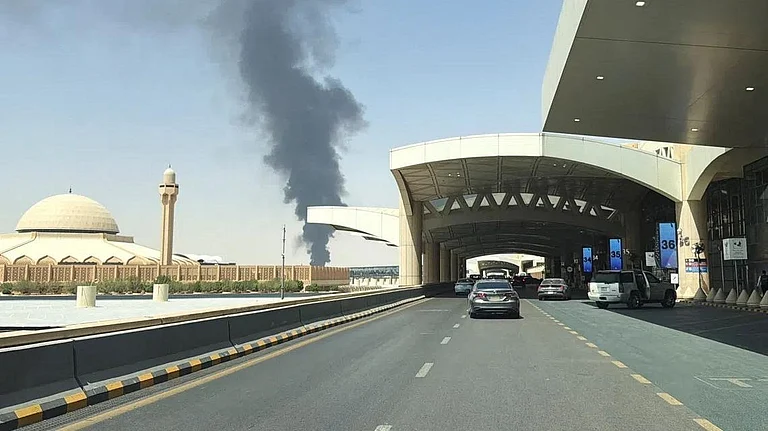
The report comes amid escalating hostilities between the Houthis and Saudi Arabia, alongside continuing tensions involving Israel. A missile based on the Iranian design could have a reported range of around 2,000 kilometres, potentially placing targets across Saudi Arabia and Israel within reach. CAR senior analyst Fabian Hinz said the components indicated a level of manufacturing ambition that researchers had not previously assumed.
What Did The Report Find?
The report draws on information released by Yemeni government authorities in July, after officials intercepted two shipments containing suspected missile components. The consignments originated in China and were intended for Hodeidah, a port under Houthi control, according to the findings reported by CAR. The seized material included stabilising fin cores, rocket motor closures with nozzle attachments, rocket motor igniters and phenolic resin, which can be used to make heat shields for missiles.
Hinz said the combination of components pointed towards an effort to assemble a missile based on the Iranian design. However, the findings do not establish that the Houthis have completed such a weapon or can independently manufacture every component required.
Experts say the group continues to depend on Iran for advanced technology and critical parts, including navigation and control systems, even as its domestic assembly capabilities expand.

What Could This Mean For Regional Security?
The reported procurement could give the Houthis greater flexibility in sourcing weapons components beyond Iran. Analysts cited by the Associated Press said the group’s supply network has increasingly involved imported parts, intermediaries and smuggling routes, allowing it to assemble more weapons locally.
The development could complicate efforts to restrict the movement of missile technology and materials into Yemen.
Advertisement
China’s embassy in Washington did not respond to a request for comment on the report, according to the Associated Press. China has previously condemned Houthi attacks on Saudi airports and called for de-escalation.
The findings also carry diplomatic implications because Beijing maintains significant economic ties with both Saudi Arabia and Iran. The report does not establish that the Chinese government authorised the shipments or that the components were supplied directly by the state.
Published At: