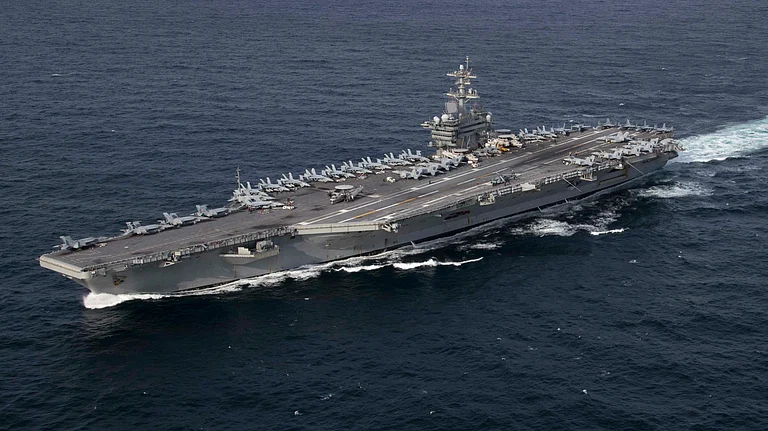
Nearly 5,000 US sailors and Marines are spending shore leave in Thailand after the USS Abraham Lincoln’s extended deployment
Pattaya’s association with US military personnel dates back to the Vietnam War, when the city became a major rest-and-recreation destination
The current port call is for rest and recuperation, while Pattaya’s old military links are again drawing attention
USS Abraham Lincoln Visit Revives Pattaya’s Long US Military Connection
Nearly 5,000 sailors and Marines from the US aircraft carrier strike group are spending shore leave near Pattaya after an extended deployment, reviving a military connection that dates to the Vietnam War.

Summary
The USS Abraham Lincoln and other ships from its carrier strike group have arrived in Thailand for a scheduled port visit, giving nearly 5,000 US sailors and Marines a chance to rest and recuperate after more than 280 days at sea. For many of them, the stop will mean time in and around Pattaya, a resort city whose association with US military personnel goes back to the Vietnam War.
The carrier arrived at Laem Chabang on Wednesday as part of the scheduled visit. Rear Admiral Robert E Loughran said the arrival offered sailors and Marines a "well-deserved opportunity" to rest and recharge while highlighting the longstanding US-Thailand alliance.
From War Base To Tourist Hub
Pattaya, about 100 km southeast of Bangkok, is now one of Thailand's best-known resort destinations, but its reputation was shaped in part by the large US military presence in Thailand during the Vietnam War.
According to AP, at the height of the war, 40,000-50,000 US service personnel were stationed in Thailand, many supporting American air operations in Vietnam. Pattaya was close to the Sattahip naval base and U-Tapao airfield, which hosted US B-52 bombers. The steady flow of US personnel helped turn what had once been a quiet fishing town into a major leisure destination.
That history also helped give Pattaya its enduring reputation as Thailand's “Sin City”, particularly because of its nightlife and sex industry. Although prostitution is illegal in Thailand, AP reported that parts of the industry continue to operate in a legal grey area.

A Different Pattaya?
Pattaya's image has changed substantially since the Vietnam War era. The city has expanded its beaches, restaurants, family attractions and other tourism infrastructure, drawing millions of visitors who have little connection to its former military role.
Advertisement
But the arrival of thousands of US military personnel has again put its old association with military tourism in the spotlight.
The city and Thai authorities have increased preparations around the visit. US Navy personnel are expected to receive reminders about Thai laws, while the Navy's Shore Patrol will work with Thai police during sailors' time ashore.
Why Pattaya Matters To The Visit
The port call is officially intended for rest and recuperation, rather than a new military operation. DVIDS said the carrier strike group arrived for scheduled port visits, while the US Navy has described the stop as an opportunity for its personnel to recover after their extended deployment.
For Pattaya, however, a large influx of sailors also carries an economic dimension. Shore leave brings spending to hotels, restaurants, shops and entertainment businesses, while local authorities must balance those benefits against concerns surrounding public order and the city's longstanding association with sex tourism.
Advertisement
The Lincoln's visit therefore brings together two very different chapters of Pattaya's history: the military presence that helped shape its international reputation and the modern resort economy that has since grown around it.
Published At: