A new book claims Donald Trump privately rejected official US tariff figures on India and China.
It happened during discussions with Commerce Secretary Howard Lutnick, questioning the accuracy of government data.
Trade tensions later escalated over India’s purchase of Russian oil before both countries announced an interim trade framework in 2026.
Trump Called US Tariff Data On India “Bulls*it Numbers”, Says NYT Book
The reported exchanges took place ahead of Trump’s “Liberation Day” tariff measures, with the president said to believe India imposed far higher duties on US goods than official estimates suggested.
Summary
US President Donald Trump privately dismissed official US tariff data on India and China as “bulls*it numbers”, according to a new book that sheds light on his approach to trade and foreign policy during the opening months of his second term.
The account appears in Regime Change: Inside the Imperial Presidency of Donald Trump, written by New York Times reporters Maggie Haberman and Jonathan Swan. It describes an exchange between Trump and US Commerce Secretary Howard Lutnick in which the president rejected tariff figures presented by his administration.
According to excerpts reported from the book, Trump disputed official data shown to him on Indian tariffs and questioned whether the figures reflected the scale of duties imposed on American goods.
“These are bulls*it numbers!” Trump said, according to the account. Lutnick replied that the figures had come from the US government.
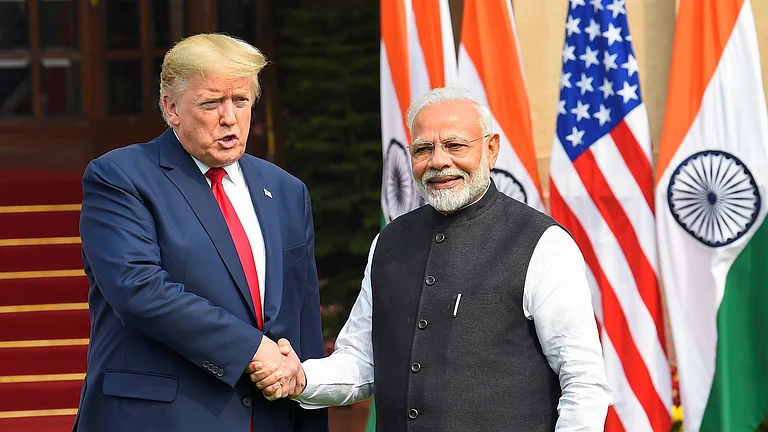
The book says Trump remained unconvinced and argued that he had not been given reliable data on tariffs imposed by major trading partners.
"Nobody has f***ing given me any numbers. Hard facts of how much China tariffs us, how much India tariffs us. You give me bulls*it numbers," Trump was quoted as saying.
The reported exchanges took place in the lead-up to Trump’s “Liberation Day” tariff push, under which he later imposed a 25 per cent tariff on Indian goods. According to the book, Trump believed India’s tariffs on US products were at least 175 per cent, if not higher.
Trade tensions between Washington and New Delhi escalated further in August 2025, when Trump accused India of "fueling Putin's war in Ukraine" through its purchases of Russian crude oil and announced an additional 25 per cent tariff, raising total duties on Indian imports to 50 per cent.
Several senior US officials have also criticised India’s tariff structure. Treasury Secretary Scott Bessent had previously described India as the "maharaja of tariffs."
Advertisement
The White House later highlighted India’s tariff regime in a fact sheet accompanying the interim India–US trade agreement, stating that India maintained some of the highest tariff levels among major economies, including average agricultural tariffs of 37 per cent and duties exceeding 100 per cent on certain automobiles.
After months of negotiations and strained ties, India and the United States announced a framework for an interim trade agreement in February 2026.

Under the proposed arrangement, Washington agreed to reduce its reciprocal tariff on Indian goods from 25 per cent to 18 per cent and withdrew the additional tariff linked to Russian oil purchases after the White House said India had committed to ending such imports.
In return, India agreed to reduce or eliminate tariffs on a range of American industrial, food and agricultural products, including dried distillers’ grains, red sorghum, tree nuts, fresh and processed fruits, soybean oil, wine and spirits.
Advertisement
However, the framework agreement has yet to be fully implemented, and both sides continue to negotiate the final terms.
Published At: