India will help restore Indonesia's 9th-century Prambanan Temple, adding a cultural dimension to a partnership that has recently expanded into defence, maritime security, trade and the Indo-Pacific.
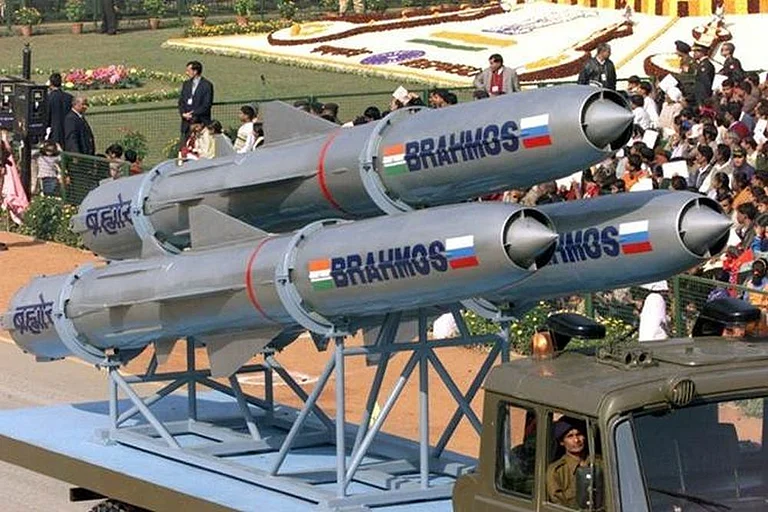
The restoration project complements broader strategic cooperation, including agreements on BrahMos and Astra missiles.
Inclusion of critical minerals, connectivity, education and digital technology, the relationship now spans both heritage and geopolitics.
Why Prambanan Matters: How Temple Restoration Is Strengthening India-Indonesia Ties
The UNESCO World Heritage Site reflects centuries of shared civilisational links between India and Indonesia, where Hindu traditions spread through maritime trade routes and blended with local cultures.

Summary
India's decision to help restore the Prambanan Temple in Indonesia goes beyond conserving an ancient monument. The initiative adds a cultural dimension to the expanding India-Indonesia partnership, which has increasingly focused on defence, maritime security and trade.
During his visit to the temple alongside Indonesian President Prabowo Subianto, Indian Prime Minister Narendra Modi highlighted the deep historical ties between the two countries, saying, "The relationship between India and Indonesia is rooted in our shared civilisational heritage and the seas that connect us." Referring to Prabowo's earlier remark that he had India's DNA in him, Modi added, "Your statement touched the hearts of Indians. And this DNA is made of mutual trust, made of shared heritage, made of shared memories."
The restoration project reflects those shared civilisational links while reinforcing cooperation beyond economic and strategic interests. India has consistently held culture as a uniting factor of diplomacy with countries. Minister of External Affairs S Jaishankar also spoke of “cultural cooperation” with FM Sugiono of Indonesia while the delegation visited New Delhi for the 8th India-Indonesia Joint Commission Meeting.
Similar heritage conservation initiatives have been undertaken by India in Cambodia and Vietnam, where the Archaeological Survey of India has restored historic temple complexes such as Ta Prohm at Angkor and the Mỹ Sơn Sanctuary.After the devastating 2015 earthquake in Nepal, India launched one of its largest overseas heritage restoration initiatives. As part of a US$50 million reconstruction package, it supported the conservation and rebuilding of 28 cultural heritage sites, including the historic Seto Machhindranath Temple and the Budhanilkantha Temple Dharamshala.
The rise of Prambanan
Prambanan was built in the ninth century during the rule of the Hindu Sanjaya dynasty in Central Java, after it regained political dominance from the Buddhist Sailendra dynasty. Historians believe King Rakai Pikatan commissioned the temple around 856 CE to mark the return of Shaivite Hindu rule, The Indian Express reported. The complex originally consisted of about 240 temples, with its central shrines dedicated to the Hindu trinity, Shiva, Vishnu and Brahma.
Advertisement
For nearly a century, Prambanan served as one of Java's most important centres of worship before the kingdom shifted its political capital to East Java. As the region was gradually abandoned, volcanic eruptions and dense vegetation buried much of the complex, leaving it forgotten for centuries.
How Hinduism reached Indonesia
Hinduism reached the Indonesian archipelago through maritime trade routes connecting India with Southeast Asia more than 1,500 years ago. UNESCO, while discussing Silk Roads, writes that Hinduism and subsequently Islam were introduced into Indonesia and Malaysia by Silk Roads merchants travelling the maritime trade routes from the Indian Subcontinent and Arabian Peninsula.
According to UNESCO, Hindu traditions merged with existing local beliefs as they spread across the Indonesian archipelago, creating distinctive religious and cultural practices. Although Islam later became Indonesia's dominant religion, Hindu-Buddhist influences remain visible in the country's literature, temple architecture, performing arts and epics such as the Ramayana and Mahabharata, which continue to be performed and celebrated today. As per Britannica, the earliest records of Indonesian history show that the archipelago was deeply influenced by Indian religious traditions. Early kingdoms centred in Java and Sumatra embraced different forms of Hinduism as well as Theravada and Mahayana Buddhism. By the 9th century CE, both faiths coexisted as court religions, with Shiva and Buddha often regarded as different manifestations of the same supreme spiritual reality.
Advertisement
In independent Indonesia, Hinduism also underwent institutional reforms to meet the country's constitutional requirement that officially recognised religions worship a single supreme deity. Balinese scholars articulated the concept of Sang Hyang Widhi Wasa, enabling Hinduism to receive formal state recognition in 1962.
Why Prambanan became a UNESCO site
UNESCO designated the Prambanan Temple Compounds as a World Heritage Site in 1991 because of their exceptional cultural, architectural and historical significance. The complex is considered the finest surviving example of Hindu temple architecture in Indonesia and among the most important in Southeast Asia.
The temples showcase intricate stone carvings depicting scenes from the Ramayana, engineering techniques and a distinctive blend of Hindu and Buddhist artistic traditions. The site also reflects a period in Java's history of religious freedom, making it an important symbol of religious coexistence and cultural exchange.
Advertisement
What this means for India-Indonesia relations
The restoration of the temple adds another layer of cultural dimension to a relationship that has increasingly been driven by strategic and economic interests. Over the past decade, India and Indonesia have expanded cooperation in defence, maritime security, digital technology, trade, critical minerals and the Indo-Pacific.
The heritage project complements these partnerships by highlighting the shared civilisational roots between the two countries. During Modi's visit, the countries decided to trade in India’s BrahMos and Astra missile, along with cooperation in connectivity, education, healthcare, space, agriculture and critical supply chains. Together, these developments suggest the relationship is evolving into a comprehensive partnership that combines strategic cooperation with deeper people-to-people and cultural engagement.
Published At: