Pedro Sánchez called snap Spanish elections for 29 November.
Parliament rejected government decrees aimed at protecting tenants.
His minority coalition government struggles without a parliamentary majority and budget approval.
Spain’s PM Pedro Sánchez Calls Early Election After Housing Law Fails To Pass
Spain's Prime Minister has called for snap elections in the country after the housing law failed in parliament

Summary
Spanish Prime Minister Pedro Sánchez has called for an early election on 29 November after recent defeats for his government, after right-wing parties defeated the emergency legislation of his government that aimed at addressing the country's housing crisis.
Sánchez used a television address to announce the snap elections after the parliament rejected the laws proposed by the government to protect tenants in the rental market. In his address, he said, “A glance at the horizon shows us that the world is in a very complex era of transformation and transition. It’s a time of great tension, of climate emergency, and of social and technological changes – including highly disruptive advances in artificial intelligence.”
He further added, “It is, therefore, a time of great dangers, but also – if we know how to seize the moment – of great opportunities. You, the Spanish people, must decide what role you wish to play in this era, and what role you want Spain to play as well,” according to the Guardian.
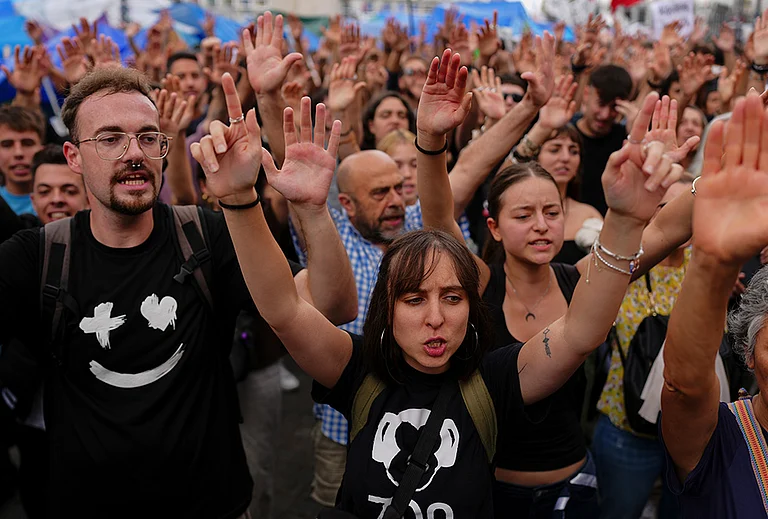
Earlier, nationwide protests started in Spain, demanding housing reform after the eviction of an 87-year-old woman on September 23 from her house, after she was unable to pay her rent after a sharp rise in rents. In response, the left-wing coalition government came with two decree laws in an effort to defuse the protests.

The first decree aimed to stop evictions of vulnerable tenants until 2030. It also adds a two-year extension for rental leases set to end before 2028, higher taxes on tourist apartments and limits on buying residential property by what the government calls "vulture funds".
The second decree drew more heat. It set out automatic renewal of rental contracts, a long-standing demand for many on the left and for the tenants' organisation Sindicato de Inquilinas.
Advertisement
Reason Behind The Early Elections
Sánchez's left-wing coalition government comprises his ruling Socialist party and junior partner the Sumar alliance, and it does not have a majority in parliament. The general elections in Spain were due in the summer of 2027 at the latest.
His coalition with the small left-wing Sumar alliance has struggled in parliament since he returned to power after the inconclusive general election in July 2023 and sealed a controversial deal with Catalan pro-independence parties.
Sánchez’s government has failed to get a budget passed for the past three years, which has resulted in various economic constraints for his government. Corruption allegations have also hit his party and people close to him. His government has faced lasting criticism over its response to the summer mass crossing into Spain’s North African enclave of Ceuta.
The decision to hold snap elections is being seen as a practical step by a veteran political risk-taker. The move puts immediate focus on the survival of his minority government in Spain. Sánchez has been in office since 2018.
Advertisement
Published At:
Tags