India remains Nepal's largest trade and economic partner despite growing regional competition
Nepal is expanding ties with China through trade, investment and infrastructure cooperation
Kathmandu pursues a balanced foreign policy while diversifying global economic partnerships
India is strengthening connectivity, energy and diplomacy under its Neighbourhood First policy
Outlook Explains | Why India Can No Longer Take Nepal For Granted
Nepal is broadening its diplomatic and economic partnerships while maintaining close ties with India. Official data and recent engagements show New Delhi remains Kathmandu's closest partner, but it now operates in a more competitive strategic environment

Summary
For much of the post-Independence period, India's relationship with Nepal rested on geography, history and deep economic integration. The two countries share an open border of nearly 1,800 kilometres, extensive cultural and religious links, close security cooperation and a trade relationship that has made India Nepal's largest economic partner for decades.
Those fundamentals remain unchanged. However, Nepal's foreign policy has evolved alongside changing regional geopolitics. According to Nepal's Ministry of Foreign Affairs, Kathmandu pursues an "independent, balanced and diversified" foreign policy aimed at expanding relations with neighbouring countries, major powers and development partners while safeguarding its sovereignty and national interests.
India's Ministry of External Affairs (MEA) similarly describes Nepal as a priority under its Neighbourhood First policy, emphasising connectivity, energy cooperation, trade, development partnerships and regular high-level political engagement. The MEA's 2024 Annual Report notes that bilateral cooperation has expanded across railways, digital infrastructure, energy, trade and cultural exchanges.
The result is not a weakening of India-Nepal ties, but a shift in the environment in which those ties operate.
India's Dominant Position in Nepal’s Economy
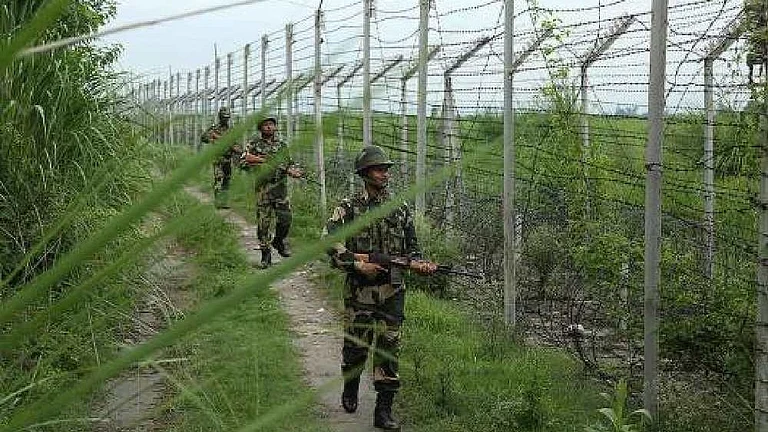
India continues to occupy a dominant position in Nepal's economy.
According to the World Trade Organization's Third Trade Policy Review of Nepal, merchandise trade reached US$13.1 billion in FY2023/24. India accounted for 67.7% of Nepal's merchandise exports and 62.6% of its imports, remaining by far Nepal's largest trading partner.
Data from India's Directorate General of Commercial Intelligence and Statistics (DGCI&S) show bilateral trade increased from US$7.51 billion in FY2020/21 to US$8.61 billion in FY2024/25. Nepal ranked as India's fourteenth-largest export destination during the period.
Beyond trade, India's role extends to transit access, financial integration and energy cooperation. Nepal's third-country trade relies primarily on Indian ports, including Kolkata and Visakhapatnam, while the Nepali rupee remains pegged to the Indian rupee.
Energy cooperation has also deepened. During the Seventh India-Nepal Joint Commission meeting in January 2024, both countries advanced a long-term power trade framework under which Nepal aims to export up to 10,000 MW of electricity to India over the next decade.
Advertisement
China's Expansion of Trade and Relations
While India remains Nepal's principal partner, China's economic footprint has expanded steadily.
The WTO reports that China's share of Nepal's imports increased from 14.6% in FY2018/19 to 18.9% in FY2023/24, making it Nepal's second-largest import source.
Investment patterns show a similar trend. According to Nepal Rastra Bank data cited in the WTO review, India accounted for 35% of its inward foreign direct investment stock as of mid-July 2023, while China accounted for 12%, placing it second among foreign investors.
Infrastructure cooperation has also accelerated. In December 2024, Nepal signed the Framework for Belt and Road Cooperation with China, covering transport connectivity, infrastructure, energy, customs, finance and trade. The agreement builds on the 2017 Belt and Road Initiative memorandum and forms part of Nepal's broader effort to diversify international economic partnerships.
Nepal's own foreign policy report highlights continued high-level engagement with Beijing, including diplomatic consultation mechanisms, official visits and economic cooperation alongside its relationship with India.
Advertisement
The Balancing Act
Rather than replacing one partner with another, Nepal has increasingly sought to engage multiple partners simultaneously.
Its Foreign Affairs Report states that Nepal's diplomacy is guided by sovereign equality, non-alignment and mutually beneficial cooperation. Alongside India and China, Kathmandu has expanded engagement through regional organisations including BIMSTEC and SAARC while strengthening ties with other development partners.
The approach is also visible in economic policy. Nepal's 2023 Trade Integration Strategy identifies market diversification and expanding exports beyond traditional destinations as national objectives ahead of the country's graduation from Least Developed Country status in 2026.
Regional energy cooperation reflects this broader approach. In October 2024, Nepal, India and Bangladesh signed a tripartite arrangement allowing Nepal to export 40 MW of electricity to Bangladesh through Indian transmission infrastructure, marking Nepal's first electricity exports beyond India.
How India Reacts
India has responded by placing greater emphasis on sustained engagement rather than relying solely on historical ties.
Advertisement
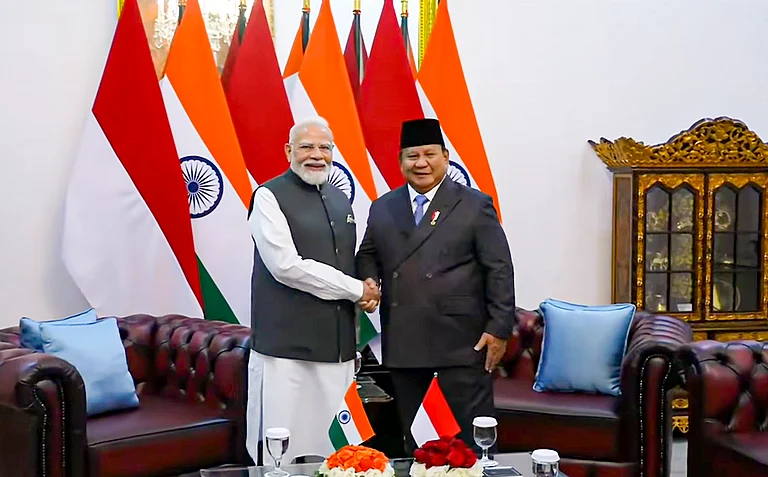
The MEA's Annual Report highlights frequent leadership-level interactions, including meetings between Prime Minister Narendra Modi and successive Nepali leaders, alongside regular ministerial dialogue.
That engagement has continued in 2026.
During Nepal Foreign Minister Shisir Khanal's official visit to India in June, External Affairs Minister S Jaishankar reviewed bilateral cooperation across trade, transit, connectivity, development partnerships, energy and people-to-people exchanges. Both sides agreed to deepen cooperation in digital technology, innovation, capacity building and cross-border legal cooperation while reaffirming the importance of the India-Nepal partnership.
Trade arrangements also remain under discussion. Nepal has sought greater policy flexibility through proposed amendments to the bilateral Trade Treaty, while officials from both countries continue negotiations through established institutional mechanisms.
What Has Changed
Official data indicate that India continues to hold advantages that no other partner currently matches. Geography, the open border, transit access, power trade, financial integration and people-to-people links continue to anchor the bilateral relationship.
Advertisement
At the same time, Nepal's own policy documents, WTO trade data and recent diplomatic engagements point to a broader shift. Kathmandu is expanding its external partnerships while maintaining close ties with New Delhi, and China has become a more significant economic actor through trade, investment and infrastructure cooperation.
For India, the available evidence suggests that historical and cultural ties remain a strong foundation, but influence increasingly depends on sustained economic cooperation, timely delivery of connectivity projects and continued diplomatic engagement under the Neighbourhood First policy.
Published At: