When a missile struck a girls’ elementary school killing 165, many Iranian women did not view it as a step toward liberation.
They saw it as the violent appropriation of a struggle they had built slowly, dangerously, and entirely on their own terms.
Women in Iran feel those who fail to protect women in their own societies cannot be trusted to impose “liberation” elsewhere.
Not In Our Name: Iranian Women Reject Liberation By Bombs
Women in Iran believe that liberation of their homeland must come through popular struggle alongside progressive forces on Iranian soil; any outside intervention violates Iran’s sovereignty

Summary
“He should have first corrected his own vices and then given us advice...”
More than a century ago, Iranian activist Bibi Khanoom Astarabadi scorned men who tried to dictate women’s behaviour while ignoring their own failings. The line today resonates in a different context. Leaders and elites in the United States who claim moral authority to “save” women abroad are doing so in the light of the Epstein scandal, which proves they fail to protect women at home.
More than a century before the world debated the “liberation” of Iranian women through airstrikes, trailblazing Astarabadi was already waging a quieter war of her own. In the late 1800s, she sat at a small wooden desk in Tehran and composed The Vices of Men (Maayib al-Rijal), a blistering satire written as a direct rebuttal to a misogynistic text called The Education of Women, which instructed that women must be silent and obedient.
The manuscript circulated among a small readership during her lifetime but was not formally published until 1992. It scandalised Qajar elites and positioned Astarabadi as one of Iran’s earliest feminist intellectuals. More importantly, she established a genealogy of resistance, built through literacy, intellect and defiance. No weapons or foreign intervention was required. She would go on to found one of the first girls’ schools in Tehran, Dabistan-e-Doshizegan (The School for Girls).”
When Iranian women today narrate their political struggle, they begin with Khatoon. They don’t talk about foreign generals or televised speeches by world leaders. Their story continues through constitutional-era women who organised literacy classes, some clandestinely, in the face of official hostility. Through underground activists of the 1970s and journalists who published Zanan (Women), Iran’s influential women’s magazine founded by Shahla Sherkat in 1992 that was shuttered by the government in 2008. And through the organisers behind the One Million Signatures campaign, which from 2006 demanded an end to discriminatory laws.

Political prisoners, such as Nobel Peace Prize laureate Narges Mohammadi, sentenced to an additional seven years in February 2026, weeks before the war, after conducting a hunger strike in detention, continued advocacy from inside solitary confinement. And the students who, in 2022, filled their school hallways with the chant Zan, Zendegi, Azadi after the killing in morality-police custody of 22-year-old Mahsa Jina Amini.
Advertisement
This history is why, when a missile struck a girls’ elementary school in Minab, Hormozgan province, on February 28, killing 165 people, the vast majority girls aged seven to 12, alongside several staff members, many Iranian women did not view it as a step toward liberation. They saw it as the violent appropriation of a struggle they had built slowly, dangerously, and entirely on their own terms.
A vigil captured that sentiment with a row of dust-covered school shoes, a mountain of school bags, mothers holding photographs of their children, and a woman’s voice saying: “We resisted repression. We reject bombardment. Do not bomb our future in our name.”
A sharper question followed: Who decided liberation would come by missile? Iranian activists who see the contradiction clearly say that those who fail to protect women in their own societies cannot be trusted to impose “liberation” elsewhere.
When foreign commentators described Khamenei's assassination by US-Israeli strikes as a “feminist intervention” or a “necessary shock” for women’s rights, Iranian scholars were quick to call the framing intellectually dishonest.
Advertisement
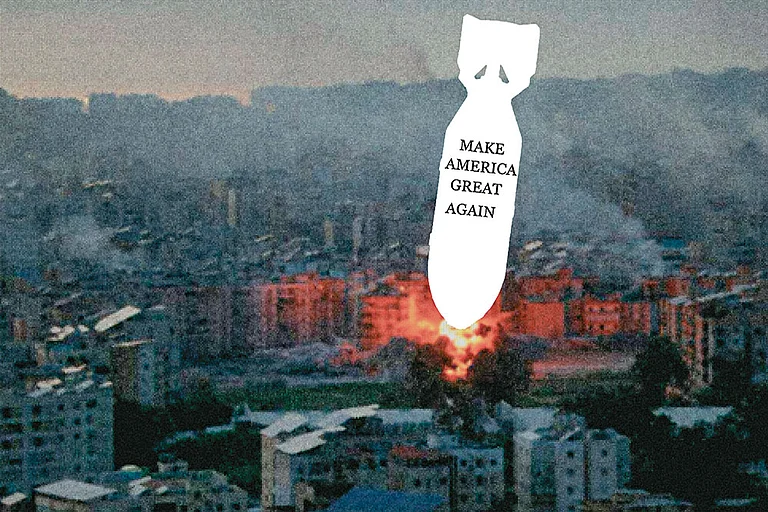
Pattie Ehsaei, an Iranian-American women’s-rights advocate, says Iranian women are not asking to be saved by bombs and are insisting on their agency and the right to define what liberation means for themselves: “Removing one man does not remove the institutions, the security apparatus, the courts, the morality-policing logic, or the culture of impunity.”
Historians such as Janet Afary, whose The Iranian Constitutional Revolution, 1906–1911: Grassroots Democracy, Social Democracy, and the Origins of Feminism documents women’s political organising during Iran’s constitutional period, and Afsaneh Najmabadi, whose Women with Mustaches and Men without Beards: Gender and Sexual Anxieties of Iranian Modernity rewrites the history of Iranian modernity through the lens of gender, have shown that Iranian women were politically active long before Western suffrage movements gained momentum, organising schools, publishing newspapers, and pushing for legal reform in the early 20th century.
These traditions continued after the 1979 Revolution, despite intense state pressure, through activism, organising, and journalism.
Advertisement
This grounding matters because it shapes how Iranian women interpret foreign claims of rescue: their struggle, rooted in literacy and civil society, does not map neatly onto airstrikes conducted in their name.
Laydaan Khanom, an activist now based in Germany, says: “The US–Israeli strikes felt like a profound violation of the political agency women had spent decades cultivating. A rape of the country through missiles fired from US bases. Iranian activists have been fighting for a better Iran. This attack disempowered us and removed our agency.”
The destruction of a school revealed what feminist ethicists have long argued: that gendered violence during wartime is not an unfortunate side effect but a predictable outcome. “What exactly is being liberated?” a woman at the vigil asked. “Girls were killed in the name of freeing women.”
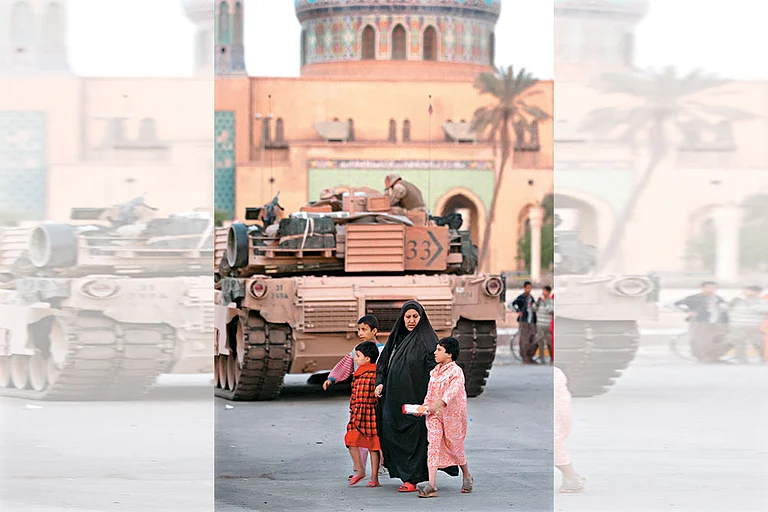
Aida Ashouri, a Los Angeles-based Iranian attorney, said: “They bombed hospitals, schools, and places of worship in Gaza to devastate the population. The same strategy is being played out here. Bombing a girls' school dehumanises the lives of children and families.”
Advertisement
She rejects the idea that opposing the Islamic Republic requires accepting foreign violence: “People protest their governments everywhere. That doesn’t mean they want their country bombed under the guise of salvation.”
Ehsaei added another layer: “When a girls’ school is hit, you cannot talk about liberation in the abstract. Mothers are identifying their children. Families are shattered. A generation absorbs terror as politics.”
Imperial Feminism and ‘Saving Muslim Women'
Iranian women recognise the rhetoric surrounding the strikes because they have seen it used before in Afghanistan, Iraq, Libya, Syria, Yemen, Sudan, and Gaza.
Feminist scholars such as Lila Abu-Lughod have long warned about the narrative of “saving Muslim women.” In Do Muslim Women Need Saving? she argues that Western governments often invoke women’s rights to legitimise military intervention in Muslim-majority societies.

Chandra Talpade Mohanty, whose foundational 1984 essay Under Western Eyes critiques the colonial assumptions embedded in Western feminist scholarship about women in the Global South, and Gayatri Chakravorty Spivak have shown that Western powers frequently deploy gendered narratives to justify intervention.
Essayist Teju Cole has named the same dynamic in his concept of the “white saviour industrial complex,” arguing that Western intervention frames those it claims to help as passive recipients of others’ goodwill.
Spivak famously captured the colonial template in her essay Can the Subaltern Speak? as “white men saving brown women from brown men”, describing how colonial governments cast themselves as protectors of native women to legitimise domination.
“Iranian women are treated as if we have no agency,” Ashouri said. “It’s Orientalist and demeaning. It creates a narrative that we are helpless, which is not reality.”
And as Jasmine put it: “Khamenei was a dictator. But the U.S. and Israel are not and will never be liberators. Iranians deserve the autonomy to overthrow their regime on their own terms.”
The rhetoric of rescuing women abroad has repeatedly clashed with the realities of gender inequality at home. The US, for example, is still unravelling the Epstein network, an emblem of how deeply institutions can fail to protect vulnerable women even in a country that claims global moral leadership.
“When governments struggle to protect women at home,” says Jasmine, “their claims to save women abroad become difficult to take seriously.”
Inside Iran, the Democratic Organisation of Iranian Women (DOIW), founded in the mid-20th century and among the country’s longest-standing women’s organisations, says that the liberation of their homeland must come through popular struggle alongside progressive forces on Iranian soil. Any outside intervention violates Iran’s sovereignty.
This aligns with an established principle in feminist peace research: sustainable change requires strong local institutions, legal reform, and civil society, not militarised intervention.
Iranian women are not a monolith, and their struggles vary across ethnicity, class, and geography. It should also be acknowledged that the Iranian diaspora is itself divided. Articulating a vision shared across Iran’s feminist networks, Ehsaei says, adding, “It is women who absorb the shock. That is the truth behind every strike and sanction.”
“We want an Iran where women have full legal personhood, bodily autonomy, equal marriage and divorce rights, equal inheritance and custody rights, and protection from violence. But sustainable change means independent courts, rule of law, free media, accountable security forces, not airstrikes,” she adds.
“Just, do not bomb our future in our name.”
Published At: