Matthew Van Dyke has promised to disclose “shocking details” of his imprisonment in India, claiming that his detention alongside six Ukrainians was part of Russia's war against Ukraine.
The NIA arrested the seven foreigners in March 2026, alleging that they travelled through Mizoram into Myanmar to train ethnic armed groups in drone warfare.
The agency did not retain UAPA charges in its September chargesheet, allowing the seven accused to secure default bail after around six months in custody, although further investigation continues.
Matthew VanDyke Promises ‘Shocking Details’ Of Imprisonment In India, Alleges Link To Russia's War
American national Matthew Van Dyke has promised to reveal details of his six-month imprisonment in India, alleging that his arrest alongside six Ukrainians was connected to Russia's war against Ukraine, after the NIA dropped UAPA charges in its September chargesheet

Summary
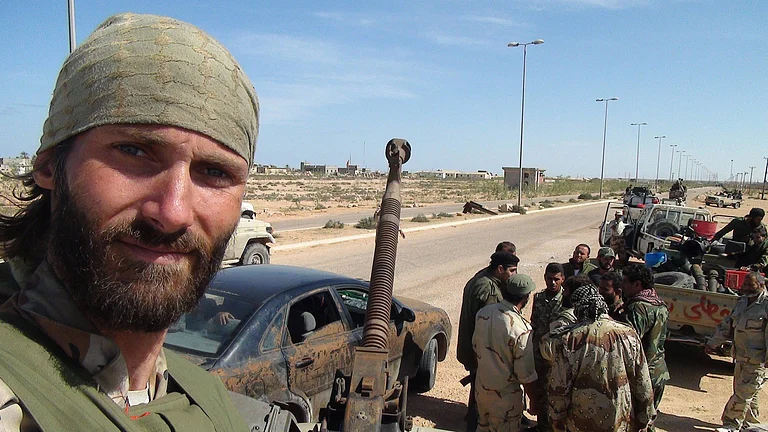
American national Matthew Van Dyke, who spent more than six months in an Indian prison alongside six Ukrainian nationals in a case investigated by the National Investigation Agency (NIA), has promised to reveal what he described as “shocking details” of his imprisonment, alleging that their incarceration was part of Russia's war against Ukraine.
In a post on X on Monday, Van Dyke wrote: “For over 6 months, India imprisoned several Ukrainians and I. This was part of Russia’s war against Ukraine. I will reveal shocking details about this story over the next few months in both posts and media interviews.” He added that he would disclose more about the case in a series of posts and interviews. His allegation about Russia's involvement has not been independently established.
Van Dyke's statement comes weeks after he and the six Ukrainians were released on default bail following the NIA's decision not to retain charges under the Unlawful Activities (Prevention) Act (UAPA) in its September chargesheet. The agency, however, has said that its investigation into the alleged terror-related offences remains open.
The development also follows a report by ThePrint that Van Dyke had submitted an affidavit to the US Embassy alleging that he was assaulted inside Delhi's Tihar Jail and denied timely medical attention. The allegations have not been independently verified.

Why Did NIA Arrest Matthew Van Dyke And Six Ukrainians?
The NIA arrested Van Dyke at Kolkata airport and the six Ukrainian nationals at airports in Delhi and Lucknow on March 13, 2026. The agency alleged that the group entered India's northeastern region without the required permits, travelled through Mizoram and crossed into neighbouring Myanmar.
According to the NIA's initial allegations, the accused were involved in training Myanmar-based ethnic armed groups in drone warfare, including drone operations, assembly and jamming technology. The agency also alleged that they facilitated the movement of drones and other equipment from Europe to Myanmar. The arrests were made under provisions of the UAPA, including Section 18, which deals with conspiracy to commit terrorist activities.
Advertisement
However, in its chargesheet filed on September 8, the NIA invoked only Sections 21 and 23 of the Immigration and Foreigners Act, 2025, relating to immigration and foreigners-related offences. The agency did not retain the UAPA provisions in that chargesheet, while informing the court that further investigation into the alleged terror-related offences was continuing.

NIA Drops UAPA Charges, Seven Foreign Nationals Get Bail
After spending around six months in custody, Van Dyke and the six Ukrainians were granted default bail on September 18. The release followed the filing of the chargesheet without the UAPA provisions within the statutory period.
Van Dyke subsequently returned to India for a court hearing on October 23. The special NIA court allowed him to remain in the United States until February 24, 2027, while granting the agency additional time to investigate his alleged involvement in the case.
Advertisement
Published At: