Israel marks three years since the Hamas-led October 7 attack that killed about 1,200 people and saw 251 taken hostage.
A US-backed ceasefire has reduced the intensity of the Gaza war, but Hamas disarmament, Israeli withdrawal and reconstruction remain unresolved.
Netanyahu faces his first national election since the attack, with security, Gaza and accountability among the issues shaping the campaign.
Israel Marks October 7 Anniversary of Hamas Attack as Netanyahu Faces Crucial Election Test
Israel is marking three years since the October 7, 2023 Hamas attack as Prime Minister Benjamin Netanyahu faces a crucial parliamentary election on October 27 amid unresolved issues over Gaza, security and accountability

Summary
Israel on Wednesday marked the third anniversary of Hamas’ October 7, 2023 attack as the country entered a politically charged period ahead of a parliamentary election that could determine Prime Minister Benjamin Netanyahu’s political future and influence the next phase of the Gaza conflict.
The anniversary comes with the war’s most intense fighting reduced after a US-backed ceasefire, but Gaza’s humanitarian crisis remains unresolved and key elements of the peace plan have stalled. Israel is due to vote on October 27, in the first national election since the October 7 attack.
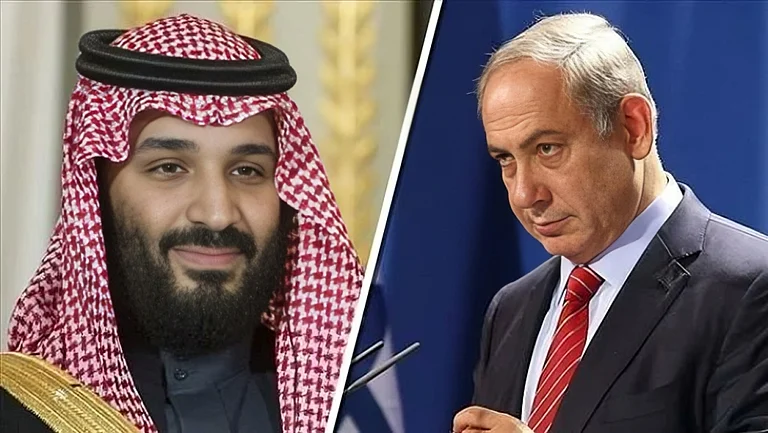

Israel Marks October 7 Anniversary As Election Nears
Hamas-led militants killed about 1,200 people, most of them civilians, and took 251 hostages during the October 7 assault, according to Israeli figures. The attack triggered Israel’s military campaign in Gaza, which has killed more than 74,000 Palestinians, according to Gaza health authorities, and left much of the territory devastated.
A US-backed ceasefire reached in October 2025 secured the return of the remaining living Israeli hostages in exchange for Palestinian prisoners and detainees, while the remains of deceased hostages were subsequently returned. Hundreds of thousands of displaced Palestinians also returned to northern Gaza as Israeli forces pulled back to a designated “yellow line”.
However, the next stage of the plan has largely stalled. Hamas has not disarmed, an international stabilisation force has yet to deploy and a proposed Palestinian technocratic administration has not taken effective control of Gaza.
Reuters reported that Israeli forces still control about two-thirds of Gaza, while more than 1,400 Palestinians have been killed since the ceasefire amid continued Israeli military activity. Reconstruction also remains limited, with a $2.45 billion rebuilding plan announced against an estimated $71.4 billion needed over a decade.

The Israeli military campaign has also taken a heavy toll on Palestinian civilians. UNICEF said at least 21,700 children had been reported killed in Gaza as of June 30, 2026, with another 45,000 children injured. The UN has said more than 21,000 children were killed in Israeli attacks in Gaza between October 7, 2023 and June 2026, based on figures from Gaza’s Health Ministry.
Advertisement
Violence has continued despite the ceasefire. According to Gaza’s Health Ministry, 1,431 Palestinians had been reported killed and 5,026 injured between the announcement of the ceasefire on October 10, 2025 and September 30, 2026, OCHA reported. UNICEF separately said at least 277 children had been reported killed in Gaza since the ceasefire.
October 27 Election Puts Netanyahu Under Pressure
The anniversary is unfolding against the backdrop of the October 27 election, with Netanyahu seeking another term after facing sustained criticism over the October 7 security failure and his government’s handling of the war.
Opposition leader Gadi Eisenkot’s Yashar party has emerged as a strong challenger in recent polling, although neither major political bloc appears close to securing the 61 seats needed to form a government on its own. The election could therefore produce another difficult coalition-building process.
The political contest is also tied to the future of Gaza and the West Bank. A change of government could alter Israel’s approach to reconstruction, settler violence and international pressure, although it would not necessarily mean a fundamental shift on Palestinian statehood or the occupation.
Advertisement
For Netanyahu, the election will test whether the security concerns and political loyalties intensified by October 7 can outweigh demands for accountability over the attack.
Three years after the assault, Israel is therefore confronting two overlapping questions: how to remember the dead and reckon with the failures of October 7, and what political direction voters want the country to take next.
Published At: