Pakistan mediated US-Iran talks while border conflict with Afghanistan intensified
UN documented hundreds of Afghan civilian casualties from Pakistani cross-border strikes
Pakistan cites TTP threats as justification for military operations in Afghanistan
Diplomatic s
uccess contrasts with worsening regional security and terrorism challenges
How Pakistan Brokered Peace While Fighting Conflict Along Its Western Border
Islamabad spent the first half of 2026 cultivating a reputation as the world's indispensable diplomatic back channel. The data from its western border, compiled by the United Nations, suggests the image requires some qualification

Summary
On April 8, 2026, US President Donald Trump announced a two-week ceasefire with Iran. The war, which had begun with US and Israeli strikes on February 28, had shut the Strait of Hormuz, sent oil markets into turmoil, and killed thousands. The ceasefire was brokered by Pakistan.
Within days, US Vice President JD Vance flew to Islamabad with special envoys Steve Witkoff and Jared Kushner for face-to-face talks with Iran's parliamentary speaker Mohammad Bagher Ghalibaf and Foreign Minister Abbas Araghchi. The Pakistani mediating team was led by Prime Minister Shehbaz Sharif, Field Marshal Asim Munir, and Deputy Prime Minister and Foreign Minister Ishaq Dar, the highest-level direct engagement between Washington and Tehran since the 1979 Islamic Revolution.
Iran's Ambassador in Islamabad was explicit about why Pakistan had been chosen. "Tehran would do talks in Pakistan and nowhere else," he said, "because we trust Pakistan."
The talks in Islamabad ran for 21 hours across April 11 and 12. They ended without a deal. But the ceasefire held, was extended, and on June 17, the US and Iran signed a memorandum of understanding for a broader peace agreement, with Pakistan's mediation acknowledged by both sides as central to reaching that point.
Pakistan had achieved something no other country had: it brought Washington and Tehran into the same room, under the same roof, for the first time in nearly five decades. For a country that, as the Council on Foreign Relations noted in April, had long been viewed as a pariah state associated with political instability, support for terrorist groups, and military rule, the contrast with its new diplomatic profile was striking.
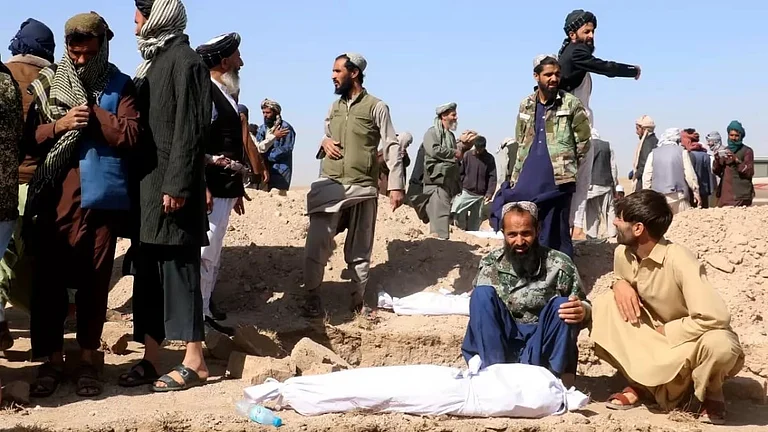
Between January 1 and March 31, 2026, the United Nations Assistance Mission in Afghanistan (UNAMA) documented a total of 372 civilians killed and 397 injured in Afghanistan as a direct result of cross-border armed violence involving Pakistani military forces. Of 95 documented incidents, 94 were attributed to Pakistani security forces and one to Afghanistan's de facto forces.
Advertisement
The leading cause of civilian casualties was airstrikes, accounting for 64% of deaths and injuries. The provinces most affected were Kabul (55%), Kunar (13%) and Paktika (11%).
On February 21, Pakistani military forces conducted airstrikes in Nangarhar and Paktika provinces, killing 13 civilians and wounding seven, including children. The Ministry of Information and Broadcasting stated the strikes targeted Tehrik-e-Taliban Pakistan (TTP) and Islamic State Khorasan Province locations. The de facto Afghan authorities responded on February 26 by announcing "extensive offensive operations."
Pakistan formally launched Operation Ghazab lil-Haq (Righteous Fury) the same day, with airstrikes the following morning in Kabul and Paktika killing 14 civilians and injuring 14.
The Omid Hospital Strike
On the night of March 16, Pakistani military forces struck the Omid Drug Rehabilitation Hospital in the PD9 area of Kabul city. The facility treated patients for drug addiction.
UNAMA visited the site, met with survivors, eyewitnesses, healthcare workers, and staff of the Kabul Legal Medical Department. Based on its investigation, three airstrikes impacted the facility. The first struck the mosque and sleeping areas. The second hit a food storage area and sleeping quarters. The third impacted the vocational training wing, causing a large fire. The strikes occurred at the close of tarawih evening prayers, when patients were leaving the mosque.
Advertisement
UNAMA independently verified at least 269 deaths and 122 injuries as a result. The vast majority were patients. The mission noted the real figure may be significantly higher: patient records were destroyed in the attack, several bodies could not be identified due to the nature of injuries, and some families took their dead directly for burial without official registration. The de facto authorities held two mass funeral ceremonies for unidentified victims.
An Eid ceasefire was announced on March 18. During the pause, Pakistani military forces continued cross-border fire in Kunar province, killing and injuring civilians. Firing continued after the ceasefire concluded.
"We urge Pakistan and the de facto Afghan authorities to commit to a permanent ceasefire, resolve the root causes of conflict, and ensure accountability for violations of international law," UN experts said in a statement in March, according to the Office of the United Nations High Commissioner for Human Rights.
Advertisement
A Vicious Cycle
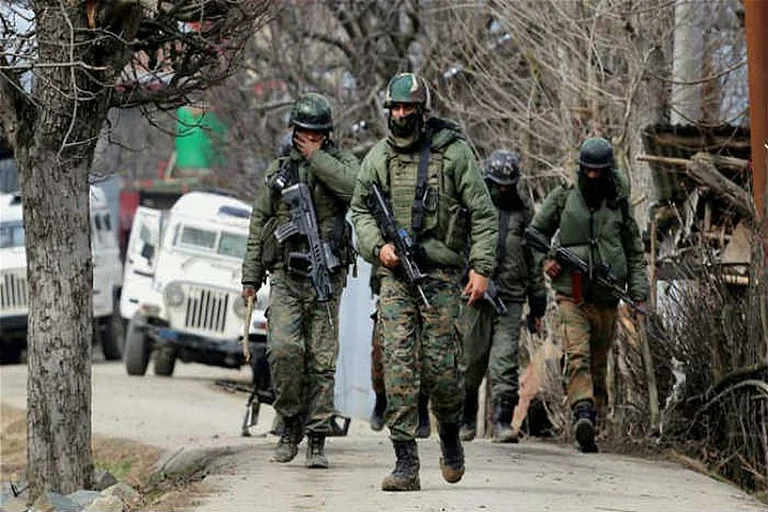
The cycle has not broken since. On June 29, Pakistani security forces killed 29 TTP militants in border strikes following a coordinated attack on the Sindh Rangers headquarters in Karachi, in which militants used an explosives-laden vehicle and gunfire to kill at least three paramilitary personnel.
On the same day, at least 36 civilians were killed and over 160 injured in Pakistani airstrikes in Paktia and Paktika provinces in eastern Afghanistan, according to Taliban officials. Pakistan stated the strikes targeted TTP positions.
Notably, Karachi, Pakistan's financial capital, has seen a resurgence of militant attacks, with the Sindh Rangers headquarters strike the latest in a series of coordinated assaults on the city's security infrastructure.
The Domestic Picture
Pakistan's security situation internally is equally unambiguous. In 2025, the country recorded the highest score on the Global Terrorism Index (GTI) for the first time, making it the country most impacted by terrorism globally. Pakistan recorded 1,139 terrorism deaths and 1,045 incidents in 2025, its worst toll since 2013.
Advertisement
TTP, the primary militant group Pakistan accuses Afghanistan of harbouring, was the third deadliest terrorist organisation in the world in 2025. GTI 2026 revealed that it was also the only one among the four deadliest groups to record an increase in deaths that year.
As of May 17, Pakistan had recorded 1,408 terrorism-related fatalities, including 447 security force personnel, 672 militants and 289 civilians, as per the South Asia Terrorism Portal. During the corresponding period in 2025, the figure stood at 1,366, meaning 2026 is tracking above the previous year's already elevated toll.
Pakistan attributes the surge to TTP operating from Afghan territory. Afghanistan's de facto government denies this, accusing Pakistan of using counterterrorism as a justification for strikes on Afghan civilians.
The Question Which Diplomatic Applause Leaves Unanswered
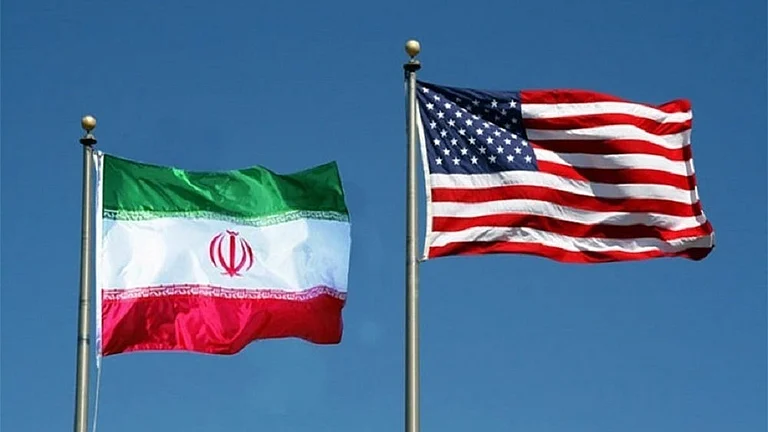
Pakistan's emergence as the US-Iran mediator is a genuine diplomatic achievement. Islamabad spent months in quiet engagement, shuttled proposals between capitals with no direct contact, coordinated with Egypt, Saudi Arabia, Turkey and China, and ultimately put a table in Islamabad that neither Washington nor Tehran had agreed to sit at for 47 years.
At the same time, in the quarter in which it hosted those talks, its military conducted the deadliest single airstrike on Afghan soil in recent memory, striking a hospital in a capital city during Ramadan. UN experts called for accountability. Pakistan has not announced any investigation.
Whether the world's peacemakers and the UN's investigators are looking at the same country with the same military command is a question Islamabad's diplomatic calendar has so far not been required to answer.
Published At: