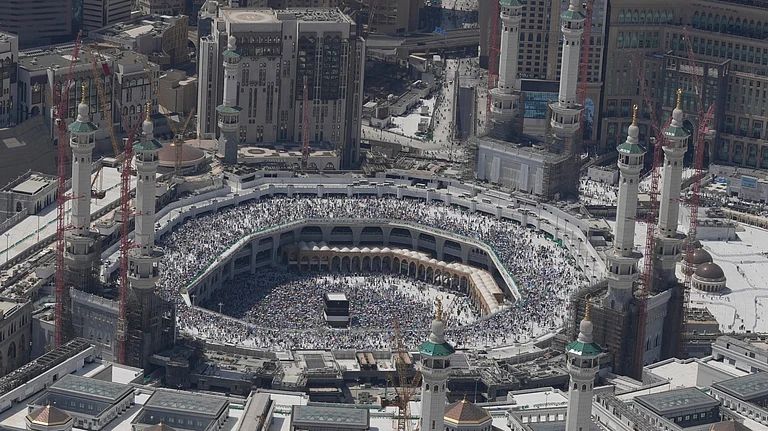
Saudi Arabia intercepted a Houthi drone near Mecca on Tuesday before it could enter the holy city's restricted airspace, calling pilgrim safety a "red line."
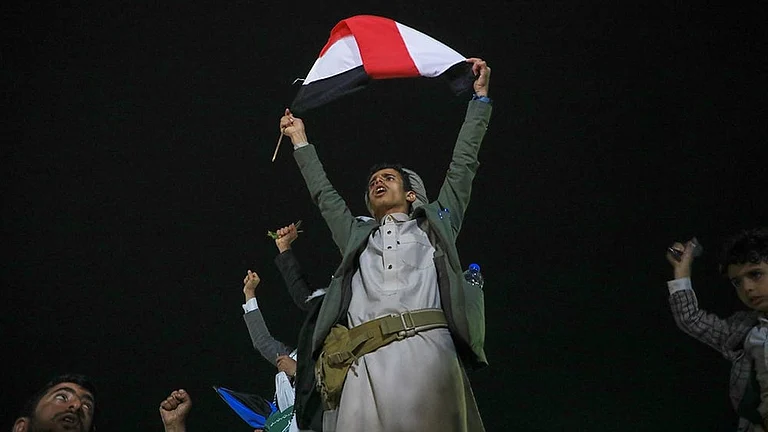
The Houthis denied targeting Mecca, even as Saudi cities faced fresh missile and drone alerts amid escalating attacks.
The incident follows Houthi strikes on Saudi oil infrastructure and shipping lanes, prompting Israel to share intelligence with Riyadh.
Houthi Drone Intercepted Near Mecca: Why Saudi Arabia Calls It A ‘Red Line’
Saudi Arabia intercepted a Houthi drone near Mecca amid escalating attacks by the Iran-aligned group, while the Houthis denied targeting the Islamic holy city

Summary
Saudi Arabia said its air defences intercepted and destroyed a Houthi drone south of Mecca on Tuesday, preventing it from entering the holy city's prohibited airspace, in a major escalation of attacks by the Iran-aligned group.
The Saudi-led coalition fighting the Houthis in Yemen said the security of Islam's two holiest sites and pilgrims was a “red line”, warning that it would take necessary deterrent measures. The Houthis, however, denied targeting Mecca.
Why Is The Mecca Drone Incident Significant?
Coalition spokesperson Turki al-Maliki said the Royal Saudi Air Defence Forces brought down the drone on Tuesday evening before it could enter Mecca’s restricted airspace.
Saudi Arabia had issued a security alert in Mecca earlier that day, marking the first such warning in the holy city since the Houthis were accused of attempting to target the area in 2017.
The warning over a potential threat in Mecca was withdrawn within minutes. Similar alerts were also issued in Taif and Jeddah, Saudi Arabia’s second-largest city.
A Houthi military source, speaking to Yemen’s SABA news agency on Tuesday, firmly denied that Houthi forces posed any threat to Mecca or other Islamic holy sites, Al Jazeera reported.
How Has The Houthi-Saudi Conflict Escalated?
The Iran-backed Houthi militant group had attacked Saudi Arabia's East-West oil pipeline, which is considered very crucial for the supply of crude oil.
Ever since the conflict involving Iran disrupted shipping through the Strait of Hormuz, the East-West pipeline has served as a critical bypass for Saudi Arabia's oil exports. The Houthi attacks have also triggered concerns over the safety of the Bab-el-Mandeb shipping lane.
The Bab-el-Mandeb is one of the world's most critical maritime chokepoints, located between the Horn of Africa and the Arabian Peninsula. It connects the Red Sea to the Gulf of Aden and the Arabian Sea.
The Saudi-led coalition said on September 8 that Houthi attacks had targeted civilian and economic facilities in Abha, Khamis Mushait, Jazan and Najran, injuring 73 people, including women and children. Coalition spokesman Major General Turki al-Maliki described the attacks as a “dangerous escalation” and said the coalition would take measures to deter further attacks.
Advertisement
Meanwhile, US Representative Joe Wilson affirmed his support to the Saudi Arabia. He said, “If the Mecca Alliance means anything then Turkiye and Pakistan must work with Saudi Arabia to destroy the foreign Houthi terrorists and liberate Yemen from Iran.”
The latest alerts come amid repeated Houthi threats to Saudi energy infrastructure and shipping around the Bab el-Mandeb. Saudi cities have faced successive missile and drone alerts as the attacks have intensified.
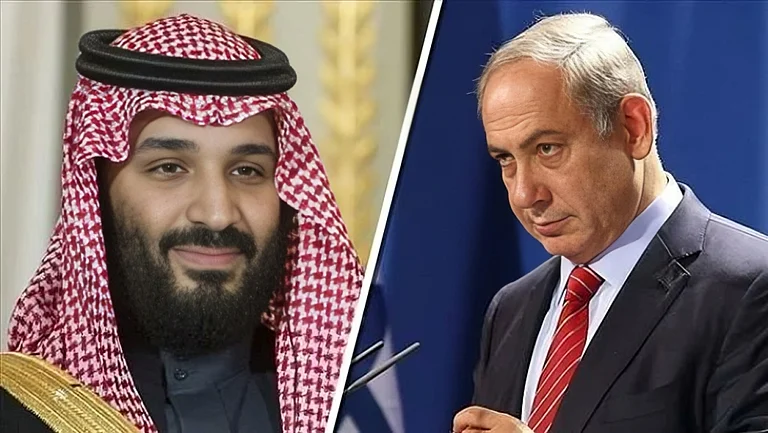
Israel has also shared intelligence with Saudi Arabia amid the Houthi threat to oil facilities and the Bab el-Mandab, highlighting growing regional concern over attacks on energy and maritime infrastructure.
Published At:
Tags