US says H-1B visa changes are not specifically targeting Indian applicants
Trump administration links H-1B reforms to immigration and national security
India-US trade agreement enters final stage despite visa policy changes
Trump expected to visit India as bilateral trade talks nears agreement
H-1B Visa Overhaul Not Targeting Indians, US Envoy Says as Trade Talks Advance
Ambassador Sergio Gor reassures that the H-1B visa changes are part of a broader immigration review and not aimed specifically at India, even as both countries move to finalise a trade deal

Summary
The Trump administration's overhaul of the H-1B visa programme is not targeted at India, US Ambassador to India Sergio Gor has said, seeking to allay concerns in the country most affected by the changes even as both nations move to finalise a bilateral trade agreement.
Gor said the United States had to take stock of its entire immigration system under the President's directive to fix what he described as "wide open" borders under previous administrations. "None of this is targeted at India necessarily. It's one of the things that we needed to take stock of. We want to know who's coming here from all over the world, right? And, of course, India has a massive population, so you're impacted by it," Gor said, according to IANS.
The ambassador drew a parallel with Prime Minister Narendra Modi's own stance on illegal migration. "When I listen to the Prime Minister speaking in India, he talks about no illegal migrants. We 100% agree with that," he said.
The Visa Changes
In September 2025, President Donald Trump issued a proclamation restricting the entry of certain H-1B nonimmigrant workers, citing what the administration described as "systemic abuse" of the programme that had undermined American workers' wages and labour opportunities.
The proclamation made a $100,000 payment mandatory for most H-1B petitions, stating that the programme had been "deliberately exploited to replace, rather than supplement, American workers with lower-paid, lower-skilled labour." The order noted that information technology firms in particular had "prominently manipulated the H-1B system, significantly harming American workers in computer-related fields."
The White House proclamation also cited national security concerns, stating that domestic law enforcement agencies had "identified and investigated H-1B-reliant outsourcing companies for engaging in visa fraud, conspiracy to launder money, conspiracy under the Racketeer Influenced and Corrupt Organizations Act, and other illicit activities."
According to the proclamation, the restriction would expire 12 months after its effective date unless extended, and included a national interest exception at the discretion of the Secretary of Homeland Security.
Advertisement
Trade Deal in Final Stages
Gor emphasised that despite the visa changes, the broader relationship between the two countries remained robust. "Our embassy is one of the busiest embassies in the world as it relates to visas, as you know. So, the people-to-people ties will continue, trade will continue, commerce will continue," he said.
"India exports more to the United States than almost any other country in the world. India does more defence exercises with the United States than any other country in the world. So, we have incredible things happening, and we'll continue building on that."
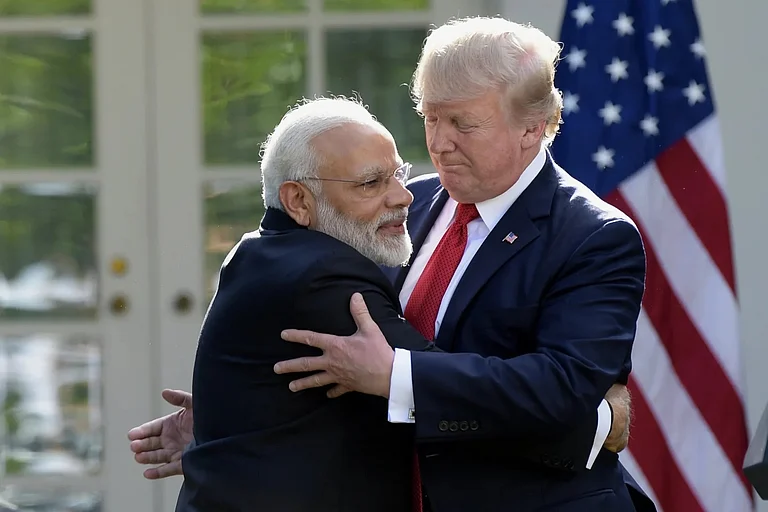
The ambassador's remarks came as negotiations on the proposed India-US trade agreement have entered the final stage, with both sides now working on the precise wording of the pact. US Trade Representative Jamieson Greer was in India this week for talks with Commerce Minister Piyush Goyal, and President Trump is expected to visit India in early 2027 to seal the deal.
Advertisement
The trade agreement, which would reduce tariffs on Indian exports, has been a priority for both countries. India has held firm on securing a competitive tariff advantage over manufacturing rivals such as Vietnam, Thailand and China. The deal comes as the Trump administration seeks alternative legal pathways to impose tariffs after the US Supreme Court struck down reciprocal tariffs under the International Emergency Economic Powers Act (IEEPA).
Published At: