The Iran war has intensified Gulf concerns about relying solely on Washington
Saudi Arabia, Türkiye and Pakistan have created a new collective defence framework
Gulf states are hedging with new partnerships while retaining close US ties
Gulf’s Strategic Hedge: Why US Allies Seek New Partners
From unease over the Iran war and the security of the Strait of Hormuz to a new Saudi-Türkiye-Pakistan defence pact, Washington's Gulf partners are seeking greater strategic autonomy. But are they really turning away from the United States?

Summary
On August 7, 2026, Saudi Arabia, Türkiye and Pakistan signed a joint defence agreement establishing a collective security framework between three of the region's most consequential powers. Coming amid the Iran war and the Strait of Hormuz crisis, the pact offered a striking example of a broader shift among US partners in the Gulf and the wider region.
The United States remains the dominant military power in the region. Its military bases, naval presence, defence partnerships and security commitments have underpinned the Gulf's security architecture for decades. Yet a growing number of US partners in the Persian Gulf are showing signs that they are rethinking how much they can depend on Washington.
According to The Washington Post, private frustration with President Donald Trump's handling of the Iran conflict has been building among Gulf officials. The report, published on August 15, 2026, cited Gulf and European officials who described growing unease over the administration's policies, concerns that the United States might not fully protect their interests, and a sense that Washington's approach was increasingly unpredictable.
The evidence of recalibration is now visible in official statements, diplomatic coordination and new defence arrangements. Gulf states are not severing their ties with the United States. But they are diversifying their security relationships and emphasising diplomacy in ways that suggest a strategic shift.
Why Trump Is Testing The Gulf Relationship
As per the report, the frustration among Gulf officials centres on the Trump administration's handling of the Iran conflict. Officials cited by the report expressed concerns that US military escalation could expose Gulf states to retaliation, disrupt the Strait of Hormuz and destabilise a region already under
While some officials worried that Washington's policies might not always align with Gulf interests, particularly when it came to the risks of a broader war. Others questioned whether the United States could be relied upon to protect Gulf security without dragging its partners into conflicts they had not chosen.
These are private assessments, not official declarations. But they align with public positions that Gulf governments have increasingly taken in recent weeks.
Advertisement
Qatar, which has long positioned itself as a mediator, has continued to keep communication channels open between Washington and Tehran. On August 4, the Qatari Foreign Ministry confirmed that Doha was "keeping the Washington-Tehran dialogue channel open as mediators push for a lasting deal." The statement emphasised diplomacy and negotiations as the preferred path towards resolving the crisis.
Oman has gone further. On February 28, 2026, the Omani Foreign Ministry expressed regret over the US and Israeli military operations against Iran, warning that the conflict carries "dire consequences for the region". Oman reiterated that position at an Arab League meeting in August, arguing for renewed diplomatic efforts and warning about the regional consequences of continued hostilities.
Neither Qatar nor Oman has formally broken with Washington. But their public emphasis on diplomacy—at a time when the US administration was pursuing a more aggressive posture towards Iran—shows that not all Gulf governments are aligned with the US approach.
Advertisement

Why Hormuz Changes The Calculus
The Strait of Hormuz has been central to Gulf concerns about the Iran conflict. The strait is a choke point for global energy exports, with petroleum liquids equivalent to roughly one-fifth of global consumption passing through it, according to the US Energy Information Administration. Any disruption to shipping there affects not just Gulf economies but the broader global economy.
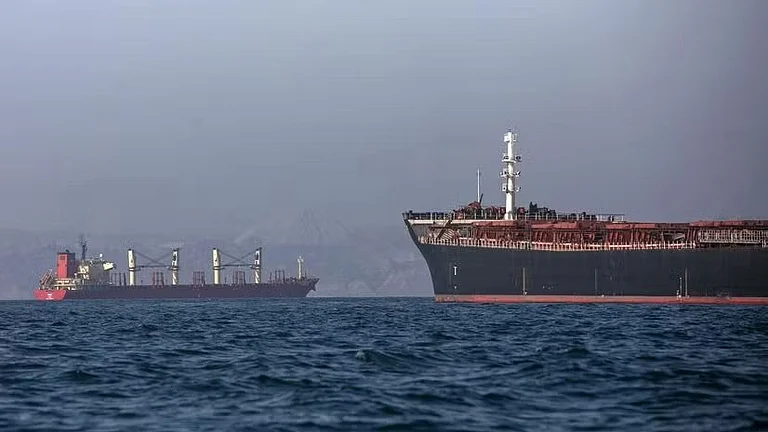
The United Arab Emirates has been directly affected. On August 8 and again on August 14, the UAE Foreign Ministry issued statements condemning attacks on UAE-linked vessels in the Strait of Hormuz. The ministry called the attacks a "dangerous escalation" and warned of the consequences for regional security and maritime navigation.
The UAE has not accused the United States of failing to protect it. But its repeated public statements on the issue reflect a deeper concern: that Gulf states can become targets or suffer economic consequences even when they are not direct participants in the conflict.
Advertisement
For Gulf governments, the question is not simply whether America can defend them. It is also whether American policy can inadvertently expose them to greater risk. The fear that US military action against Iran could provoke retaliation against Gulf infrastructure—or lead to a prolonged closure of Hormuz—has been reflected in their diplomatic messaging.
Saudi Arabia's Security Hedge
The most significant concrete development has been the new defence arrangement between Saudi Arabia, Türkiye and Pakistan.
The agreement, announced through the Saudi Press Agency, establishes a collective defence framework among the three countries. It commits them to strengthening defence cooperation and collective deterrence.
The Pakistani government described the pact as a "significant step towards strengthening collective security and defence cooperation" between the three countries. Türkiye's Directorate of Communications said the agreement reflected a shared commitment to regional stability and cooperation. Bahrain, a key Gulf ally, expressed its support for the agreement, according to the Saudi Press Agency.
Advertisement
The pact is not a replacement for the US security umbrella. Saudi Arabia continues to maintain extensive defence ties with Washington and purchase billions of dollars in American military equipment. The relationship remains substantial.
But the agreement does represent a significant strategic diversification. By building a parallel security framework with Türkiye and Pakistan, Saudi Arabia is creating additional layers of collective security and deterrence. It also demonstrates that Saudi Arabia is willing to develop defence partnerships beyond Washington.
Is This Really Anti-American?
The Gulf states are not choosing between Washington and everyone else. They are preparing for a world in which Washington is one important partner among several.
There are powerful reasons for Gulf states to retain their relationship with the United States. American military capabilities remain unmatched. The US provides intelligence, logistics, defence technology and military capabilities that no other external power can fully replicate. Economic and investment ties also bind the Gulf to the United States.
But there are also incentives to hedge. If Gulf states remain entirely dependent on one external power, they risk being drawn into conflicts they cannot control. They also lose leverage if they have no alternatives.
Hedging means maintaining a close relationship with the United States while building relationships with other partners. It allows a state to maintain its existing alliance while also ensuring that it has options if that alliance becomes unreliable or politically costly.
The Saudi-Türkiye-Pakistan agreement should be understood in this context. It is not a break with the United States. It is a diversification strategy that gives Saudi Arabia more room to manoeuvre.
What This Means For Washington
The shift does not pose an immediate threat to the US-Gulf alliance. But it does suggest that Washington may gradually lose some of the leverage and exclusivity that came from being the region's indispensable security partner.
The more immediate risk for Washington is erosion of confidence. If Gulf governments increasingly conclude that US military power cannot reliably prevent crises that threaten their territory and economies, they will have stronger incentives to build their own alternatives.
If such arrangements multiply, they could gradually reduce Washington's exclusivity as the Gulf's preferred external security partner.

The Real Test
The Gulf states are not abandoning the United States. But they are clearly recalibrating.
They are emphasising diplomacy and de-escalation, sometimes at odds with Washington's military posture. They are diversifying their security relationships. They are preparing for a world in which the United States may no longer be their only major external security partner.
The real test will come after the current Iran crisis subsides. Will Gulf states continue to build their alternative partnerships, or will they revert to full dependence on Washington? The answer will determine whether the current shift represents a lasting change or a temporary hedge against uncertainty.
The United States remains central to Gulf security. But for Saudi Arabia and its neighbours, the emerging strategy appears to be clear: preserve the American relationship while building more options beyond it.
Published At:
Tags