Israel’s strike on Iran’s South Pars gas field, one of the world’s largest natural gas reserves, marks a significant escalation.
The attack has triggered swift retaliation, with Iran targeting energy facilities in Qatar and Saudi Arabia.
US President Donald Trump in a post on Truth Social, after the Israeli strike on South Pars warned Iran not to retaliate.
Day 2O Of War In West Asia: Strikes On Gas And Oil Mark New Phase In Conflict
The war in West Asia has expanded to target energy infrastructure , threatening to destabilise global markets and send the world economy into a tailspin.

Summary
Attacks on critical oil and gas infrastructure are fast emerging as the most dangerous new phase of the West Asian conflict, as the US–Israel war of choice against Iran marks its 20th day. What began as a targeted military campaign has now expanded to energy infrastructure , threatening to destabilise global markets and send the world economy into a tailspin.
Israel’s strike on Iran’s South Pars gas field, one of the world’s largest natural gas reserves marks a significant escalation, signalling a shift from military targets to the economic lifelines of the region.
The attack has triggered swift retaliation, with Iran targeting energy facilities in Qatar and Saudi Arabia, raising fears of a widening conflict across the Gulf. Iran attacked Qatar's Ras Laffan Industrial City that processes about a fifth of global gas supply.
In retaliation Qatar declared Iran’s military and security attaches ``persona non grata’’ and ordered them to leave Qatar in 24-hours.
The fall-out of the tit-for-tat strikes has been immediate. Energy markets have reacted sharply, with oil prices surging amid concerns over supply disruptions from a region that accounts for nearly a third of the world’s crude exports. Key transit routes, including the strategically vital Strait of Hormuz, are once again under threat, amplifying anxieties over the security of global energy flows.

For India which imports most of its oil, gas and LNG from the Gulf Cooperation Council (GCC) this is a dangerous escalation that will hit everyday life of ordinary citizens, besides affecting India’s business and ultimately its growth story. What was once a geopolitical contest is now rapidly becoming an energy war with massive global economic consequences.
"The tit-for-tat strikes in oil and gas facilities in West Asia and the Gulf translate into a multidimensional shock for India : higher energy prices, increased import bill pressure, vulnerability in LNG and crude supply chains, and secondary effects in inflation, the rupee and macro stability,’’ says Anil Wadhwa, a former ambassador to Oman.
Advertisement
He goes on to add : "The strikes would tilt India towards higher energy prices, more macro- fragility, and tougher trade of choices between inflation control, growth support and strategic autonomy.’’
``India had previously called for the avoidance of targeting civilian infrastructure, including energy infrastructure, across the region. Recent attacks against energy installations in different locations across this region are therefore deeply disturbing and only serve to further destabilise an already uncertain energy scenario for the whole world. Such attacks are unacceptable and need to cease,'' MEA spokesman Randhir Jaiswal told reporters at his weekly briefing on Thursday.
For Gulf nations, the attacks present an acute dilemma. Efforts to remain insulated from the conflict are becoming increasingly untenable as the war spills into shared economic zones and energy corridors. The GCC nations did not want a war, but are increasingly being drawn into the conflict. "The State of Qatar condemns in the strongest terms the Iranian targeting of energy facilities in the Kingdom of Saudi Arabia and the United Arab Emirates over the past two days, deeming it a blatant violation of international law and a serious threat to global energy security, navigation, and the environment." However, the foreign ministry statement has no word of condemnation for Israel, which first attacked Iran’s gas fields. Tehran had already warned of a tit-for-tat retaliation for every strike on oil and gas.
Advertisement
Trump’s Warning To Iran
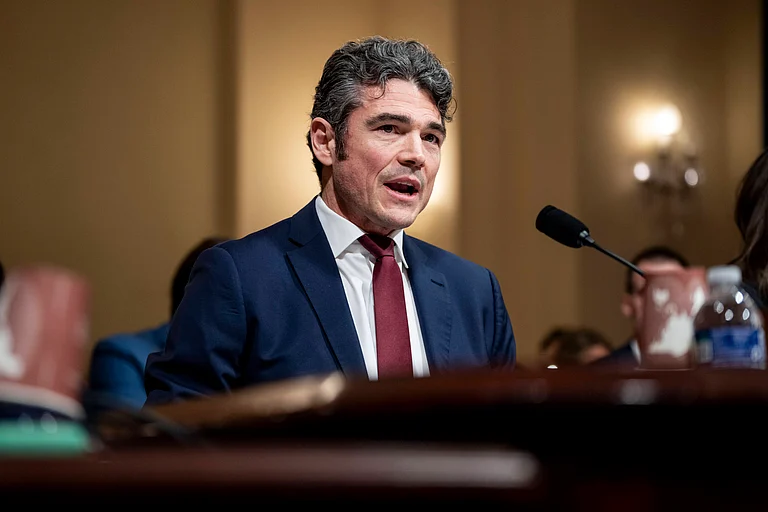
US President Donald Trump in a post on Truth Social, after the Israeli strike on South Pars warned Iran not to retaliate. "Israel, out of anger for what has taken place in the Middle East, has violently lashed out at a major facility known as South Pars Gas Field in Iran." Trump went on to add that the US knew nothing about it and promised ``NO MORE ATTACKS WILL BE MADE BY ISRAEL’’. But warned Iran that if it dared to retaliate on gas hubs and oil fields, "the United States of America, with or without the help or consent of Israel, will massively blow up the entirety of the South Pars Gas Field at an amount of strength and power that Iran has never seen or witnessed before.’’
Iran, however, gave no heed to what Trump posted, went ahead and targeted various energy sites in Qatar and Saudi Arabia that host American military bases.
Advertisement
Iran’s Revolutionary Guards on Wednesday warned neighbouring Gulf nations much as Trump had done to Iran, that their oil and gas industries would be "completely destroyed" if Israel or the United States conducted any further attacks against Iranian energy infrastructure.
Tehran no longer believes a thing that the US says, considering that both during last year’s 12-day war and the strikes on February 28, happened in the middle of negotiations.
For a country whose top leadership has been decapitated, and is fighting for its very existence nothing now matters. As the war enters this volatile phase, the risks of miscalculation are growing.
Published At: