Cuba has approved reforms allowing private firms to operate pharmacies, fuel stations and other state-run services
The measures expand the non-state sector as Havana seeks to revive an economy hit by sanctions and energy shortages
Parliament also passed new labour, housing and administrative laws as part of a broader economic overhaul
Cuba Broadens Private Sector Role With New Economic Reform Amid Crisis
Cuba's National Assembly has approved a series of economic reforms that will allow private firms to operate pharmacies, gas stations and other state-run services, as the government seeks to expand the non-state sector amid a deepening economic crisis exacerbated by US sanctions.

Summary
Cuba's National Assembly has approved a series of economic reforms that will allow private firms to operate pharmacies, gas stations and other state-run services, according to a statement by the Cuban Presidency.
The reforms, announced during the Seventh Ordinary Session of the National Assembly of People's Power in its X Legislature, expand the list of permitted economic activities for the non-state sector and represent one of the most significant shifts in Cuba's economic model in recent years.
The Ministry of Economy and Planning said the reforms are part of a broader effort to "update and expand the non-state sector," with the goal of improving efficiency and reducing the state's role in non-strategic areas of the economy
Cuban President Miguel Díaz-Canel, addressing the parliament, said the reforms were necessary to "unlock the country's economic potential" and that the new legislation would "place the economy at the centre of the government's agenda."
"Today, we have started the most important and perhaps the most difficult stage in the implementation of the transformations that the country demands," Prime Minister Manuel Marrero Cruz said.
New Laws and economic transformation
The National Assembly approved several key pieces of legislation, including a new Labour Code, a Housing Law and a Law on the Organisation of the Central Administration of the State.
The Labour Code was described as "a fundamental tool for the implementation of socio-economic transformations."
The parliament also approved a Law on the System of Personal Identity and Domicile, described as "a necessary and updated legal norm," and debated the budget execution for the 2025 fiscal year.
"This is a sovereign people that has decided its own destiny," Díaz-Canel added.

Economic Pressures And Energy Crisis
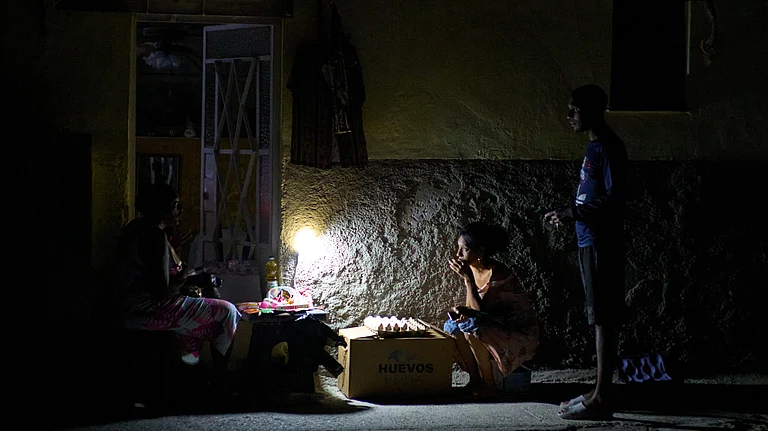
The reforms come as Cuba faces mounting economic pressure from tightening US sanctions and a deepening energy crisis. The island suffered its third island-wide blackout in a week last week after a failure in the national electricity system triggered a nationwide power outage
Advertisement
Cuban officials have consistently argued that the US economic, commercial and financial blockade has severely restricted the country's ability to import fuel, spare parts and equipment needed to maintain its electricity system. The tightening of US sanctions has intensified shortages affecting electricity generation, fuel supplies and essential public services.
Cuban Foreign Minister Bruno Rodríguez Parrilla, speaking ahead of the United Nations General Assembly debate on the embargo, said the tightening of US sanctions had worsened the crisis
The National Assembly's approval of the reforms signals a shift in Cuba's approach to its state-dominated economy, with the government acknowledging the need to expand the private sector to address the country's economic challenges.
Published At: