Trump said the US would restart a naval blockade of Iran, become the "guardian" of the Strait of Hormuz and seek a 20% fee on cargo transiting the waterway.
Under the UN Convention on the Law of the Sea, ships and aircraft have the right to unimpeded transit through international straits such as Hormuz, raising legal questions over Trump's proposal.
Can Trump Take Over The Strait of Hormuz? What International Law Says
The International Maritime Organization said there is "no legal basis" for imposing mandatory tolls on ships passing through straits used for international navigation.

Summary
United States President Donald Trump has said the US will restart its naval blockade of Iran and “become the guardian” of the Strait of Hormuz, amid the ongoing escalation with Iran that threatens to derail efforts towards a more lasting peace. The UN’s shipping agency said it opposed any imposition of fees to cross the strait.
Trump made the comments in an interview with Fox News and in a post on Truth Social on Monday, shortly after the US and Iran traded their latest round of attacks. Iran said it again struck US military sites in Bahrain, Kuwait, Oman and Jordan, while US forces have been primarily targeting port cities along Iran’s coast.
“We are reinstating the THE IRANIAN BLOCKADE, so named because it is only stopping Iran’s ships or customers from entering or leaving,” Trump said on Truth Social.
The US Navy-led Joint Maritime Information Center subsequently said the blockade would begin at 20:00 GMT on Tuesday.
“The U.S.A. will be, from this point forward, known as ‘THE GUARDIAN OF THE HORMUZ STRAIT,'” Trump added, “but as such, and as a matter of FAIRNESS, will be reimbursed, at the rate of 20% on all cargo shipped, for any and all costs necessary to do the job of providing safety and security to this very volatile section of the World.”
“The process and formation will begin immediately,” he said.
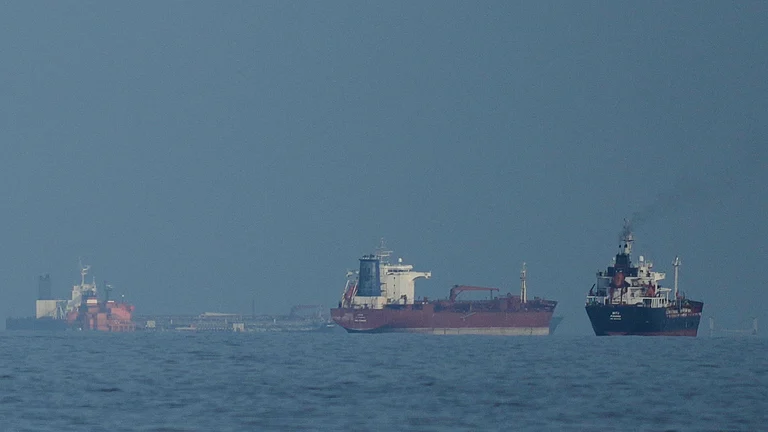
In a statement, the UN’s shipping agency said it opposed any imposition of fees to cross the strait.
“We have always been consistent on our stance on fees – IMO stands firmly against charging fees for passage through straits used for international navigation,” the International Maritime Organization said.
“There is no legal basis through which to introduce mandatory tolls simply to transit through a strait.”
Advertisement
The proposal also appears to run counter to the United Nations Convention on the Law of the Sea (UNCLOS), which governs navigation through international straits. Part III of the convention establishes a transit passage regime under which ships and aircraft have the right to continuous and expeditious passage through straits used for international navigation, and such passage "shall not be impeded."
While Article 34 recognises the sovereignty of states bordering a strait over their territorial waters, it says that sovereignty must be exercised in accordance with the convention's transit passage provisions.
Articles 37 and 38 extend the right of transit passage to all ships and aircraft using international straits, including the Strait of Hormuz, allowing uninterrupted navigation and overflight. Article 39 requires vessels and aircraft exercising that right to proceed without delay, comply with international safety and pollution regulations, and refrain from any threat or use of force against states bordering the strait.
Advertisement
In June, Trump's own secretary of state, Marco Rubio, had rejected the notion of any country charging tolls to pass through international waterways.
“No country is allowed to charge tolls or fees on an international waterway. That’s existing international law,” Rubio said, at the time responding to the possibility of Iran levying fees for passage.
Published At:
Tags