The deal comes amid wider regional tensions, with concerns that renewed conflict between Israel and Hezbollah could weaken the fragile US-Iran understanding.
Hezbollah has rejected the agreement, arguing that it legitimises Israel’s continued military presence.
The deal makes Hezbollah’s disarmament a precondition for a phased Israeli withdrawal from southern Lebanon
Can the Israel-Lebanon Framework Hold, or Deepen Regional Divisions?
Lebanon and Israel signed a US-brokered trilateral framework that links a phased Israeli withdrawal from southern Lebanon to Hezbollah’s disarmament, but Hezbollah has rejected the agreement.

Summary
The trilateral framework signed in Washington on Friday links a phased Israeli withdrawal from Lebanon to Hezbollah’s disarmament, with the United States also acting as a signatory to the agreement. However, Hezbollah has rejected the deal and opposed its conditions.
The agreement’s provisions effectively make Hezbollah’s disarmament a prerequisite for Israel’s military withdrawal from Lebanese territory.
The agreement is also particularly sensitive because continued tensions between Israel and Lebanon risk undermining the fragile US-Iran peace arrangement. Ongoing hostilities between Israel and Hezbollah have emerged as a potential threat to the broader ceasefire framework, raising concerns that further escalation in Lebanon could jeopardise efforts to preserve regional stability.
What Exactly Is the Israel-Lebanon Trilateral Framework?
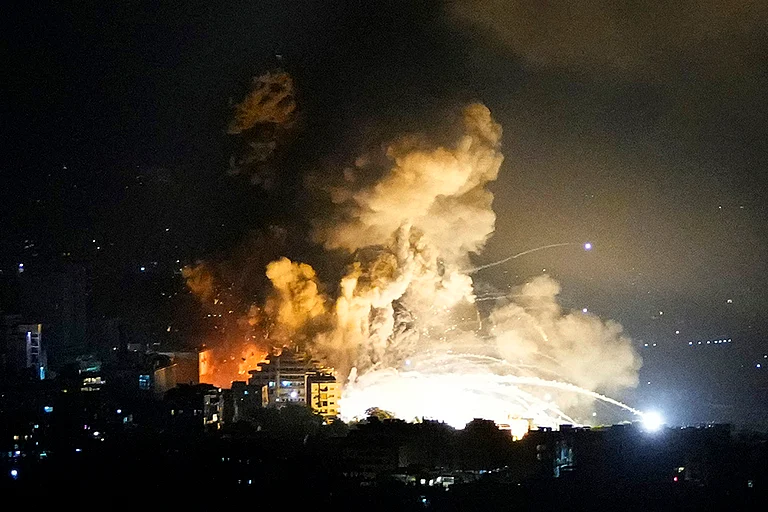
After months of negotiations, Lebanon and Israel on Friday signed a United States-brokered framework agreement intended to reduce hostilities and establish a mechanism for future security coordination. The US is also a formal signatory to the deal, making it a trilateral agreement.
US Secretary of State Marco Rubio described the agreement as an opening step rather than a final settlement. “There is a lot of work ahead,” Rubio said. “Today is the first step. The first step is sometimes the hardest one.”
The agreement comes after nearly two years of conflict between Israel and Hezbollah, which has continued at varying levels since October 2023. Fighting intensified sharply in September 2024 and escalated again nearly four months ago amid the wider regional crisis triggered by US strikes on Iran. According to reported figures, the conflict has killed more than 4,000 people in Lebanon since March.
Under the framework, Israel is not required to immediately withdraw from the areas of southern Lebanon that it continues to control. Israeli officials have also indicated they may continue military operations inside Lebanon if they consider them necessary.
Rubio said the agreement “establishes a clear and structured process to restore Lebanon’s sovereignty, disarm [Hezbollah] and dismantle its terrorist infrastructure, and enable Israel to return to its borders once that threat to its citizens is removed”.
Advertisement
He added: “It also creates a trilateral Military Coordination Group for Lebanon … allowing the two sides to implement this Framework.”
Lebanese Prime Minister Nawaf Salam presented a different interpretation of the agreement, writing on social media that it “aims to achieve Israel’s withdrawal from all Lebanese territories”. At the same time, he said the framework largely builds on previous agreements and United Nations resolutions that affirm the Lebanese state’s authority across all parts of the country — a principle that challenges both Hezbollah’s armed role and Israel’s continued military presence.
The announcement triggered protests in Beirut, where demonstrators expressed opposition to the agreement.

Why the US Is Playing the Mediator
Washington has positioned itself as the key intermediary in an attempt to contain regional escalation and preserve broader diplomatic efforts underway in West Asia. Israeli and Lebanese representatives travelled to Washington earlier this week for US-mediated talks, although Hezbollah did not take part in the negotiations.
Advertisement
Rubio reiterated the scale of the challenge ahead, saying: “There’s a lot of work ahead. We don’t in any way underestimate the difficulty of the task ahead, but we understand the importance of it, how vital it is.”
The fighting between Israel and Hezbollah has complicated efforts to preserve the June 17 ceasefire reached between the United States and Iran under a memorandum of understanding intended to end the US-Israeli war against Iran. That 14-point agreement called for “the immediate and permanent termination of military operations on all fronts, including in Lebanon”.
Despite that, Israel has continued conducting strikes in Lebanon, contributing to tensions between Netanyahu and US President Donald Trump. Earlier this month, Trump said he had described Netanyahu as “crazy”, while also calling him a “very good man” with whom he has an “amazing partnership”.
Speaking at the Group of 7 summit in France last week, Trump said: “We have a little dispute over Lebanon.” He criticised the scale of Israeli military action, adding: “You don’t have to knock down a building every time somebody walks into it that’s from Hezbollah.”
Advertisement
Trump urged Israel to adopt a more restrained approach, saying: “They could do a much better job with Hezbollah on that. I don’t think they’re doing well. And I feel very bad for Lebanon.”
Rubio echoed concerns about Lebanon’s position in the wider conflict, saying: “The people of Lebanon have suffered tremendously now for decades as a result of outside interference in their affairs, of countries trying to use the country as a launchpad for attacks. This is not what the people of Lebanon want, and that’s not what they deserve.”
Summary
What Israel Wants From The Deal
Prime Minister Benjamin Netanyahu has framed military operations in Lebanon as necessary to protect northern Israeli communities and has ruled out a full withdrawal unless Hezbollah is disarmed.
Netanyahu said Israeli forces would remain in southern Lebanon “as long as Hezbollah is not disarmed and as long as there is a threat to the State of Israel”.
The agreement, released by the US Department of State, states: “Israel and Lebanon affirm the right of each state to exist in peace.” It adds: “Israel and Lebanon hereby declare their intent to conclusively end the conflict, address its underlying causes, and to therewith formally conclude any state of war between them.”
The framework also outlines a vision for a “secure, rebuilt Lebanon, under full Lebanese state sovereignty, in which no non-state armed group poses a threat to Israel, Lebanon, or citizens of either country.”
In simpler terms, the deal links Israel’s withdrawal from Lebanon to Hezbollah’s disarmament. It proposes an initial Israeli withdrawal from two pilot zones, after which the Lebanese army would gradually take over security responsibilities. Future withdrawals would depend on additional agreements.
Netanyahu said the two areas would serve as a “pilot program for disarming Hezbollah and transferring the territory to the control of the Lebanese army”, adding that Israel had already withdrawn from one area. Defence Minister Israel Katz said the military had been instructed “to prepare for an extended stay.”
Advertisement
Why Hezbollah Opposes It
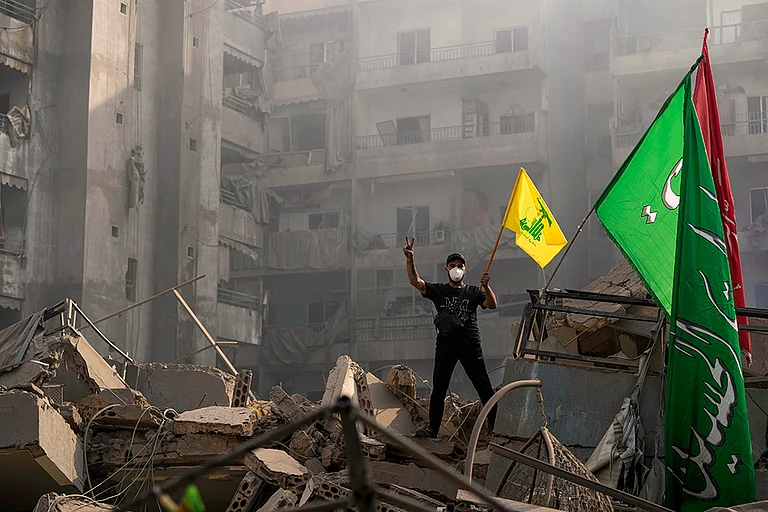
Hezbollah has rejected the agreement, arguing that it turns Israeli withdrawal into a condition tied to the group’s disarmament.
Hezbollah leader Naim Qassem said: “Israel must leave unconditionally.”
After the framework was announced, Netanyahu reinforced Israel’s position, saying: “The most important thing is, first of all, that Israel remains in the security zone in southern Lebanon. This is a major achievement, and we will maintain it as long as Hezbollah has not disarmed.”
Qassem accused Lebanese authorities of legitimising Israel’s continued presence, saying: "The authorities are legitimizing the occupation for many years to come, and this could even lead to the annexation of these lands to the Zionist entity! This is an agreement that deprives the Lebanese of their right to return to their land. What business does the Israeli enemy have interfering in our internal affairs in Lebanon? Any agreement must be confined to the area south of the Litani River and have no connection to any internal Lebanese matter concerning weapons, security, or the future of the country."
He also criticised the Lebanese government for negotiating directly with what he called the "Zionist enemy entity" and accused officials of weakening Hezbollah’s position.
“We will pursue all necessary means and exert international and Arab pressure to compel the Israeli enemy to abide by the first clause of the Memorandum of Understanding and withdraw from Lebanon," Qassem declared.

Could This Become A Full Peace Treaty?
Rubio said the agreement reached on Friday should be viewed as an opening move rather than a final settlement.
“There is a lot of work ahead,” Rubio said, describing the agreement as the first step, which “is sometimes the hardest one.”
The stakes surrounding the framework extend beyond Israel and Lebanon. Continued tensions between the two sides risk undermining the wider US-Iran memorandum of understanding.
However, questions remain over whether the agreement can hold. Hezbollah, which was not involved in the negotiations, has criticised the framework, while the 14-point arrangement does not require Israel to immediately withdraw from the large areas of southern Lebanon. Netanyahu told a press conference earlier this month, saying: “We will stay in the Lebanon security buffer zone for as long as necessary.”
In recent weeks, Israel has carried out strikes in Beirut and the eastern Bekaa Valley, saying the attacks targeted Hezbollah positions. Earlier ceasefire efforts negotiated in Washington led to only a partial reduction in fighting, with Israeli operations continuing and forces remaining deployed across roughly one-fifth of Lebanese territory.
Although Israel and Lebanon share a border, the two countries have technically remained in a state of war since 1948 following the creation of Israel in historic Palestine. Israel has fought multiple conflicts with Lebanon and maintained a military presence in parts of southern Lebanon between 1982 and 2000, saying it was necessary to protect communities in northern Israel, AP reported.
Following Israel’s withdrawal in 2000, the United Nations established the Blue Line to mark the boundary between the two countries. Another ceasefire in October 2024 ended a year of fighting between Israel and Hezbollah, but Israeli troops remained positioned on five hilltops that Israel said served defensive purposes. That ceasefire later collapsed in March during the US-Israeli war against Iran.
Netanyahu has framed military operations in Lebanon as a security necessity, maintaining that the current agreement will not lead to a withdrawal of Israeli forces “as long as Hezbollah is not disarmed and as long as there is a threat to the State of Israel”.
Lebanese President Joseph Aoun welcomed the framework, describing it as the “first step on the path towards Lebanon restoring its sovereignty over all its territory”.
He also said the agreement marked “the beginning of the path for displaced people to return to their liberated towns under the sovereignty of the Lebanese state”.
While Hezbollah did not participate in the Washington talks, the group remains a central actor in Lebanon and retains influence over whether any agreement can ultimately succeed.
Published At: