California voters will decide on November 3 whether to impose a one-time 5% wealth tax on qualifying billionaires who were state residents on January 1, 2026
Proposition 40 would direct 90% of its proceeds towards healthcare, with the remainder allocated to education, food assistance and administration; the state’s legislative analyst estimates revenue in the tens of billions of dollars over several years
Supporters argue the levy could protect public services, while opponents warn that wealthy residents could leave and reduce future income-tax revenue; the measure could also face legal complications involving Propositions 41 and 42
California’s Billionaire Tax Explained: The Money, The Risks And The Legal Battle
California voters will decide on November 3 whether to impose a one-time 5% wealth tax on certain billionaires. Proposition 40 could raise tens of billions of dollars for public services, but opponents warn of capital flight, legal disputes and costs to the state’s wider tax base.

Summary
California voters will decide on November 3 whether to impose a one-time 5% tax on the net worth of certain billionaires and trusts, a proposal that has become a major contest over wealth inequality, healthcare funding and the influence of technology executives in America’s richest state.
Proposition 40, formally titled Imposes One-Time Tax on Certain Taxpayers, would direct 90% of the revenue towards healthcare services, with the remainder allocated to education, food assistance and administration. The California Legislative Analyst’s Office (LAO) estimates that the measure could generate tens of billions of dollars, although the final amount and timing would be difficult to predict.
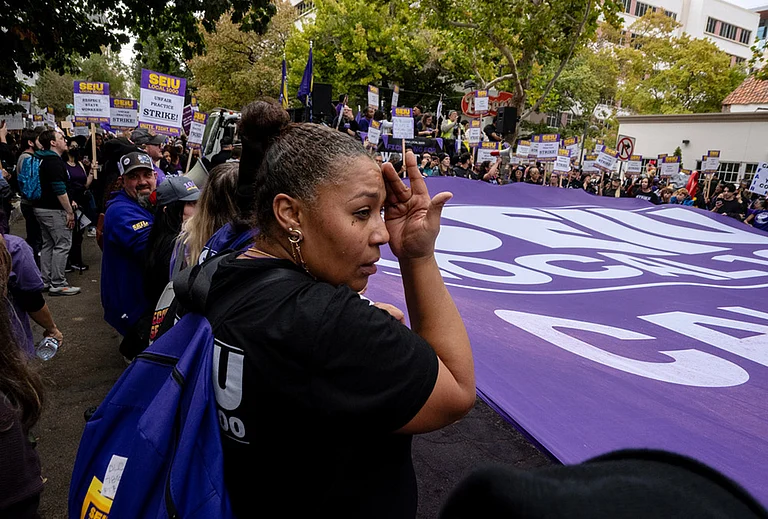
Supporters, including the Service Employees International Union–United Healthcare Workers West and Senator Bernie Sanders, argue that the wealthiest Californians should contribute towards protecting public services. Opponents say the proposal could encourage billionaires to leave the state, create uncertainty for businesses and reduce future income-tax revenue.
The ballot measure also faces a legal complication. Propositions 41 and 42, which voters will consider on the same day, could conflict with Proposition 40. According to the LAO, a court could prevent the billionaire tax from taking effect if either measure receives more affirmative votes than Proposition 40.
The proposal is distinctive because it would impose a one-time tax specifically targeting billionaire-level wealth at the US state level. But it would not be the world’s first wealth tax: other countries have imposed annual net wealth taxes, while Argentina introduced a one-off levy during the Covid-19 pandemic.
Who Would Pay And How Would The Tax Work?
Under Proposition 40, the tax would apply to individuals who were California residents on January 1, 2026, and had net worth of at least US$1 billion, alongside certain trusts covered by the measure.
The proposed tax-obligation date is January 1, 2026, while assets would be valued as of December 31, 2026. The tax would therefore be assessed using a specified valuation date rather than the value of an individual’s assets when the ballot measure was approved.
The headline rate is 5% of net worth, with a graduated reduction for individuals whose net worth falls below US$1.1 billion. The measure covers wealth held worldwide, subject to its exclusions and valuation rules. Real estate, qualified pensions and retirement accounts generally receive exemptions.
Advertisement
Tax payments would be due in 2027, with an option to spread them over five years at an additional cost. The arrangement is intended as a one-time levy rather than an annual tax on wealth.
The scope of the measure makes asset valuation central to its implementation. Determining net worth can require assessing private-company shares, trusts and other holdings that do not have a readily observable market price. The proposed tax would therefore require rules for valuation, compliance and disputes over the assets included in an individual’s taxable wealth.
The measure’s final impact would depend on how those rules operate and how taxpayers respond. Its statutory design provides the framework, but it does not guarantee a particular revenue total.
Where Would The Money Go?
Proposition 40 would allocate 90% of the proceeds to healthcare services. The remaining revenue would go towards education, food assistance and the administration of the tax.
Advertisement
Supporters argue that the money could help protect healthcare access at a time when federal funding changes threaten services for vulnerable Californians. They say taxing a small group of extremely wealthy residents could provide resources without raising taxes on most households.
That is the campaign’s case for the measure, rather than an independent assessment that all potential federal healthcare cuts would be offset. The amount available for public services would depend on the final revenue collected and when the payments arrived.
The LAO expects the tax to generate tens of billions of dollars over several years but cautions that the amount and timing are uncertain. Campaign claims of revenue reaching US$100 billion should not be confused with the analyst’s official estimate.
The distinction matters for public budgeting. A one-time levy could provide substantial funding, but it would not automatically establish a recurring source of revenue for programmes with continuing costs. The state would need to account for the difference between a large, temporary collection and long-term expenditure commitments.
Advertisement
Is It The World’s First Tax On Billionaires?
The proposal is not the first wealth tax in history. The Organisation for Economic Cooperation and Development has documented net wealth taxes in countries including France, Norway, Spain and Switzerland. Argentina also introduced a one-time tax on net wealth during the pandemic.
California’s proposal is unusual in its design: a one-time levy aimed specifically at individuals with billionaire-level wealth, introduced through a state ballot measure. The international comparisons help explain its significance without establishing an unsupported global first.
Wealth taxes have long faced questions about valuation, administrative complexity, taxpayer behaviour and their effect on investment. Governments must determine which assets fall within the tax base, how ownership is assessed and how disputes over valuations are resolved.
California’s proposal brings these questions into a particularly high-profile setting because the state is home to many of the country’s wealthiest technology founders and investors. Some hold much of their wealth in shares of privately held or publicly traded companies rather than cash. A tax on net worth could therefore require taxpayers to find funds to meet the liability even when they have not sold those assets.
Advertisement
The measure’s one-time structure may distinguish it from annual wealth taxes, but it does not remove the administrative and economic questions associated with taxing assets rather than income.
Why Are Supporters And Opponents Divided?
Supporters argue that billionaires have benefited disproportionately from the growth of California’s technology economy and should contribute more towards public services. They say healthcare and other social programmes face funding pressures that a one-time levy could help address.
Opponents counter that a wealth tax could prompt some high-net-worth residents to relocate, change where they hold assets or restructure their financial affairs to reduce their liability. They warn that such responses could weaken California’s future tax base, particularly because the state receives substantial income-tax revenue from wealthy residents.
The LAO estimates that behavioural responses by billionaires could reduce annual state income-tax revenue by less than US$1 billion. It also estimates that administering the tax could cost tens of millions of dollars annually for several years.
These are estimates of potential effects, not proof that a particular number of billionaires will leave California. The eventual impact would depend on taxpayer decisions, asset valuations, the administration of the measure and changes in income-tax receipts.
The dispute is particularly pronounced in Silicon Valley, where wealth is closely tied to company ownership and investment. Some technology investors and business figures oppose the tax, arguing that it could discourage investment and entrepreneurship. Supporters maintain that the state should not avoid taxing extreme concentrations of wealth because some taxpayers may move.
Both sides are therefore arguing about more than the immediate collection. The question is whether the proposed revenue would outweigh the risks and administrative costs of imposing a one-time tax on assets that can be difficult to value and move across jurisdictions.
Could Other Propositions Block The Tax?
Propositions 41 and 42 add a separate uncertainty to the November 3 vote.
Proposition 41 would require audits of programmes funded by new or increased special taxes and could prevent the state from excluding certain tax spending from its constitutional spending limit. Proposition 42 would prohibit new state taxes on the ownership of financial assets and other personal property while restricting some retroactive taxation.
The LAO warns that if either Proposition 41 or Proposition 42 receives more “yes” votes than Proposition 40, a court could find that the measures conflict and prevent the billionaire tax from becoming law, even if Proposition 40 wins majority support.
That outcome is not automatic. It would depend on the relationship between the measures and how the courts interpret any conflict. But the possibility means that a simple majority in favour of Proposition 40 may not settle the question of implementation.
The three measures present voters with overlapping questions about taxation, public spending and the limits on state government. Their combined results could become as important as Proposition 40’s own vote total.
How Much Money Is Behind The Campaigns?
The financial battle reflects the stakes for wealthy taxpayers and public-service advocates. As of October 22, the California Secretary of State reported approximately $33.4 million in contributions to committees supporting Proposition 40 and $130.3 million to committees opposing it.
The opposition has received substantial backing from business and technology-linked donors. The state’s Fair Political Practices Commission identifies Sergey Brin and investor L John Doerr among major contributors associated with opposition to the measure.
Those figures capture contributions reported to committees supporting or opposing Proposition 40; they should not be treated as a complete measure of all campaign spending or compared directly with independent expenditures without accounting for the different categories. The totals also reflect filings through a specified date, rather than every dollar spent during the final days of the campaign.
The disparity nevertheless shows that the proposal has become a major political contest. For supporters, the tax is a way to make extreme wealth contribute towards public services. For opponents, it raises questions about the state’s business climate, investment and future revenues.
What Happens If Voters Approve It?
Approval would not end the dispute. The state would still need to implement asset-valuation rules, determine the treatment of trusts, collect payments and handle challenges from taxpayers. The LAO has warned that administering the measure would be costly and complex, while its final revenue remains uncertain.
Propositions 41 and 42 could also complicate implementation if their results trigger legal conflicts. Even if Proposition 40 receives majority support, its future would depend on the interaction between the measures and any subsequent court decisions.
The central question is whether California can use a one-time tax on billionaire wealth to fund public services without creating greater administrative, legal or fiscal uncertainty. Supporters see the levy as a way to make the state’s wealthiest residents contribute more towards healthcare and other priorities; opponents say the costs could extend beyond the taxpayers directly affected.
The November 3 vote will establish whether voters approve the proposal. How much revenue it ultimately raises, whether it survives legal challenges and how wealthy residents respond will determine its practical consequences.
Published At: