BRICS seeks fair, resilient supply chains that ensure resource-rich countries retain sovereignty and gain greater value from their mineral resources.
Members highlighted the BRICS Remote Sensing Satellite Constellation and progress towards expanding space-agency cooperation and establishing a BRICS Space Council.
The grouping backed efforts to prevent an arms race and the weaponisation of outer space, including work towards a legally binding multilateral framework.
BRICS Unites on Fair Critical Minerals and Peaceful Space Cooperation
BRICS has backed fairer and more resilient critical mineral supply chains while reaffirming the peaceful use of outer space, signalling a broader push for resource security, technological cooperation and sustainable development across the Global South

Summary
BRICS countries have called for fair and resilient supply chains for critical minerals, while stressing that resource-rich nations must retain full sovereignty over their mineral wealth and secure greater value from its extraction and processing.
The grouping has also reaffirmed its commitment to the peaceful exploration and use of outer space, highlighting the role of space systems and advances in space science and technology in tackling global challenges and supporting development.
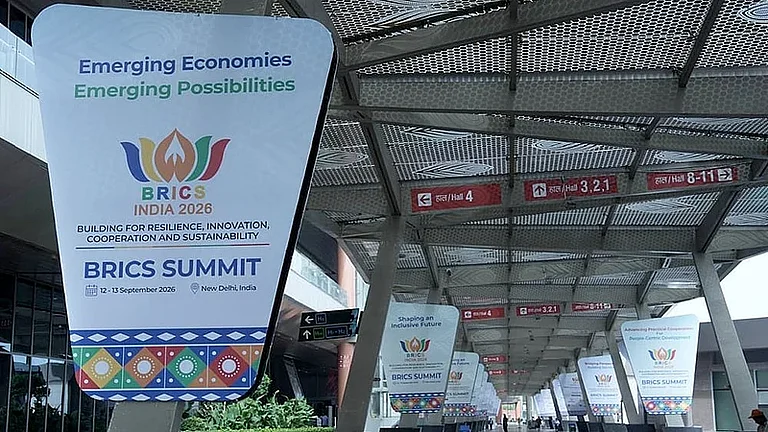
In the New Delhi Declaration 2026, BRICS leaders backed supply chains for critical minerals that are reliable, responsible, diversified, resilient, fair, sustainable and just. They said such supply chains should promote benefit sharing, value addition and economic diversification in resource-rich countries, while preserving their sovereign rights over mineral resources.
The declaration also recognised the importance of critical minerals in developing zero- and low-emission energy technologies, strengthening energy security and making energy supply chains more resilient.
On space, BRICS highlighted the achievements of the Remote Sensing Satellite Constellation (RSSC), which uses satellite capabilities to support efforts to address global challenges and promote socio-economic development.
The leaders stressed the importance of international cooperation in the peaceful exploration and use of outer space and reiterated the need to narrow disparities in space capabilities among BRICS members.
They also welcomed discussions at the BRICS Heads of Space Agencies meeting in Bengaluru, which highlighted the importance of mitigating space debris to safeguard the long-term sustainability of activities in orbit. The grouping noted progress towards amending the BRICS RSSC Agreement to allow additional BRICS space agencies to join, as well as work on the terms of reference for a proposed BRICS Space Council.

The declaration further reaffirmed BRICS support for the long-term sustainability of outer space activities and efforts to prevent an arms race in outer space (PAROS), including the weaponisation of space and threats or the use of force against objects in orbit.
BRICS members backed negotiations on a multilateral legal instrument aimed at strengthening global security in this area. They also pointed to the updated draft Treaty on the Prevention of the Placement of Weapons in Outer Space, the Threat or Use of Force against Outer Space Objects (PPWT), submitted to the Conference on Disarmament in 2014, as an important contribution to those efforts.
Advertisement
The declaration said practical, non-binding measures, including transparency and confidence-building measures (TCBMs), as well as universally agreed norms, rules and principles, could also contribute to preventing an arms race in outer space.
BRICS members also took note of an initiative by some members at the UN General Assembly to establish a single Open-Ended Working Group to facilitate more coherent and inclusive discussions on the issue. They committed to engaging constructively in that process, building on existing work towards a legally binding instrument on PAROS.
Published At: