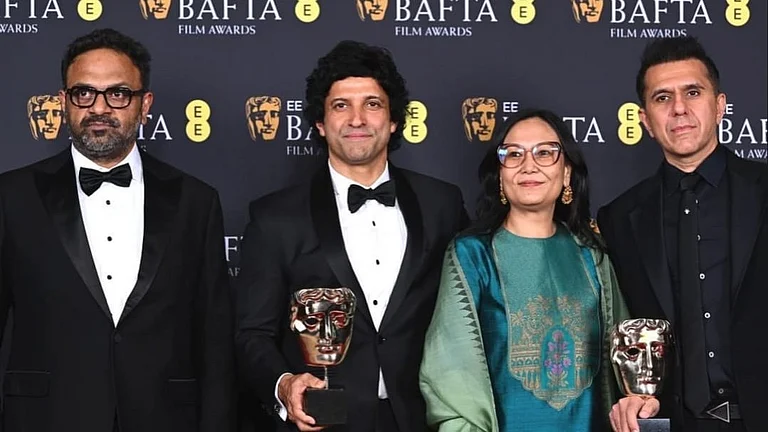
It was late night in Manipur on February 22 when India’s cinema lovers found new reason to celebrate—away in London, Manipuri film Boong, helmed by director Lakshmipriya Devi, had just won the Best Children’s and Family Film Award at the British Academy of Film and Television Arts (BAFTA) ceremony.
The Big Boong
Perhaps Boong’s recent BAFTA win, and the international attention it should bring to Manipur, will be the first step towards better things in a region that truly deserves it

“Lakshmipriya—or LP or Bembem, as I call her—is my first cousin,” says Somi Roy, a film curator and author based in Imphal. “This is a stunning award. By far the highest honour a Manipuri film has achieved on an international stage. Being an Indian film to win a BAFTA is even more astonishing. I saw this film develop through the years and it was an extremely challenging task to do this.”
The irony of a Manipuri film bringing glory to India is difficult to miss.
At a time when Manipur is split due to a brutal ethnic conflict between the majoritarian Meitei and the Kuki-Zo communities—it began in May 2023, and has led to at least 250 deaths, massive displacement of people and violence against women—this remarkable achievement not only puts the spotlight on the resilience and creativity of Manipur’s filmmakers, but also marks a defining moment for regional Indian cinema.
According to Ronid ‘Akhu’ Chingangbam, Boong’s music director, the film says a lot of things. “We were once different communities living together and that is reflected in it,” he notes. “The Meitei boy, the lead, is played by a Kuki boy. There is a Kuki girl played by a Meitei. It reminds us how it used to be.” He adds, “Now we (Meiteis) can’t go to Moreh, and they (Kuki-Zos) can’t come to Imphal. This film shows how it used to be living under one umbrella... I hope things get better. I hope the film comes to town and everyone can watch it.”
Boong was chosen by the jury over three films. Two of them from the Disney stables—Lilo & Stitch and Zootropolis 2/Zootopia 2, and Arco, voice-acted and produced by Natalie Portman. A magical win if there ever was one!
Advertisement

For LP, Boong was never just a cinematic project; it was a heartfelt tribute to Manipur, a region she described while on stage as “very troubled, very much ignored, and very unrepresented in India”. The film’s triumph, therefore, resonated far beyond the awards ceremony, symbolising both personal achievement and a powerful assertion of identity for a community long placed low on India’s priority list.
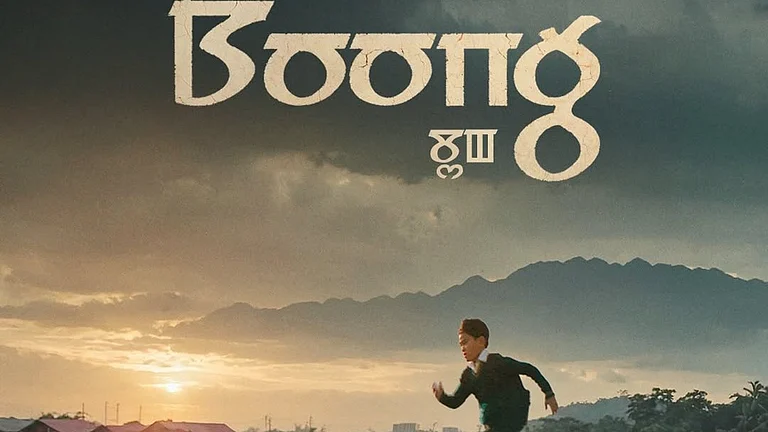
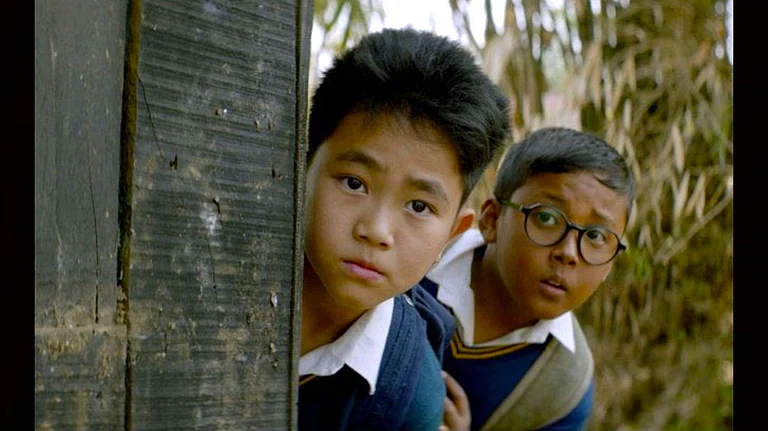
Boong tells the story of a schoolboy navigating racial divisions and political (border) challenges in Manipur, driven by resilience and the hope of reuniting a fractured family. Boong, the boy, wants to gift his mother something precious, and he decides that the best gift would be to bring his absentee father back into their lives. Teaming up with Boong in his endeavour is his close friend, a Marwari boy, a so-called outsider in the state.
Advertisement
During her acceptance speech, LP prayed for peace. “We pray that all the internally displaced children, including the child actors in the film, regain their joy and innocence, and dream once again,” she said. “We pray that no conflict is ever formidable enough to destroy the one superpower that all of us have as human beings that is forgiveness.”
For Boong’s director Lakshmipriya devi, the film was never just a cinematic project; it was a tribute to Manipur, a region she described as “very troubled, very much ignored.”
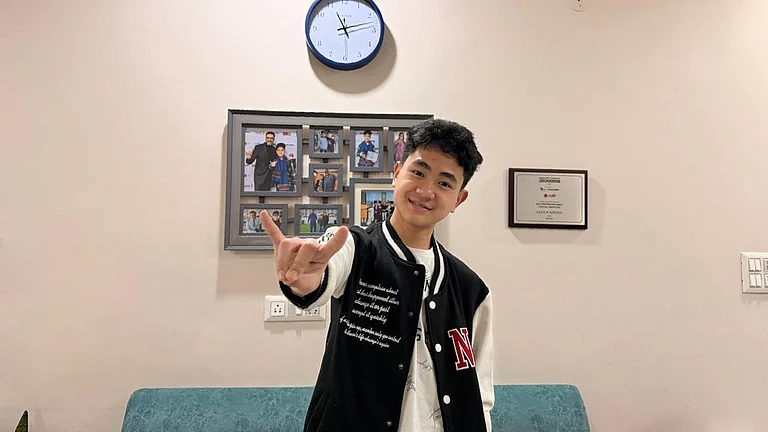
The film’s lead actor, Gugun Kipgen, is a Kuki-Zo boy who had to leave his home in Imphal, a Meitei majority area, when violence began in May 2023 and then settle in Kangpokpi. A girl’s character in the film is played by someone who still lives in a relief camp in Khurkhul.
Advertisement
“It’s unlikely this film will change anything dramatically,” Roy says. “Everything is a process and is fluid. What LP’s film is doing it is making people think. And it’s important for people in India to know and to engage with Manipur.”
Roy’s mother, M.K. Binodini Devi—Imasi, or royal mother, to everyone—was a trailblazer. Born in 1922, she was the youngest daughter of Maharaja Sir Churachand Singh and Maharani Dhanamanjuri Devi of Manipur, then a princely state of the British Raj. Binodini studied in Santiniketan from 1945, which left a deep impression on her. She left in October 1949. The same year the king of Manipur, Binodini’s brother, was coerced into joining the Indian union as is widely alleged. That was when trouble began in the state.
Just before Rabindranath Tagore’s birth centenary in 1961, a group of artists, composers and poets formed a group called Roop Raag in Manipur. “My mother was a founder member. This started in her neighbour’s house and my mother’s residence and all the artists of Manipur who loved Tagore gathered there. Music, theatre, film grew out of this place,” Roy says.
Advertisement
In 1966, Binodini wrote a play called Asanga Nongjabi (Crimson Rain Clouds), based on her experiences at Santiniketan’s Kala Bhavan and interactions with the artist Ramkinkar Baij there. Even as her experiments with the theatre form continued, she started writing radio plays, which would initially be recorded in her house. The next step was screenplay writing. That’s when she formed a working partnership with theatre and music director Aribam Syam Sharma, who was transitioning to filmmaking. The rest is history.
The craze with which the films written by Binodini and directed by Sharma were received in Manipur was beyond belief. A photograph from 1980 of the scenes outside Friends Talkies, a cinema house in Imphal’s Paona Bazar where Binodini-Sharma’s Olangthagee Wangmadasoo (Beyond the Heat of Summer) had just released, tells the story.
This was also the year when the Armed Forces (Special Powers) Act, or AFSPA, came into force in Manipur. Introduced to curb dissent and separatist movements, it gave the army immunity from prosecution and a license to kill.
In 1981, Imagi Ningthem (My Son, My Precious), their next film, released. It went on to win the Grand Prix at the Festival des 3 Continents in Nantes in 1982 and secured two honours at the 29th National Film Awards in India. The same year, it premiered at the Museum of Modern Art in New York. Then in 1991, their Ishanou was included in the Un Certain Regard section at Cannes. In 2023, it was recognised as a Cannes Classic, and a digitally restored version was screened 32 years after its release.
Imagi Ningthem was about a woman who adopts the abandoned, illegitimate son of her husband from another woman who dies at childbirth. Ishanou, the exact opposite, revolves around a woman who leaves her happy family and child to become a shamanic priestess. These films with two different ways of engaging with motherhood were made entirely in Manipur.
However, by 1991, the violence had intensified in the state. In 1987, Operation Bluebird, a counter-insurgency operation in and around Oinam village by Assam Rifles, had carried out a series of arbitrary arrests, detentions and torture of hundreds of villagers. “At least 11, possibly 15 men, including a 65-year-old village elder were tortured and illegally executed by the Assam Rifles,” mentions an Amnesty International case study of torture and extrajudicial executions.
The Future of Cinema in Manipur
LP has taken over the baton from Binodini and Sharma even as she charts her own course. But before her, there have been filmmakers and theatre personalities who, knowingly or unknowingly, shaped the state’s cinematic landscape. The late playwright Ratan Thiyam was one of them.
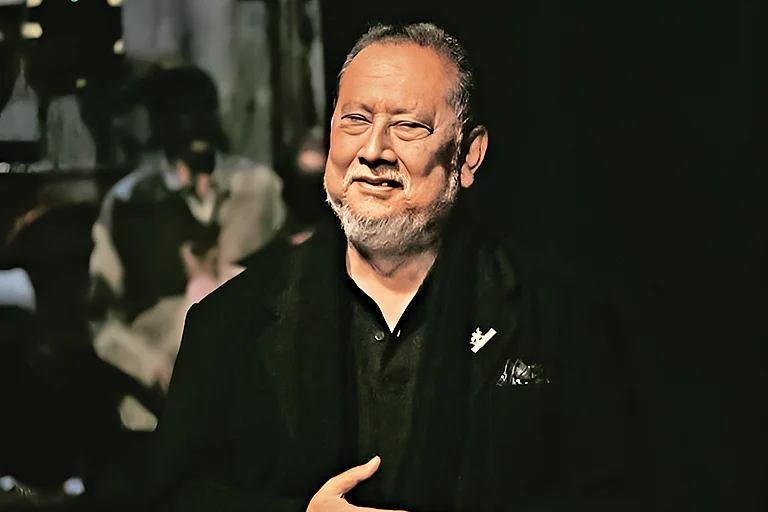
Bachaspatimayum Sunzu, a three-time National Award-winning filmmaker and secretary of the Manipur State Film Development Society, is another. Known for his documentary AFSPA 1958, Sunzu is saddened by the fading away of cinema halls in Manipur, a trend that hasn’t been helped by a call to ban screening of Hindi films in theatres. In September 2000, the Revolutionary People’s Front, the political wing of the People’s Liberation Army in Manipur, an underground outfit, imposed the ban and it has stayed in place.
“Filmmaking is a costly venture,” Sunzu says. “It also requires careful nurturing. Manipuri filmmaking is also progressing from the rudimentary simple approach with culturally grounded stories that appealed to the audience.”
His society, he says, has prepared an incubation lab for documentaries and developing fiction screenplays with mentors and monetary awards. “In 2025, there were writing projects with online participation open for all. People participated from the hills. Projects came from Ukhrul and Senapati districts but not from Churachandpur.”
The absence of participants from Churachandpur, a Kuki-Zo area, only underlines the fissures that exist and are possibly deepening.
Perhaps the success of Boong, and the international attention it should bring to Manipur, will be the first step towards better things in a region that truly deserves it.
Arijit Sen is an independent journalist in Kolkata. He is a three-time recipient of the RNG award for reporting from Northeast India.
Published At: