Sudarshan Shetty's experimental film captures Mumbai's chaotic working-class life through unpunctuated poetic recitation and breath as a metaphor for endurance.
Shot on classic 16mm celluloid, it contrasts raw urban visuals with rhythmic performances, including a powerful bus scene blending song and city noise.
Edited by Shweta Rai and sound-designed by Gautam Nair, the work meditates on silence's impossibility, turning listening into an act of resistance in a never-pausing city.
Sudarshan Shetty’s Poetic Meditation On Breath, Chaos & Survival In Maximum City
Mumbai doesn't pause for poetry, it drowns it in noise of survival, rhythm, and refusing to pause.

Summary
‘A Breath Held Long’ by Sudarshan Shetty explores a raw and subtle representation of the chaotic and noisy lives of those inhabiting urban working-class spaces in Maximum City. It captures the sight and sounds, the smells and flavors of residents in Mumbai’s chawls, high-rises and urban sprawl.
Shot on 16 mm celluloid, the 25-minute film’s visuals may appear intimidating to the eye for those used to the current technological favourite, the mirrorless camera. But let’s not forget the beauty of the 16 mm process: it creates a latent image that must be developed chemically. There is no instant review, one shoots blind, balancing artistic instinct with experience.
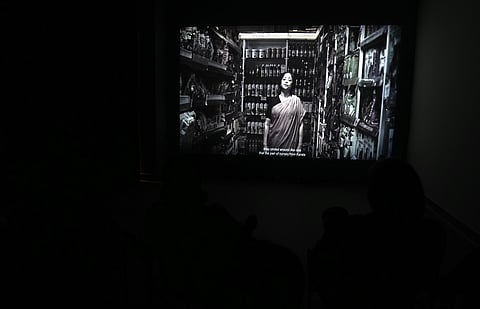
One initially feels as if the characters were breaking the fourth wall, but later it becomes background sound and you focus only on the visuals. Tribhuvan Tiwari
The actors throughout the film recite poetry without punctuation or pause, reflecting the effortless and underestimated act and art of breathing. The backdrop of all the characters displays the mundane life of Mumbai’s urban working class.
At first you actively concentrate on spoken poetry. One initially feels as if the characters were breaking the fourth wall, but later it becomes background sound and you focus only on the visuals. The artist wants you to zone out the poetry at one point; your experience, if not entirely, is in his control, even the interpretation of the visuals.

Is there a metaphorical or symbolic meaning? You can try to interpret if you want. Tribhuvan Tiwari
There are certain scenes that make you curious, such as the portrayal of a shirt hanging through a rope in the middle of a chawl. Is there a metaphorical or symbolic meaning? You can try to interpret if you want. Then there are two characters that differ in their speaking manner: one recites lines repeatedly, while the other recites the poems through his sub-conscious voice.

The aalaps and the meends of classical music blend seamlessly with the rhythm of the rickety bus. Tribhuvan Tiwari
And then there’s the bus scene, where a singer, who is also one of the characters, recites poetry in the form of rhythm language. When she starts to sing, three more people from the crowded bus join her and continue to sing in the backdrop of extreme noise that comes when one travels through a public bus. The aalaps and meends of classical music blend seamlessly with the rhythm of the rickety vehicle.
The exhibition pairs the film with sculptural works, the most peculiar to the eye is a group of small white clay figurines crowded together on a base. They're ordinary people frozen in every day postures, hands in pockets, carrying bags, facing different ways. It feels like a quiet snapshot of Mumbai's packed streets and chawls: everyone anonymous, enduring, just there in the crowd without making noise about it. Like the film's theme, but stopped in time, the bodies are holding space amid the city's push.
Advertisement

They're ordinary people frozen in every day postures, hands in pockets, carrying bags, facing different ways. Tribhuvan Tiwari
Published At: