Ravi Muppa delivers a gripping 25-minute psychological thriller built on visual storytelling.
Vikram Singh anchors the film with a morally conflicted and deeply unsettling performance.
Incognito explores voyeurism, masculinity and privacy through silence rather than spectacle.
Incognito Review| A Chilling Short That Exposes The Monster Behind Closed Doors
Ravi Muppa's 25-minute psychological thriller uses silence, visual storytelling and moral contradiction to examine voyeurism, masculinity and the unsettling cost of looking away.

Summary
If you've ever stayed at a cheap roadside hotel, Incognito will probably make you think twice the next time you check in. Ravi Muppa's 25-minute short isn't interested in loud thrills or dramatic twists. Instead, it builds tension from something far more believable: the fear that someone could be watching when you think you're alone. That simple idea becomes the foundation for an unsettling psychological thriller about power, hypocrisy and guilt.
Written and directed by Ravi Muppa and presented by Anurag Kashyap and Vikramaditya Motwane, does exactly that. Running just 25 minutes, it wastes very little time before pulling viewers into a world where privacy is currency, morality is selective and every locked hotel room hides more than one crime. Psychological thrillers often rely on elaborate twists to shock their audience. Incognito chooses restraint instead. It lets silence, glances and carefully composed visuals carry much of its emotional weight. In doing so, it becomes less about suspense and more about discomfort.
Set in a rundown motel, the film follows its receptionist and manager, played by Vikram Singh, a man who secretly installs cameras in guest rooms before selling intimate recordings online. His routine is interrupted when a frightened young woman, played by Ayushi Nema, checks into the motel with a suspicious older man, portrayed by Dev Chauhan. For the first time, the receptionist finds himself confronting a situation that forces him to question whether he should remain an observer or intervene.
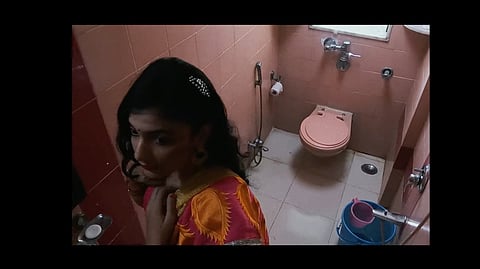
A still from Incognito YouTube
The premise is simple, but the moral conflict underneath it is far more compelling.
One of the film's strongest achievements lies in how it establishes its protagonist. The opening moments deliberately paint him as an ordinary man. He performs his morning prayers, follows a disciplined routine and appears almost gentle in his everyday interactions. That image slowly begins to fracture as we discover the reality of what happens behind his reception desk. The contradiction is striking. Here is someone who believes in ritual and righteousness while simultaneously profiting from violating the privacy of countless strangers.
Advertisement
That hypocrisy becomes the emotional backbone of Incognito.
What makes Ravi’s writing particularly effective is that it never asks the audience to forgive this man simply because he develops a conscience. His desire to rescue the young woman may appear noble on the surface, but the film constantly reminds us that his morality only awakens when confronted with a crime greater than his own. It becomes difficult to celebrate someone whose compassion arrives only after years of exploitation.
The storytelling is refreshingly minimal. Dialogue is sparse and often secondary to sound design, visual composition and performance. There are stretches where almost nothing is spoken, yet the tension continues to build. The use of silence is particularly impressive. Every creaking door, distant footstep and muted background sound contributes to an atmosphere of unease. Mathew Job's score knows exactly when to emerge and when to disappear, allowing the silence itself to become part of the narrative.
Advertisement
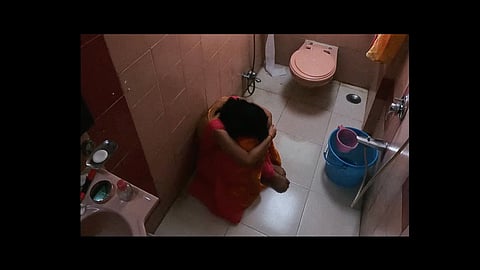
A still from Incognito YouTube
It is also a reminder of how powerful visual storytelling can be. Much of Incognito could be understood without dialogue, making it remarkably accessible. The emotions, conflicts and suspense transcend spoken language, demonstrating how cinema can communicate through image, rhythm and sound alone. It is the kind of film that could even be used in educational settings to spark conversations about consent, privacy, and exploitation.
Vikram Singh delivers an understated yet deeply effective performance. His body language constantly shifts between guilt, curiosity and fear, making the character difficult to read without ever becoming unbelievable. Ayushi Nema makes a lasting impression despite limited dialogue, communicating vulnerability without reducing her character to helplessness. Dev Chauhan's presence remains intimidating throughout, contributing to the film's constant sense of danger.
Perhaps the most fascinating reading of Incognito is through what could almost be described as an anti-Bechdel lens.
Traditionally, discussions around the Bechdel Test focus on whether female characters exist independently of male narratives. Incognito flips that dynamic in an unsettling way. Here, the narrative is driven by two men whose lives become entirely consumed by one woman. One wishes to possess her. The other believes he wants to save her. Yet both ultimately exercise power over her body and choices. The woman becomes the centre of their actions without ever truly belonging to either of them. That inversion makes the film's commentary on masculinity even more disturbing.
Advertisement
The horror here does not come from supernatural elements or graphic violence. It comes from recognition. Hidden cameras, roadside motels and exploitation are not fictional inventions. They exist. The film's greatest achievement is making everyday spaces feel terrifying without relying on exaggerated spectacle.
If there is one criticism, it is that the film leaves certain emotional threads intentionally unresolved. Some viewers may wish for greater insight into the woman's perspective. Yet that restraint also feels deliberate, forcing us to confront the uncomfortable truth that the camera, much like the protagonist, never truly allows her to own her story.
Incognito is proof that compelling cinema does not require a feature-length runtime. In just 25 minutes, Ravi Muppa crafts an intelligent psychological thriller that examines voyeurism, hypocrisy and the dangerous illusion of selective morality. It is unsettling, thought-provoking and technically assured. Most importantly, it reminds us that sometimes the most frightening monsters are not the ones hiding in the shadows, but those watching from behind the camera.
Advertisement
Published At: