Drishyam: The Conclusion returns Ajay Devgn for the franchise's third chapter.
Jaideep Ahlawat brings fresh tension as Crime Branch officer Rajveer Tomar.
The 2.5-hour thriller delivers twists but struggles to match earlier films.
Drishyam: The Conclusion Review | Ajay Devgn And Jaideep Ahlawat Face Off In A Final Game Of Cat And Mouse
Drishyam The Conclusion brings Vijay Salgaonkar back into a fresh investigation, with Jaideep Ahlawat's Rajveer Tomar determined to uncover what really happened.

Summary
Drishyam: The Conclusion brings Vijay Salgaonkar back to the centre of a case that was supposed to have ended years ago. Abhishek Pathak returns to direct Ajay Devgn, Tabu, Shriya Saran, Jaideep Ahlawat and Prakash Raj in the latest chapter of a franchise built on one deceptively simple question: how far can a man go to protect his family?
There is an immediate familiarity to Drishyam: The Conclusion. The October 2 jokes, Inspector Gaitonde's dry humour and Vijay's ability to stay several steps ahead of the police are all part of the franchise's DNA. But this time the film is less interested in the Salgaonkars as a family and more interested in Vijay as a man trying to survive another investigation. That shift gives the film momentum, but it also removes some of the emotional grounding that made the earlier films so effective.
The case surrounding Sameer Deshmukh is still not completely buried. With the hearing approaching its final stages, new evidence gives Crime Branch officer Rajveer Singh Tomar reason to reopen the investigation. Jaideep Ahlawat enters the story as a very different kind of threat from the officers Vijay has faced before. Rajveer is patient, observant and relentless. He does not need to shout to make Vijay uncomfortable. His job is to find the missing piece, and the film gets much of its tension from watching him close the distance.
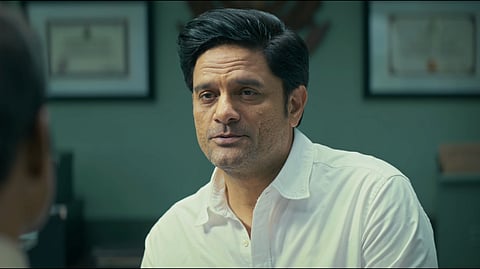
A Still Of Jaideep Ahlawat YouTube
Ahlawat is easily one of the strongest parts of the film. He gives Rajveer an intimidating stillness without turning him into a standard police villain. Watching an actor of his intensity go up against Devgn's controlled performance works because neither actor is trying to overpower the other. Ajay Devgn again relies heavily on his eyes and his ability to make Vijay seem ordinary even as he calculates his next move.
The film's moral tension is also tied to the previous chapter. Vijay has always been presented through the complicated logic of a father protecting his family, but the new film makes that moral position harder to hold onto. Who was right and who was wrong? Where exactly is Sameer's body? And does protecting your family continue to justify every decision once the consequences keep spreading?
The problem is that the film sometimes confuses a complicated plot with convincing writing. There are several twists and subplots designed to keep the audience guessing, and some of them work well. The trouble begins when the mechanics behind Vijay's latest plan need to be examined more closely. The earlier Drishyam films made his elaborate planning feel impressive because the details mattered. Here, some developments arrive because the screenplay needs them to rather than because the characters have logically earned them. The film wants the audience to admire the trick before asking whether the trick actually holds up.
Advertisement

A Still From Drishyam: The Conclusion YouTube
That becomes particularly noticeable as the story moves towards its climax. The courtroom and police investigation threads create enough pressure, but the final stretch occasionally leans too heavily on reveals and dramatic timing. For a franchise that built its reputation on making improbable plans feel meticulously possible, that is a significant weakness.

A Still From Drishyam: The Conclusion YouTube
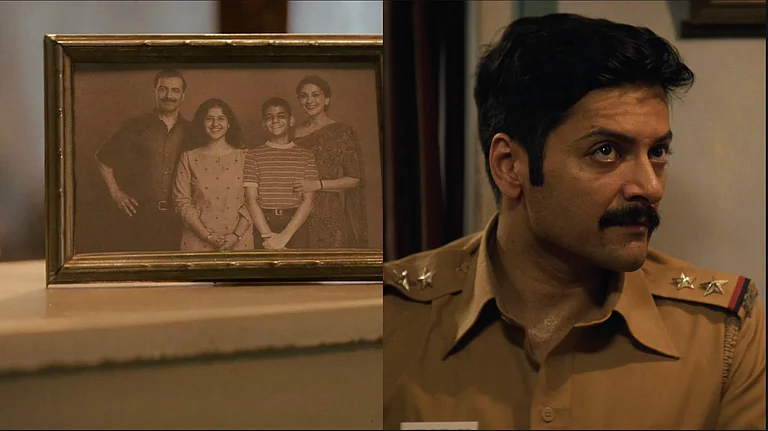
The film is also less successful when it pushes Vijay's family into the background. Nandini and the daughters were once essential to understanding why Vijay was willing to go so far. Here, their presence is largely tied to the case and the family's future rather than their individual emotional lives. The Anju's marriage sequence brings some of that tension back, but it also highlights how little space the family gets elsewhere. The film wants the stakes to feel personal without spending enough time with the people Vijay is supposedly protecting.
Advertisement
Thankfully, Inspector Gaitonde remains a welcome source of dark humour. Kamlesh Sawant understands exactly how much to play up the character's sarcasm without breaking the film's tension. Prakash Raj also makes an impression as Indrajit Shetty, bringing authority to a role that could easily have become another functional piece of the investigation. Tabu has less room than expected, which is frustrating given Meera and Vijay's history.
Prakash gets a slightly different space to work with as Indrajit Shetty, the lawyer brought into the case as the pressure around Vijay increases. He gives the character the confidence of someone who knows how to handle a courtroom without turning every line into a performance. There is weight in the way he delivers even the more straightforward exchanges, and his presence adds another layer to the film's legal proceedings. It is not a very large role, but Raj makes it feel more substantial than the screenplay allows it to be.
Advertisement

A Still Of Prakash Raj YouTube
Unfortunately, Tabu is not given enough material to match Meera Deshmukh and Vijay's history. Her grief and anger were such an important part of the earlier films, but here the performance often feels flat because the writing keeps her at a distance from the emotional core of the story. There are moments when the character should carry years of resentment and pain, yet the film rarely gives Tabu the scenes needed to bring that weight back.

A Still Of Tabu YouTube
Visually and tonally, the film understands what kind of thriller it needs to be. The atmosphere is grim without becoming relentlessly heavy, and Amar Mohile's background score does a lot of work in keeping the investigation moving. Pathak also knows when to let a scene sit on an actor rather than fill every moment with exposition. Yet the pacing is uneven because the suspense is sometimes stretched around information that does not carry enough weight.
Advertisement
Drishyam: The Conclusion has enough twists, humour and performances to keep the franchise's loyal audience invested, but it does not always possess the precision that made the earlier films so memorable. Jaideep Ahlawat gives the finale a much-needed jolt, while Ajay Devgn remains perfectly cast as Vijay. The mystery may be approaching its end, but too many solutions ask to be accepted rather than worked out.
Published At: