Advertisement
X

Bobby Beauty Parlour Review | A Tender Coming-Of-Age Tale About Friendship, Freedom And Growing Apart

Outlook Rating:
3.5 / 5

Adrija Sinha and Parul Rana shine in this thoughtful short film that explores female friendship, class and the quiet grief of being left behind

Bobby Beauty Parlour Review Special Arrangement
Summary
  • Adrija Sinha and Parul Rana elevate this intimate coming-of-age short with heartfelt performances. 

  • Baba Bulleh Shah's Charkha beautifully deepens the film's emotional farewell and final moments. 

  • Friendship, class and womanhood intertwine in this thoughtful 2026 short film without easy answers. 
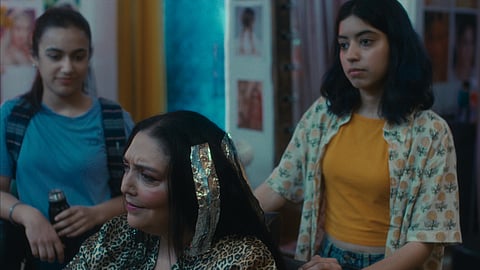
Friendships rarely end with dramatic confrontations. More often, they dissolve because life pulls two people in different directions. One moves ahead while the other stays behind. Writer-director Shashwat Dwivedi captures that ache with remarkable sensitivity in Bobby Beauty Parlour. Presented by Imtiaz Ali and Anurag Kashyap as part of Friendship Week, the short film uses the confines of a small-town beauty salon to tell a deeply personal story about growing up, womanhood and the invisible walls society continues to build around young women. 

Running within a compact runtime, the film never feels rushed. Instead, it allows conversations, silences and fleeting moments to carry emotional weight. Rather than relying on dramatic twists, Bobby Beauty Parlour trusts its characters enough to let ordinary interactions reveal extraordinary emotions. 

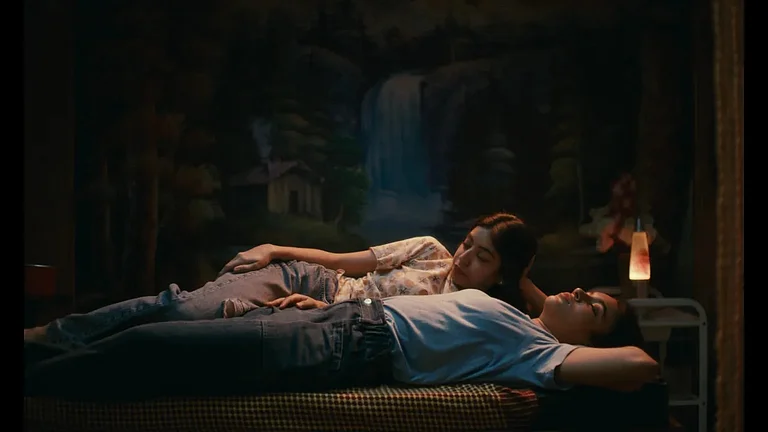
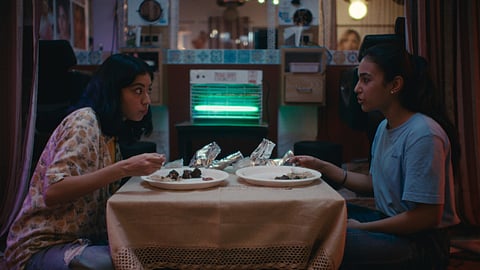
Set during the hottest day of the year, the story follows Eelu (Adrija Sinha), who visits her childhood friend Manu (Parul Rana) at the beauty parlour where she works. When the salon owner suffers a heatstroke, the two find themselves stranded inside the parlour with nowhere to go. What begins as an afternoon of dancing, gossiping and reminiscing slowly transforms into an emotional farewell as deeper insecurities, ambitions and fears surface. The arrival of Arun (Saksham Raj) shifts the mood further, forcing both women to confront realities they had momentarily forgotten. 

A Still From Bobby Beauty Parlour
A Still From Bobby Beauty Parlour Special Arrangement

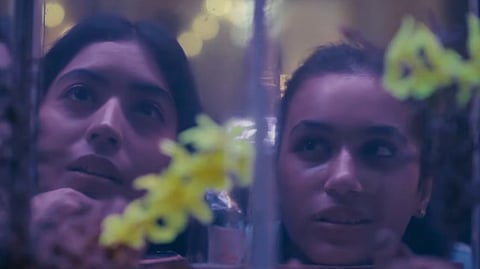
What makes Bobby Beauty Parlour particularly engaging is that it refuses to simplify its central relationship. It would have been very easy to bring the story entirely towards a romantic reading between the two women. Instead, the film wisely leaves room for multiple interpretations. Is this simply the heartbreak of childhood friends drifting apart? Is one of them carrying feelings she cannot express? Or is this fundamentally about watching someone else escape a life you know you will never leave? 

The film never insists on one answer, and that restraint becomes one of its greatest strengths. 

Adrija Sinha delivers a wonderfully natural performance as Eelu. She embodies someone standing at the threshold of adulthood, excited by the possibilities waiting beyond her hometown while remaining emotionally tied to the life she is preparing to leave behind. There is an ease to her performance that makes every conversation feel spontaneous rather than scripted.  

Advertisement

The real emotional anchor, however, is Parul Rana. Manu spends most of the film wearing a smile that barely conceals what she already knows. Her future has, in many ways, already been decided. Bobby Beauty Parlour is not merely her workplace but also the symbol of a life she may never escape. Rana captures that helplessness with remarkable subtlety. By the closing moments, her grief feels larger than simply losing a friend. It becomes the mourning of an entire future that will never belong to her. 

That emotional contradiction is beautifully observed. She is genuinely happy that Eelu is moving forward while simultaneously devastated by what that departure means for herself. Pride, resentment, loneliness and love coexist without ever contradicting each other. Few films capture such conflicting emotions with this level of honesty. 

Saksham Raj (Arun, Eelu's Boyfriend) functions less as a fully realised individual and more as a representation of something much larger. He embodies the controlling expectations that continue to shape women's lives long after childhood. His presence subtly alters the dynamic between the two friends, reminding viewers that even when women begin breaking social barriers, patriarchal control rarely disappears completely. Sometimes it simply changes its form. 

Advertisement

The short also speaks thoughtfully about class without making grand political speeches. One woman is preparing to step into a larger world while the other remains confined by circumstance, opportunity and expectation. Their separation is not driven by conflict but by inequality. The sadness comes from recognising that both women understand this reality long before either of them says it aloud. 

A Still From Bobby Beauty Parlour
A Still From Bobby Beauty Parlour Special Arrangement

Visually, the beauty parlour becomes more than just a location. It is both a safe space and a prison. Within its colourful walls, the two women laugh, dance and briefly forget the outside world. Yet the same walls also represent the limitations surrounding Manu's life. The contrast between freedom and confinement quietly shapes every scene. 

The use of Baba Bulleh Shah's ‘Charkha’ is particularly inspired. Early in the film, the song accompanies moments of joy as the two friends dance together, temporarily free from responsibility. By the final act, the same composition returns with an entirely different emotional texture. As Eelu walks away and Manu remains behind, the song transforms into a lament for everything left unsaid. Without needing lengthy dialogue, the music deepens the emotional impact of the ending. 

Advertisement

Janhavi Asthana's cinematography complements the intimacy of the story beautifully. The camera rarely intrudes, instead observing the characters with warmth and patience. The natural performances, understated editing and restrained direction create a film that feels lived-in rather than manufactured. 

If Bobby Beauty Parlour occasionally falls short, it is because some of its broader social ideas remain just beneath the surface. The film gestures towards conversations around gender, class and freedom but stops before fully exploring them. A little more depth could have elevated an already thoughtful premise into something even more memorable. 

A Still From Bobby Beauty Parlour
A Still From Bobby Beauty Parlour Special Arrangement

Even so, Bobby Beauty Parlour succeeds because it understands that growing apart can hurt just as much as falling out. It is about the quiet heartbreak of watching someone you love move towards a future that was never available to you. Through strong performances from Adrija Sinha and especially Parul Rana, alongside sensitive filmmaking and a beautifully judged emotional rhythm, the short becomes far more than a story about friendship. It becomes a reflection on womanhood, choice and the invisible boundaries that continue to shape both. 

Advertisement
Published At:
US