Over the past few decades, artists have spoken publicly about Palestine while navigating professional backlash and negative social media campaigns.
Susan Sarandon, who has been consistently vocal about the genocide in Gaza, says that her advocacy made it nearly impossible to work within the conventional Hollywood ecosystem.
Hollywood’s response has been harsher for younger actors like Melissa Berrera, who don’t have decades of career capital.
Susan Sarandon To Sally Rooney: The Price Artists Pay For Palestinian Solidarity
Hollywood may prefer its politics fictional, but artists, the stubborn creatures that they are, keep rabble rousing. One of the first major flashpoints in Hollywood arrived in the late 1970s with Vanessa Redgrave.

Summary
For over five decades in Hollywood, Susan Sarandon has treated political neutrality the way some actors treat carbs: as an anathema. From the US war on Iraq to the Palestinian genocide, she has spoken up vociferously and consistently.
At a discussion this February in Spain, before receiving the International Goya Award for lifetime achievement, Sarandon spoke with disarming bluntness about what followed her participation in pro-ceasefire Palestine protests. She spoke again about how the United Talent Agency dropped her as a client after she marched and publicly called for an end to Israel’s assault on Gaza. The fallout went beyond representation. Sarandon promptly lost out on television appearances, major studio projects evaporated and it became nearly impossible to work within the conventional Hollywood ecosystem. “I don’t know lately if it’s changed. I couldn’t do any major film or anything connected with Hollywood,” she noted at the event.
Eventually, Sarandon found agents in England and Italy. She worked on a film with an Italian director who, she said, had been warned not to work with her. For now, she joked, she has developed a new specialty: small independent films with first-time directors. It is an ironic position for someone whose filmography includes some of American cinema’s most iconic roles.
She also took the opportunity to praise Spain’s stance on the issue. Spanish Prime Minister Pedro Sánchez has been openly critical of the US–Israel alliance over the attacks on Iran and Palestine, and Spain has even withdrawn its ambassador to Israel. Sarandon added that it is deeply validating to see actors like Javier Bardem speak out so forcefully, especially at a time when artists and media figures in the United States face growing pressure for doing the same.
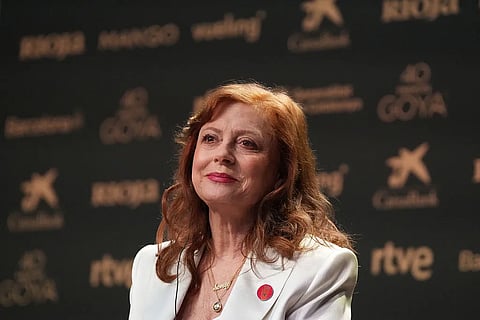
Susan Sarandon Wearing A Gaza Solidarity Pin X
Sarandon’s experience, however bleak, is not unique. Over the past few decades, a growing list of artists have spoken publicly about Palestine while navigating professional backlash and negative social media campaigns.
Mark Ruffalo has long positioned himself as a politically engaged actor, advocating for environmental causes as well as progressive policies. Ever since he began speaking more forcefully about Palestinian civilian suffering and calling for a ceasefire, he has faced sustained criticism from pro-Israel lobbies demanding retractions.
Advertisement
The response has been harsher for younger actors without decades of career capital. Melissa Barrera, who had emerged as one of the central figures in the revived Scream franchise, was dismissed from the seventh instalment (which released in February to bombastic reviews) after posting in favour of a ceasefire in Gaza. The production company, Spyglass Media Group, described Barrera’s posts as antisemitic and fired her.
Barrera rejected that characterisation. Castmate Jenna Ortega also walked away from the franchise in solidarity. Barrera and Ortega are among the other young voices—from Euphoria’s (2019) Hunter Schafer to The Last of Us’ (2023) Bella Ramsey (and Pedro Pascal)—taking a stand despite the risk of being blacklisted. Actor-comedian Ramy Youssef has also used his platform to speak out for Palestine, most memorably during his appearance hosting Saturday Night Live. Ramy, the co-creator of the Netflix series Mo—which is about a Palestinian refugee living and seeking political asylum in the US—has been accused of politicising entertainment time and again.
Advertisement
Even beyond actors, many American artists have shown solidarity for the cause of Palestinian liberation. Singers like Kehlani and Macklemore have been loud critiques; Macklemore even called Israel’s assault on Palestine a “genocide” without hesitation. Supermodels Gigi Hadid and Bella Hadid—their father, Mohamed Hadid, is a Palestinian in exile who survived the 1948 Nakba—have also been among the most visible figures from the world of fashion speaking about Palestinian rights, despite lost opportunities and cultural clout.

Mark Rufallo Wearing A Gaza Solidarity Pin At The Academy Awards 2024 X
The Hypocrisy of Hollywood
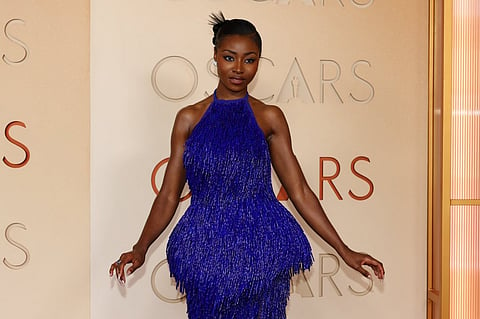
Actor Jayme Lawson At The Academy Awards 2026 X
At the 2026 BAFTA Awards, Tourette’s campaigner John Davidson—present as the subject of the 2025 biographical film I Swear—unintentionally shouted racial slurs while actors Michael B. Jordan and Delroy Lindo were presenting. The outburst, a symptom of Davidson’s neurological condition, was broadcast on television despite a delay that could have allowed editors to remove it.
Sinners (2025) actor Jayme Lawson called out what she described as the hypocrisy of Hollywood. In a later red carpet interview, she argued that the BAFTA broadcast had censored expressions of Palestinian solidarity while at the same time failing to protect the dignity of Black performers onstage. Lawson was careful to place responsibility not on Davidson, but on the institutions managing the broadcast.
Advertisement
The episode has become a significant and revealing example of how Palestinian solidarity has been strategically and selectively suppressed in mainstream cultural spaces.
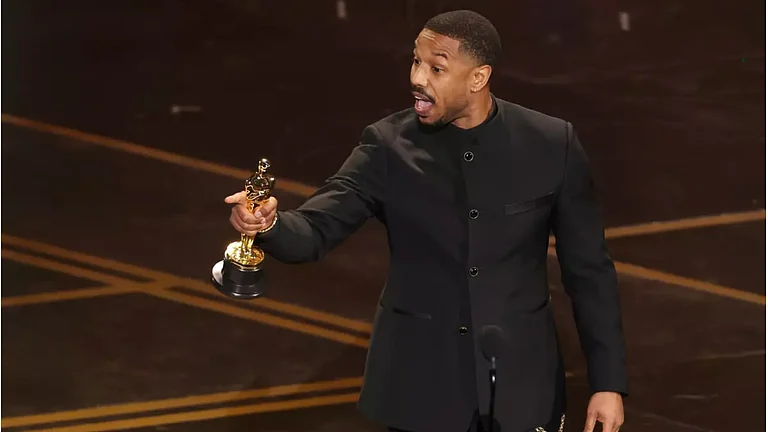
A Long History of Protest
Hollywood may prefer its politics fictional, but artists, the stubborn creatures that they are, keep rabble rousing.
One of the first major flashpoints in Hollywood arrived in the late 1970s with Vanessa Redgrave. In 1977, Redgrave helped produce and narrate a documentary titled The Palestinian, which examined the Palestinian liberation movement and included interviews with members of the Palestine Liberation Organisation, including then-chairman of the PLO, Yasser Arafat. In a 2012 interview with The Daily Telegraph, Redgrave had revealed how she funded the documentary by selling her house.
When Redgrave was nominated for a Best Supporting Actress Academy Award for her performance in Julia (1977), there was immediate pushback. Members of the Jewish Defense League picketed the Oscars ceremony and burned her effigy. Nonetheless, Redgrave won the award, and she used her acceptance speech to condemn what she described as intimidation by “Zionist hoodlums”.
Advertisement
The fallout lingered for years. Redgrave later acknowledged that the controversy likely cost her roles, though she maintained that speaking out against injustice mattered more than the professional consequences. Her stance made her one of the earliest and most prominent Hollywood actors to publicly defend Palestinian rights.
Sarandon, in many ways, belongs to this lineage. The Thelma & Louise (1991) star’s participation in anti-war protests has placed her squarely within a tradition of political dissent in American cinema that is more anomaly than norm.

The Irish Factor
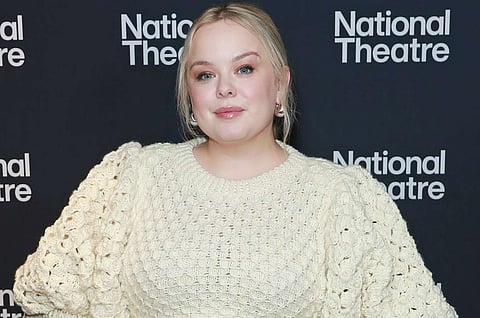
Nicola Coughlan Instagram
The Irish political imagination sees Palestine through a kindred historical lens. Irish artists have been among the most vocal cultural figures expressing solidarity with Palestinians, frequently drawing parallels with Ireland’s own history of colonial domination under the British Empire. The Balfour Declaration of 1917, issued by Britain during its imperial zenith, promised support for a Jewish homeland in Palestine while the region remained under British control. For many Irish observers, the story echoes their own experience of British imperial oppression. That historical parallel has helped shape a distinctly Irish cultural solidarity with Palestinians, visible not only in politics but across literature, film, and music.
Nicola Coughlan, widely known for her role in Bridgerton (2020-ongoing) and Derry Girls (2018-2022), has been a proponent of Palestinian liberation and peace for years. During the height of her fame, Coughlan has used her platform to raise funds for humanitarian relief in Gaza and advocated for a ceasefire. Her posts have obviously generated both admiration and hostility online. But that has not deterred her or her efforts to encourage fellow artists, including Sarandon, to help raise aid and awareness.

Sally Rooney X
In contemporary times, few writers have articulated the Irish perspective as clearly as the novelist Sally Rooney. Known internationally for her novels Normal People (2018) and Conversations with Friends (2017), Rooney has been outspoken about Palestine for years, supporting cultural boycotts and criticising Israeli state policy. The backlash has been intense. The UK government had warned her regarding her support for Palestine Action, a direct-action network that British authorities had temporarily designated a terrorist organisation before the decision was overturned in court. She faced the threat of arrest if she stepped foot in the UK.
However, speaking at the People’s Congress for the Hague Group in Amsterdam in March, Rooney boldly and fiercely argued that public figures “at the heart of the empire” have a responsibility to speak out. Rather than seeing solidarity with Palestinians as a sacrifice, she described it as an “extraordinary privilege”.
“We should see and say that it is the honour of our lives to stand with Palestine,” Rooney vigorously crooned on. This was a resounding reminder for our times. When history is written in rubble, with the blood and tears of the helpless and ordinary, and silence becomes the easiest refuge, it becomes all the more imperative to stand firm and speak truth to power, no matter the cost.

Published At:
Tags