Sonam Wangchuk ended his 26-day fast after written assurances from the Centre.
Government promised examination reforms, anti-paper leak legislation and protections for protesters.
CJP secured in-principle approval for compensation and no action against demonstrators.
Why Did Sonam Wangchuk End His Hunger Strike? What The Centre Promised And What Comes Next
Written assurances from the Centre ended Wangchuk’s hunger strike, but the CJP protest remains unresolved

Summary
Activist Sonam Wangchuk ended his 26-day hunger strike shortly after midnight on Friday after receiving written assurances from the Centre on examination reforms, action against paper leaks and protections for peaceful student protesters.
Wangchuk broke his fast at Medanta Hospital in Gurugram in the presence of Union Health Minister JP Nadda, Minister of State in the Prime Minister’s Office Jitendra Singh and senior members of the Apex Body of Leh Ladakh.
The breakthrough followed a four-hour meeting chaired by Union Home Minister Amit Shah on Thursday. According to India Today, Shah held discussions with Nadda and Singh amid mounting concern over Wangchuk’s health and the intensifying protests linked to the alleged NEET-UG paper leak.
The meeting resulted in the government adopting what India Today sources described as a “positive approach” towards Wangchuk’s demands while treating his deteriorating health as an immediate priority.
Why Did Wangchuk End His Fast?
Following the high-level meeting, Jitendra Singh spoke to Wangchuk’s wife, Gitanjali Angmo, and assured her that the government was prepared to address the concerns raised by the activist.
Nadda and Singh later visited Wangchuk at the hospital and personally handed him a written assurance from the Centre. The two ministers remained present when he ended his hunger strike.
Announcing his decision, Wangchuk said the fast was withdrawn after prolonged negotiations and in view of the risk of further unrest.
“Just now in the presence of Union Ministers JP Nadda & Dr Jitendra Singh and the senior leaders of Apex Body of Leh Ladakh I finally broke my fast after 26 days,” Wangchuk wrote on X.
“Earlier 65 Members of Parliament from different political parties had visited or signed letters urging me to break the fast. This was done after a long negotiation on various conditions and in view of possible violence in the country. Meanwhile I urge you all to stay very vigilant about not allowing violence of any kind anywhere,” he added.
Prime Minister Narendra Modi subsequently wished Wangchuk a speedy recovery.
Advertisement
“I urge Sonam ji to follow his daily routine as advised by the doctors and regain his weight as soon as possible. I pray to the Almighty that Sonam ji remains healthy,” Modi said.

What Did The Centre Promise?
According to Wangchuk, the written communication from the government included assurances that Parliament would discuss accountability in the examination system, the alleged NEET-UG paper leak and wider reforms in the conduct of competitive examinations.
The government also assured him that cases would not be filed against peaceful demonstrators, including those who participated in the July 20 ‘Chalo Parliament’ march.
Another demand concerned compensation for the families of students who died by suicide following the examination controversy. Wangchuk said the Centre was “positively considering” the proposal.
The ministers assured Wangchuk that legislation aimed at strengthening safeguards against examination paper leaks would be introduced in Parliament the following week.
Advertisement
The proposed Bill, being framed under the Department of Personnel and Training, is expected to include stricter punishment for those involved in paper leaks and provisions for fast-track courts.
PM Assures Strict Action
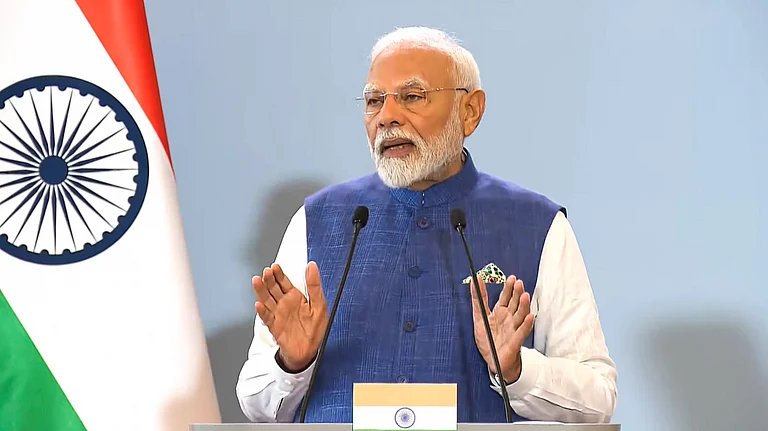
In a late-night video message, Prime Minister Modi confirmed that the Union Cabinet would discuss a proposal for stronger action against examination paper leaks.
“The Cabinet will discuss the issue of paper leaks on Friday... On Monday, when the second week of the Monsoon Session of Parliament begins, a Bill will be brought with provisions for strong action against paper leaks and we will try to pass it as early as possible,” Modi said.
Describing paper leaks as “very painful” for students and their families, the Prime Minister said those allegedly responsible for the NEET-UG leak had been arrested.
“The guilty have been caught. They are now in jail. Our most significant responsibility was to ensure that the students do not lose a year... By using all resources, the government has ensured that 22 lakh students could attend the re-test,” he said.
Advertisement
Modi also said he had instructed authorities to establish fast-track courts to ensure quicker trials. He described the proposed legislation as another step towards making the examination system “foolproof”.
Government Meets CJP
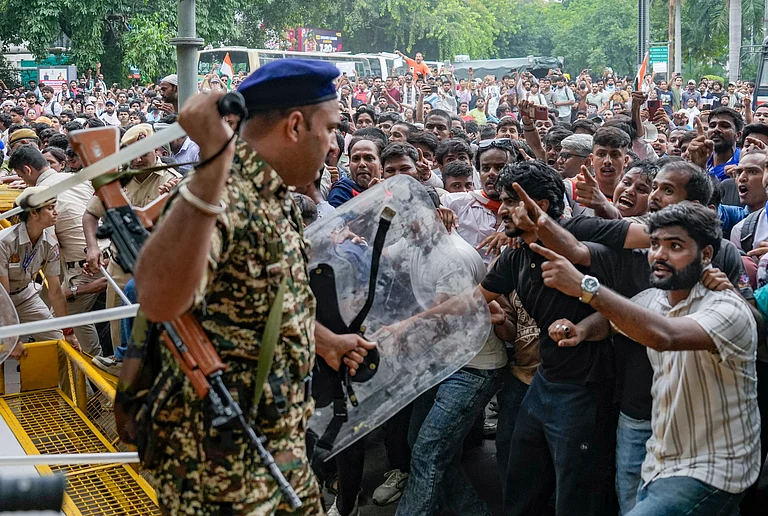
The government’s assurances to Wangchuk were followed by direct negotiations with the Cockroach Janta Party, or CJP, which has been leading the student protests.
CJP spokespersons Ashutosh Ranka and Saurav Das met Nadda and Jitendra Singh on Friday. It was the second high-level interaction between the protest group and the Centre.
After the two-hour meeting, Ranka said the government had given “in-principle” approval to two CJP demands: compensation for the families of NEET aspirants who died by suicide and protection from legal action for peaceful student protesters.
Nadda said the talks covered three demands and five suggestions for reforming the examination system.
“We have told them that we will meet them again tomorrow afternoon and tell them about the discussion we had among the Government,” Nadda said, according to news agency ANI.
Advertisement
The decision to meet the CJP came after its leaders rejected an earlier government proposal to hold talks at Nadda’s residence or office. The group had insisted on discussions at Jantar Mantar or another mutually acceptable neutral venue.
What Remains Unresolved?
The principal unresolved demand is the resignation or removal of Union Education Minister Dharmendra Pradhan.
“Dharmendra Pradhan needs to resign or he needs to be sacked. We spoke to the government in detail about this. The government has sought time till tomorrow afternoon to respond to this demand,” Ranka told reporters.
He warned that any delay in removing Pradhan would strengthen rather than weaken the agitation.
CJP founder Abhijeet Dipke also made it clear that Wangchuk’s decision to end his fast did not mark the end of the protest.
“We are relieved and grateful that Sonam sir has ended his hunger strike after 26 days. Thank you, sir, for your extraordinary courage and sacrifice. By putting your own life on the line, you awakened the conscience of an entire nation. Your life is far too precious to this country,” Dipke wrote on X.
“The Cockroach Janta Party’s peaceful protest at Jantar Mantar will continue until Dharmendra Pradhan resigns,” he added.
What Happens Next?
The government and the CJP are expected to hold another round of discussions on Saturday, July 25. The Centre is likely to communicate its position on the demand for Pradhan’s resignation during that meeting.
Meanwhile, the proposed anti-paper leak legislation is expected to move through the Cabinet before being introduced in Parliament. Its provisions, enforcement mechanism and applicability to national and state-level examinations will determine whether it satisfies demands for structural reform.
Wangchuk’s withdrawal has reduced immediate concerns over his health and removed one major pressure point for the government. However, it has not ended the larger confrontation.
The CJP continues to demand political accountability, while the Centre has so far concentrated on compensation, protection for protesters and institutional reforms.
Published At: