Bombay High Court convicted Tarun Tejpal in the 2013 Goa rape case.
The ruling overturned his 2021 acquittal by a Goa sessions court.
The case concerns allegations involving a former junior colleague at ThinkFest.
Timeline | From Acquittal To Conviction: HC Verdict Revisits The 2013 Sexual Assault Case Against Tarun Tejpal
The High Court rejected the trial court’s reliance on assumptions about how a sexual assault survivor should behave

Summary
The Bombay High Court has convicted journalist and Tehelka founder Tarun Tejpal of rape, sexual harassment and the use of criminal force against a former junior colleague, overturning a Goa trial court’s 2021 decision to acquit him of all charges.
The case relates to allegations that Tejpal sexually assaulted the woman inside a hotel elevator during the ThinkFest event in Goa in November 2013. The Goa bench of the Bombay High Court, comprising Justices Neela Gokhale and Amit Jamsandekar, reversed the trial court verdict nearly 13 years after the alleged incident.
Tejpal, 62, was directed to remain present in court for the pronouncement of the judgment. After being convicted, he maintained that he was not guilty and said he would challenge the ruling before a higher court.
Who Is Tarun Tejpal
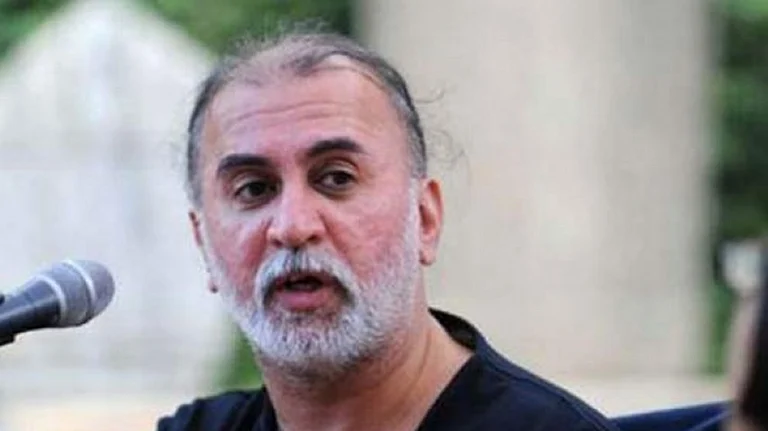
Tarun Tejpal is a journalist and the founder of Tehelka magazine. At the time of the alleged incident, he was the publication’s editor-in-chief, while the complainant was a junior journalist working with the organisation.
Tejpal has repeatedly described the case against him as politically motivated. He told the judges that false allegations had been made against him as part of a “political vendetta” by the Bharatiya Janata Party government in Goa because of his criticism.
Following the High Court’s verdict, Tejpal again claimed that he was a “political victim”. Seeking leniency, he referred to his age and family circumstances.
“I am 62, and I believe I am a victim. I have a wife. There’s not much else to say. All that I can say is we can go and appeal. Please be lenient with me,” Tejpal told the court.
He also described himself as a husband and the father of two daughters.
What Are The Allegations Against Tejpal
A woman journalist accused Tejpal of sexually assaulting her inside an elevator at a Goa hotel on November 7 and November 8, 2013, during the ThinkFest event.
Advertisement
Tejpal was arrested in November 2013. He spent around six months in jail before the Supreme Court granted him bail in 2014.
In a 2,684-page chargesheet filed before a fast-track court in Goa, the police alleged that Tejpal assaulted the woman twice and maintained that there was sufficient evidence to establish the charges against him.
The charges included provisions relating to rape, sexual harassment, wrongful restraint, wrongful confinement and the use of criminal force. Provisions dealing with rape committed by a person occupying a position of authority or control over a woman were also invoked.
The Conviction
The High Court convicted Tejpal under Section 376(2)(f) of the Indian Penal Code, which covered rape committed by a relative, guardian, teacher or a person occupying a position of trust or authority towards a woman.
He was also convicted under Section 354A, dealing with sexual harassment, including unwelcome physical contact, explicit sexual advances or demands for sexual favours.
Advertisement
The court further found him guilty under Section 354B, which criminalised assault or the use of force against a woman with the intention of disrobing her.
Since some of the provisions under which he has been convicted carry a mandatory minimum sentence of 10 years, Tejpal could face imprisonment ranging from 10 years to life. The court is scheduled to hear arguments on the quantum of sentence before announcing the punishment.
Why The Goa Trial Court Acquitted Him
In May 2021, a sessions court in Goa acquitted Tejpal of all charges.
The trial court observed that the complainant “did not demonstrate any kind of normative behaviour” that a victim of sexual assault “might plausibly show”.
It also relied on messages exchanged between the complainant and Tejpal to conclude that she was “neither traumatised nor terrified”. According to the sessions court, this “completely belies” the prosecution’s case.
Advertisement
The woman’s conduct before and after the alleged incident became a significant part of the trial court’s assessment. The Goa government subsequently challenged the acquittal before the Bombay High Court.
When the High Court issued notice on the state’s appeal in June 2021, it observed that the trial court judgment “appears to provide a manual on how rape victims should behave”.
What The Goa Government Argued
During the appeal, the Goa government described the trial court’s handling of the case as “perturbing” and called its conclusions a “classic case of perverse findings”.
Solicitor General Tushar Mehta, appearing for the state, argued that the sessions court had effectively placed the complainant on trial by judging her actions through preconceived ideas about how a survivor of sexual assault was expected to behave.
Mehta submitted that there could be no universal standard for assessing a survivor’s reaction. Such responses, he said, could differ depending on a person’s education, personality, social background and the circumstances surrounding the alleged assault.
Advertisement
He also objected to what he described as “embarrassing” questions asked during the complainant’s cross-examination. These included questions about whether it was “immoral” to have consensual sex, voluntarily consume alcohol or smoke cigarettes, and whether she had conversations with friends containing “sexual overtones”.
According to Mehta, such questions should neither have been asked nor relied upon by the trial court.
The state further argued that the lower court had placed excessive emphasis on minor inconsistencies in the complainant’s statements instead of considering whether her central allegations remained consistent.
Tejpal’s Apology Email
A major point of dispute during the proceedings was an email sent by Tejpal to the complainant after the alleged incident.
Mehta told the High Court that Tejpal had apologised for his “lapse of judgment”, expressed shame and stated that he believed the encounter had been consensual.
The prosecution argued that these statements amounted to an acknowledgement that an encounter had taken place.
Tejpal’s lawyers rejected this interpretation. Senior Advocate Aabad Ponda argued that the prosecution had wrongly portrayed the apology emails as admissions of a physical or sexual encounter.
According to the defence, none of the emails admitted to a consensual physical or sexual encounter. The references, it argued, were limited to a consensual verbal conversation of a sexual nature.
What Tejpal’s Defence Argued
The defence questioned the complainant’s account and pointed to what it described as contradictions in her version of events.
Relying on CCTV footage, Tejpal’s lawyers argued that the surveillance material did not support the allegation that he had pulled the complainant into the elevator or forcibly dragged her back inside.
The defence also contended that her account of being confined inside a moving elevator was inconsistent with the surveillance footage and expert evidence.
It further argued that the complainant’s conduct after the alleged assault did not support the prosecution’s claim that she was traumatised and frightened.
Citing WhatsApp conversations, emails, CCTV footage, witness statements and other material placed before the trial court, the defence said the complainant continued attending events and social gatherings. It also referred to her visit to Hollywood actor Robert De Niro’s hotel suite at night after the alleged incidents, arguing that her “movements” during the following week were “far from constrained”.
The state, however, maintained that these arguments were rooted in stereotypes about how a sexual assault survivor should behave.
By convicting Tejpal, the Bombay High Court has set aside the acquittal granted by the Goa sessions court in 2021.
The court will now determine the sentence after hearing arguments from the prosecution and the defence. Tejpal has said he will appeal against the conviction before a higher court.
Published At: