Former AAP councillor Tahir Hussain was sentenced to life imprisonment in the Ankit Sharma murder case.
AAP has stressed that Hussain was suspended in 2020 and later left its political fold.
BJP leaders argue Hussain’s position as an AAP councillor keeps the party politically accountable.
Tahir Hussain Verdict: AAP Says ‘Expelled’, BJP Says ‘Too Close To Erase’
Tahir Hussain’s life sentence in the Ankit Sharma murder case has reignited the AAP-BJP political battle over his association with the party during the 2020 Delhi riots

Summary
Six years after the northeast Delhi riots left more than 50 people dead and the capital scarred by communal violence, one of the most closely watched cases arising from the violence reached a significant milestone on Friday. A Karkardooma court sentenced former AAP councillor Tahir Hussain and four co-accused, Nazim, Qasim, Anas and Javed, to life imprisonment for the murder of Intelligence Bureau officer Ankit Sharma.
The verdict has also brought back into focus a political argument that has shadowed the case from the beginning: how much distance can the Aam Aadmi Party place between itself and a former councillor who was a sitting party representative when the riots took place?
AAP’s position has remained that Hussain was suspended from the party as soon as allegations against him surfaced in 2020 and subsequently left its political orbit altogether. The BJP, however, has argued that the suspension cannot erase Hussain’s political proximity to the party at the time of the violence, or the relationship he had with senior AAP leaders.
The sentencing followed nearly six years of proceedings and a long trial involving witness testimonies, forensic evidence and electronic records. On July 13, the five men had been convicted of murder, kidnapping, rioting and promoting communal enmity. Hussain was acquitted of the charge of criminal conspiracy and some other charges, but was convicted on the core offences relating to Sharma’s killing and the rioting.
The court rejected the Delhi Police’s plea for the death penalty and sentenced all five to life imprisonment. The defence had argued against capital punishment, while the prosecution had sought the maximum sentence, contending that the case fell within the “rarest of rare” category. An appeal against the conviction and sentence is expected to be pursued before the High Court.
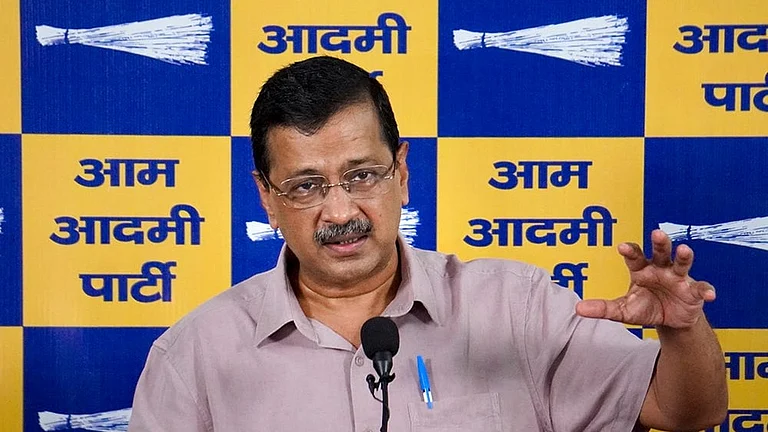
AAP’s distancing act
The political fallout from the verdict has followed a pattern AAP first set in motion in the week Sharma was killed.
Advertisement
In 2020, within a day of Hussain being named in connection with the case, AAP suspended him from the party. Then Delhi chief minister and AAP national convenor Arvind Kejriwal said that if any AAP members were found to be involved in the riots, they should be punished.
For the party, the suspension was also an attempt to draw a clear line between itself and the allegations against Hussain. Party sources have maintained that the issue was complicated politically, but that Kejriwal's immediate response was to signal that AAP would not tolerate involvement in communal violence, regardless of who was accused.
After the conviction was announced on July 13, the party again adopted a cautious approach. AAP issued a written statement the night the verdict was delivered. Kejriwal followed it with a post on X the next day. But neither he nor any senior AAP leader held a press conference or issued a video statement directly addressing the case.
Advertisement
Delhi AAP President Saurabh Bharadwaj said: “There are dozens of examples involving individuals accused of the most heinous crimes, whether it was Kuldeep Sengar, Brij Bhushan Sharan Singh, or several others who were even accused of sexually assaulting children. Yet, the BJP continued to stand by them…In fact, I would say that Tahir Hussain was effectively serving the BJP's interests. If anyone has politically benefited from the Delhi riots, it is the BJP alone.”
“You can look at the election results in North East Delhi, or examine the voting percentages. In the most recent election in 2025, Tahir Hussain was fielded by Asaduddin Owaisi's party from the Mustafabad constituency,” he added.
The party’s defence rested largely on two points: Hussain had been suspended from the primary membership of AAP soon after the 2020 violence, and he subsequently moved outside the party’s political fold.
That second point became particularly useful to AAP after Hussain contested the most recent Delhi Assembly election on an AIMIM ticket from Mustafabad, taking on AAP’s own candidate in the constituency.
Advertisement
“We expelled him from AAP long, long back. Didn’t he join one of ‘chanda chor’ party’s sister organisations?” Kejriwal wrote on X, shifting the focus from Hussain’s past association with AAP to his subsequent political affiliation and taking a swipe at the BJP.
Delhi AAP chief Saurabh Bharadwaj reinforced the same argument, pointing to Hussain’s later association with AIMIM and his decision to contest against AAP.
Okhla MLA Amanatullah Khan, when asked about the verdict, also kept his response measured. He pointed out that the ruling had come from a Sessions Court and said an appeal before the High Court was expected, expressing hope that justice would ultimately prevail.
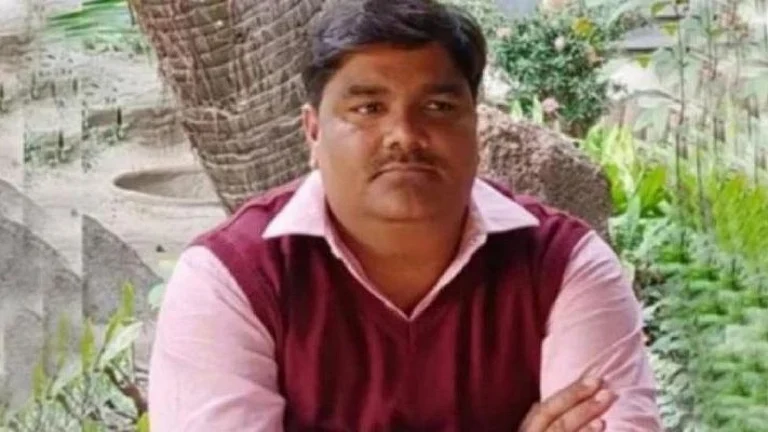
BJP refuses to let AAP draw a line
The BJP, however, has shown little interest in allowing AAP’s “we expelled him” argument to close the issue.
Delhi Chief Minister Rekha Gupta said the verdict raised questions about AAP’s historical links with Hussain. She argued that Kejriwal and senior party leader Sanjay Singh owed the public an explanation about what other episodes of alleged riot-inciting activity the party may have been connected to.
Advertisement
Gupta described the verdict as justice for the victims of what she characterised as a massacre during the 2020 riots.
BJP national spokesperson Gaurav Bhatia went further, placing Kejriwal alongside Hussain in his political attack. Bhatia alleged that Kejriwal had provided political protection to Hussain and used him as an instrument to incite communal violence.
His argument rested heavily on Hussain’s position within AAP at the time. Hussain was not merely a party worker, Bhatia said, but a sitting councillor and, in the BJP’s characterisation, a close associate and “right hand” of Kejriwal.
Other BJP leaders also joined the attack. Pradeep Bhandari accused senior AAP leaders, including Kejriwal and Sanjay Singh, of having defended Hussain for years for electoral reasons. He alleged that AAP had stood by a convicted murderer and rioter for vote-bank politics.
The BJP’s attacks have therefore sought to move the debate beyond the legal question of Hussain’s individual culpability and towards his political association with AAP when the violence occurred.
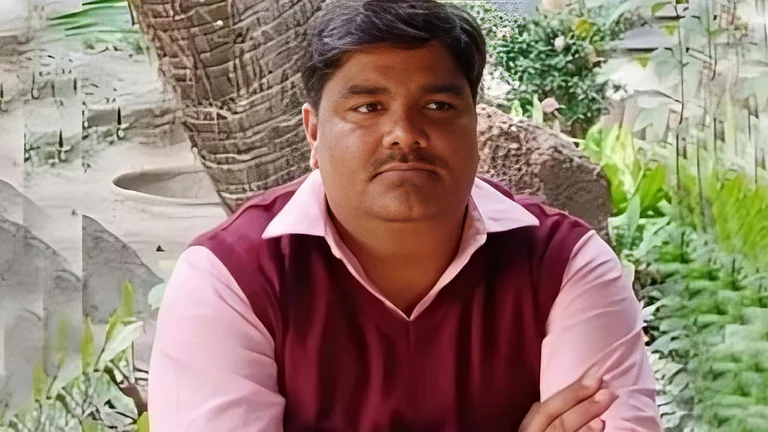
Ankit Sharma case
Ankit Sharma, an Intelligence Bureau officer, went missing during the communal violence that convulsed northeast Delhi in February 2020. His body was later recovered from a drain near the Chand Bagh area.
Investigators alleged that Sharma was abducted near his residence in Khajuri Khas, assaulted by a mob and killed. Hussain, who was then a sitting AAP councillor, was accused of playing a central role in the violence. Police alleged that the terrace of his building was used by rioters to pelt stones and hurl petrol bombs.
In its judgment, the court held that Hussain was part of a heavily armed mob that had assembled with animus against Hindus with the intention of committing rioting, arson and looting. The court described Sharma’s killing as a “savage and relentless assault”.
Published At: