The Supreme Court has brought the legal chapter of the Bofors case to a close.
Though no convictions were secured, the scandal transformed corruption into a defining electoral issue.
Nearly four decades later, Bofors remains India's enduring political shorthand for allegations of high-level corruption and government accountability.
Outlook Explains | Why Bofors Remains India's Most Consequential Corruption Scandal
Bofors transformed the way corruption was debated in India, altered the fortunes of the Congress under Prime Minister Rajiv Gandhi, and became a touchstone for every major political campaign centred on probity in public life

Summary
Nearly four decades after allegations of kickbacks in the Bofors gun deal first shook Indian politics, the Supreme Court has brought the legal chapter of one of the country's most enduring corruption cases to a close. While the case ultimately ended without any convictions, the political consequences of the scandal far outlived the criminal proceedings.
Bofors transformed the way corruption was debated in India, altered the fortunes of the Congress under Prime Minister Rajiv Gandhi, and became a touchstone for every major political campaign centred on probity in public life. Even today, "Bofors" remains shorthand for political corruption in India, illustrating how some scandals leave a deeper imprint on public memory than on the courtroom.
What was the Bofors scandal?
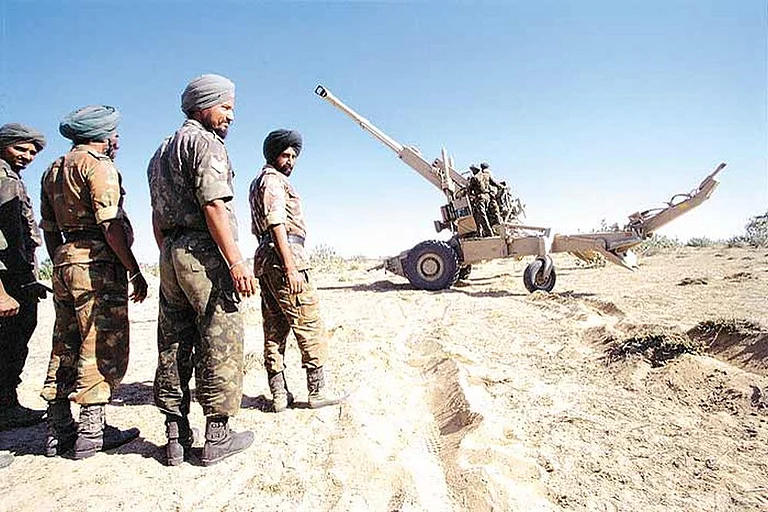
The controversy dates back to 1986, when the Rajiv Gandhi government signed a ₹1,437-crore contract with Swedish arms manufacturer AB Bofors to supply 155 mm FH-77B howitzers to the Indian Army.
In April 1987, Swedish Radio alleged that Bofors had paid illegal commissions to influential middlemen and Indian officials to secure the contract, despite the agreement explicitly prohibiting middlemen. The revelations sparked a political storm, with allegations that secret payments had been routed through offshore accounts to politically connected individuals.
The Indian government denied wrongdoing, and Rajiv Gandhi repeatedly maintained that neither he nor his government had accepted bribes. However, the allegations led to multiple investigations in India and abroad. The Central Bureau of Investigation (CBI) registered a case in 1990, naming several individuals, including Italian businessman Ottavio Quattrocchi, former Defence Secretary S.K. Bhatnagar, and Bofors executives. Rajiv Gandhi was never chargesheeted in the case.
Why did it become India's biggest political controversy?
Bofors was not India's first corruption allegation, but it became its most politically explosive because it struck at the credibility of a Prime Minister who had come to power promising clean governance.
Advertisement
Rajiv Gandhi won the 1984 Lok Sabha election with a record mandate after the assassination of Indira Gandhi. Young, modern and seen as a reformer, he enjoyed an image of personal integrity. The Bofors allegations therefore came as a profound political shock.
The scandal also arrived at a time when television news was expanding and investigative journalism was becoming increasingly influential. Reports by Swedish journalists, followed by extensive coverage in the Indian media, ensured that the allegations dominated public discourse for months.
The Opposition, led by V.P. Singh, turned Bofors into the central issue of the 1989 general election. The slogan of fighting corruption resonated widely, helping unite disparate opposition parties against the Congress.
How did it affect Rajiv Gandhi and the Congress?
The political impact was immediate and profound.
The Congress, which had won more than 400 seats in 1984, lost its parliamentary majority in the 1989 general election. V.P. Singh, who had resigned as Rajiv Gandhi's Finance and Defence Minister after differences over corruption investigations, emerged as the face of the anti-corruption movement and became Prime Minister.
Advertisement
Although Rajiv Gandhi consistently denied any involvement and no court ever convicted him of corruption, the allegations damaged his political credibility. The Congress spent years attempting to rebut claims that it had shielded those responsible.
In subsequent decades, political opponents repeatedly invoked Bofors whenever corruption became an election issue. From the Jain Hawala case to the 2G spectrum controversy, the Commonwealth Games controversy and the Rafale debate, comparisons with Bofors became a recurring feature of Indian political discourse.

Why did the case last nearly four decades?
The Bofors investigation became one of India's longest-running criminal cases because it involved multiple jurisdictions, complex financial transactions and repeated legal challenges.
Investigators sought evidence from Switzerland, Sweden, the United Kingdom and several other countries through mutual legal assistance requests. The process of obtaining banking records and documentary evidence from foreign jurisdictions often took years.
Advertisement
Several accused died during the course of the proceedings, including Rajiv Gandhi in 1991 and Ottavio Quattrocchi in 2013. Charges against some accused were quashed, while others were discharged for lack of evidence or because prosecutions could no longer continue.
The CBI also faced criticism over the pace of the investigation and decisions taken at different stages of the case. Successive governments were accused by their political opponents of either slowing or influencing the investigation, though such allegations were themselves politically contested.
By the time the matter reached its final stages, the passage of time had made further prosecution increasingly difficult.
Why has the Supreme Court now closed it?
The Supreme Court effectively ended the case after dismissing a plea against a 2005 Delhi High Court judgement which cleared the names of three Hinduja Brothers and Bofors itself.
It was the last surviving appeal of the 2005 judgment and was made by BJP leader Ajay K Aggarwal. Previously, in 2018, the top court had also rejected a plea by the CBI pertaining to the same judgment citing the large delay that the investigating agency made in approaching the court.
Advertisement
Back in 2018, the court had also questioned Aggarwal’s Locus in the case remarking that the CBI itself had not challenged the 2005 acquittal.
What remains of Bofors' political legacy?
The legal case may be over, but Bofors' political legacy is unlikely to fade.
The scandal fundamentally altered Indian politics by making corruption a central electoral issue. It demonstrated that allegations of financial impropriety—even without a conviction—could reshape public opinion, influence elections and redefine political narratives.
It also transformed investigative journalism, encouraging greater scrutiny of defence procurement and government decision-making. Subsequent governments introduced reforms aimed at increasing transparency in defence acquisitions, although concerns about secrecy and accountability have continued to surface in later controversies.
For the Congress, Bofors remains one of the defining episodes of its post-Independence history. For the BJP and other opposition parties over the years, it became a powerful political metaphor for alleged corruption at the highest levels of government.
In 2005 India Today called it "A watershed not merely in Indian politics but also in Indian journalism."
Perhaps Bofors' greatest legacy lies in the language of Indian politics itself. Long after the court files have been closed, the scandal continues to serve as a benchmark against which later corruption allegations are measured.
Published At:
Tags