A meeting chaired by PM Modi on April 29, 2025, decided India should “teach Pakistan a big lesson” after the Pahalgam attack.
Modi gave the armed forces freedom to choose the timing of the response.
Chauhan also revealed that a strike on Skardu was approved but cancelled due to bad weather.
Operation Sindoor: PM Modi Asked Forces To ‘Teach Pakistan A Big Lesson’, Says Gen Anil Chauhan
Modi gave the armed forces freedom to choose the timing of the response but stressed that there should be no scope for failure

Summary
Former Chief of Defence Staff General Anil Chauhan (retd) has revealed that a meeting chaired by Prime Minister Narendra Modi on April 29, 2025, following the Pahalgam terror attack, decided that India should take an “unthinkable” action to “teach Pakistan a big lesson”. He said Modi gave the armed forces freedom to choose the timing of the response but stressed that there should be no scope for failure and that evidence of the strikes must be secured.
Speaking at an event in New Delhi on ‘Operation Sindoor and its Aftermath’, Chauhan said the meeting was attended by Defence Minister Rajnath Singh, National Security Adviser Ajit Doval and the three service chiefs. The discussions focused on how India would employ military force after the April 22 Pahalgam attack that killed 26 people.
“On April 29, when we went there, the big decision there was that ‘we should teach Pakistan a big lesson, because India will not tolerate cross-border terrorism and this must end’,” Chauhan said, adding that the idea of doing something “unthinkable” was also discussed.
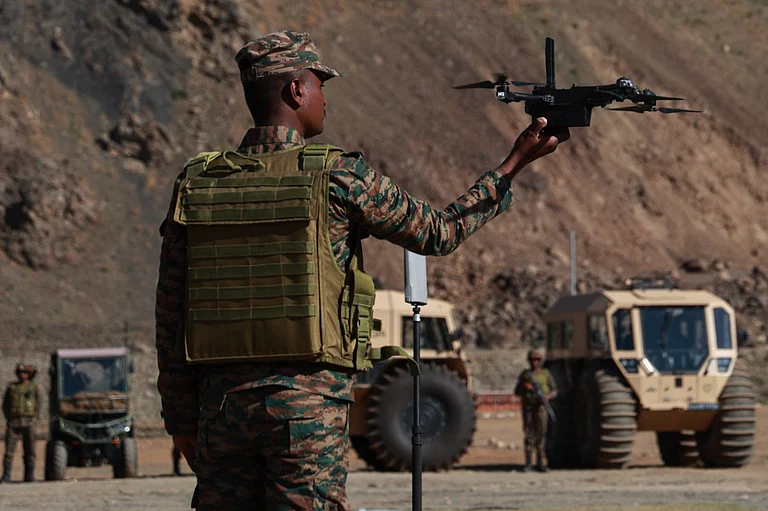
PM Modi Gave Forces Freedom To Choose Timing
Chauhan said Modi told the military leadership that there was no political pressure to launch the operation immediately and that the forces should act at a time of their choosing.
The Prime Minister, he said, told the forces to “do it at your own time, but ensure there is no reason for failure, either due to human or technical reason, and we should have evidence of whatever we do”.
The former CDS said there had initially been doubts about whether Indian forces could conduct strikes around midnight and still obtain evidence of their targets in pitch darkness. The armed forces, however, were confident in their capabilities and chose the timing partly to preserve surprise and minimise civilian casualties.
The identification of targets remained a major challenge, he said, as some terror facilities had been vacated, relocated or reoccupied after India indicated that it would target them.
Advertisement
Bahawalpur Target Made Air Power Necessary
Chauhan said the Bahawalpur target, associated with Jaish-e-Mohammed, was added to the list during the April 29 meeting on the insistence of Defence Minister Rajnath Singh.
“This target was at a distance, yet we included it. Once we included the Bahawalpur target in the list, the use of air (power) became inherent in it; loiter munitions and drones won't be able to reach, and success wouldn't have been ensured,” he said.
Markaz Taiba in Muridke and Markaz Subhanallah in Bahawalpur were among the nine terror infrastructure sites targeted by India in the early hours of May 7, 2025.
The Indian government and armed forces have since described Operation Sindoor as a shift from deterrence towards direct action against cross-border terrorism.

Skardu Strike Was Cleared But Aborted Due To Weather
Chauhan also disclosed that the Indian Air Force had been authorised to strike Pakistan Air Force's Skardu base during Operation Sindoor, but the mission was called off because of bad weather.
Advertisement
He said the IAF chief had sought approval to strike Sargodha and was asked to identify two additional targets. Skardu was subsequently selected as one of them.
“The Chief had asked me whether he should strike Sargodha. I said, ‘Go ahead’ and I said, ‘Please identify two more targets.’ One of the targets he had identified was Skardu. We gave a yes but after sometime, the weather was bad in Skardu and they had to change over to Bholari,” Chauhan said.
The IAF subsequently struck a hangar at Bholari, with satellite imagery showing extensive
Chauhan also confirmed that an Indian loitering munition struck the Kirana Hills area near Sargodha during Operation Sindoor, although he stressed that the location itself was not deliberately targeted.
He said the munition had been deployed to search for radars around Sargodha. After failing to locate a suitable target within its operational endurance, it eventually struck one of the hills.
Advertisement
“Before those strikes, we had sent a lot of loiter ammunitions at Sargodha and Kirana Hills are 10 km North of Sargodha,” Chauhan said.
Published At: