PM Narendra Modi will visit Manila for the Asean-India Summit, East Asia Summit and expected Quad Leaders’ Summit.
India aims to strengthen trade, maritime and defence cooperation with Asean, with annual bilateral trade worth $122 billion.
Trade imbalance, the delayed AITIGA review and Myanmar's political situation remain key issues in India's engagement with Asean.
PM Modi's Philippines Visit To Focus On Asean Ties, Trade & Regional Security
The November 16–17 visit will focus on strengthening India's strategic, trade and defence ties with Southeast Asia amid changing regional geopolitics

Summary
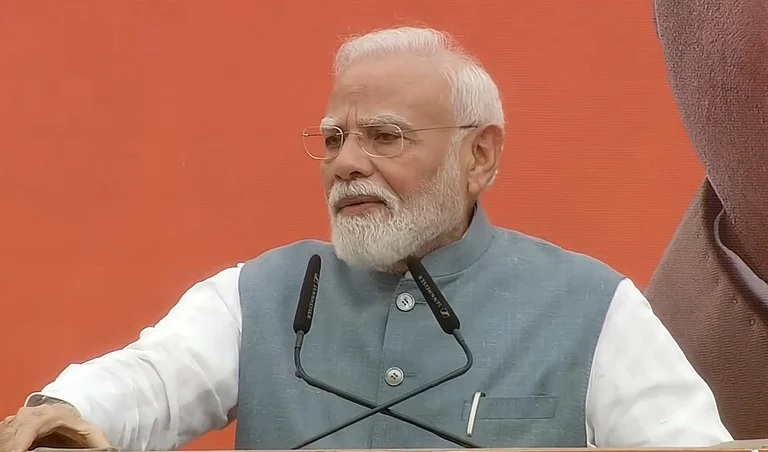
Prime Minister Narendra Modi will visit Manila on November 16 to attend the Asean-India Summit and the East Asia Summit on November 17. The meetings will be held on the sidelines of the Asean Summit hosted by the Philippines.
Modi is also expected to attend a Quad Leaders’ Summit with the leaders of Australia, Japan and the US, besides holding several bilateral meetings.
The Ministry of External Affairs (MEA) said the engagements would be important for strengthening trade ties and building resilience amid rapid geopolitical changes, Hindustan Times reported.
Asean’s Strategic Role
Asean remains central to India's regional engagement. Rudrendra Tandon, Secretary (East) in the Ministry of External Affairs, described the 11-member bloc as a “locomotive for peace, stability and economic prosperity”.
He said Asean was a key pillar of India's Act East policy and its vision for the Indo-Pacific region.
The economic relationship is also significant, with annual trade between India and Asean member states standing at around $122 billion.
Tandon said India, as an Indian Ocean country located close to the Southeast Asian maritime region, had a strong interest in maintaining strategic ties with Asean, both collectively and with individual member states.
“India strongly believes that as an Indian Ocean country that abuts this very important Southeast Asian maritime zone, a strong strategic relationship with Asean member states, as a collective as well as individually, is good for both of us,” he said.
He added that stronger ties would help both sides respond to changing geopolitical circumstances and contribute to regional stability.
“It will make us more resilient to handle the very rapid geopolitical changes that are taking place around us. It will also contribute to peace and stability in Asia as a whole,” Tandon said.
Maritime cooperation is another key area of engagement. Tandon highlighted coordinated patrolling and maritime domain awareness as measures to tackle piracy and illegal, unreported and unregulated (IUU) fishing.
Advertisement
He said India could also provide training and other assistance to strengthen the maritime capabilities of Asean member states.
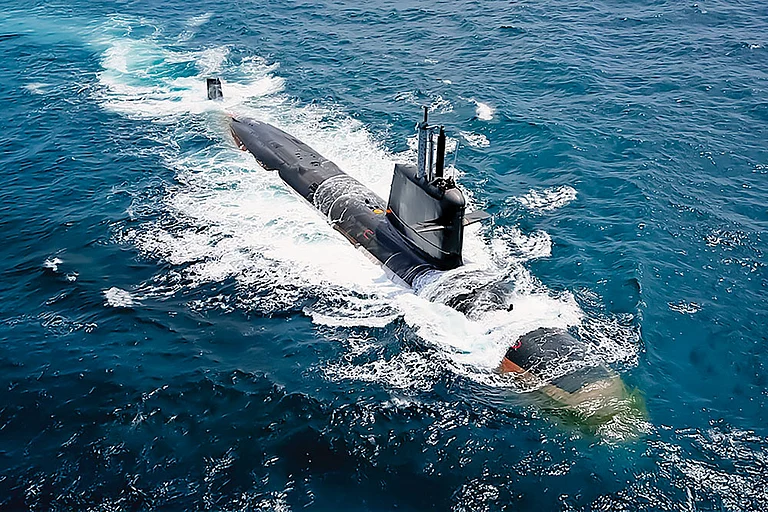
Defence cooperation has also expanded. Tandon pointed to India's growing defence ties with several Asean countries, including the agreement with the Philippines for the supply of BrahMos cruise missiles.
Trade Talks And Myanmar
India is also seeking to conclude the review of the Asean-India Trade in Goods Agreement (AITIGA) at the earliest.
Tandon said New Delhi was pushing for the review to be completed “as soon as possible”. India is also holding discussions with individual Asean member states on trade facilitation and agreements to create new opportunities.
However, the review process has faced delays. Tandon described it as a “difficult” exercise because it requires consensus among all Asean member states. The agreement came into force in 2010, while its review began six years ago.
Advertisement
India's concerns include the trade imbalance with the bloc, with imports from Asean member states exceeding $80 billion. The review was initiated largely to address these concerns.
Myanmar is another issue likely to figure in India's regional engagement.
Asked about New Delhi's position on the country, Tandon said isolating Myanmar would not be the right approach, as it could create space for other countries to increase their influence.
“We have always said that isolating Myanmar is not the right approach because if we do, someone else will fill that vacuum. There is no alternative to engagement,” he said.
Tandon added that India supported Asean's efforts to engage with the Myanmar government while taking into account the country's complex history and society.
“Patience and consistency in engagement is very important,” he said.
Published At: