The Act gives the Centre sweeping powers while shifting financial and administrative burdens onto states.
Drèze says MGNREGA’s deeper achievement was not just income support but empowerment—especially for women, bonded labourers, and unorganised workers.
In the new Act, there are provisions allowing the Centre to switch the scheme on or off, determine allocations, and open the door to exclusion, favouritism, and political punishment
MGNREGA Gave Workers Power, That Is What Is Being Taken Away: Jean Drèze on VB–G RAM G Act
Social scientist and welfare economist Jean Drèze says the government is promising jobs without guaranteeing work. The BJP-led government has not merely rebranded MGNREGA. What was an enforceable right to work, driven by workers’ demand and backed by the Centre’s obligation to fund it, has been recast as a discretionary, centrally controlled scheme with budget caps, blackout periods and political gatekeeping.

Summary
Despite objections even from allies and the Opposition, the BJP-led Parliament passed the Viksit Bharat—Guarantee for Rozgar and Ajeevika Mission (Gramin) (VB–G RAM G) Bill, 2025, on 18 December 2025, and it will replace the Mahatma Gandhi National Rural Employment Guarantee Act, 2005 (MGNREGA).
The Act strikes at the heart of a programme that evolved into one of the country's most expansive welfare interventions, sustaining millions of households nationwide. It replaces a rights-based guarantee, where funds expanded with demand for work, with a capped, budget-driven scheme, constrained by fixed allocations and limited to regions notified by the Union Government.
Social scientist and welfare economist Jean Drèze believes the new Act marks a troubling shift: the Union government promises jobs without guaranteeing work. A key architect of the National Rural Employment Guarantee Act, later renamed MGNREGA, Drèze served on the National Advisory Council during the UPA government and played a pivotal role in shaping the landmark programme. In an interview with Outlook, he discusses the new Act and why he sees it as fundamentally flawed.
Do you see the new Act as way of weakening the employment guarantee scheme? By making employment contingent on Centre-notified areas and approved plans, does VB-G RAM G convert a right into a discretionary welfare scheme?
I think that’s correct. Under the VB-GRAMG Act, the Centre has all significant powers and no significant obligations. The Centre has no reason to bother with employment guarantee since the obligation to meet the demand for work lies with the state governments. It can treat VB-GRAMG like any other centrally-sponsored scheme. Worse, it can restrict this scheme to notified areas of its own choice.
Why do think the government is replacing MGNREGA with the VB G RAM G Act?
It’s hard to tell, given the secrecy that surrounded the framing of this Act. As you know, the business class and other privileged groups in India have never liked MGNREGA. They consider it a wasteful programme, but their real grudge, I think, is that MGNREGA gives some power to the workers. They have a lot of influence on the Modi government, and this is the result.
Perhaps some people think in good faith that VB-G RAM G will enable the Central Government to fix MGNREGA by taking charge. But centralisation has done more harm than good to MGNREGA. Besides, the Central Government has its own priorities, and workers’ rights are not among them. Employment generation may continue under VB-G RAM G, but more as an adjunct of the Centre’s projects than to guarantee work on demand.
It is also possible that the Central Government will try to implement VB-G RAM G much like MGNREGA, initially at least, and just try to steal the show, as it did with the National Food Security Act. Your guess is as good as mine.
Advertisement
Under MGNREGA, work is demand driven and universal; the new scheme may allow states to notify ‘black out’ periods during peak agricultural seasons — what are the implications for workers who need continuous access to work?
Under Section 6 of the new Act, a black-out period of sixty days is not only allowed but mandatory. This is an unnecessary complication as well as a dilution of the right to work. It is an unnecessary complication because very few rural labourers work on MGNREGA during the peak season in any case. They can earn much higher wages in the private sector at that time. It is a dilution of the right to work because every complication in the scheme makes it harder for workers to secure their entitlements. Incidentally, some MGNREGA works take place in the peak agricultural season for good reasons. In Jharkhand, for instance, the plantation of mango saplings in MGNREGA orchards takes place in the month of July, when ploughing and sowing are in full swing. These orchards are among the best MGNREGA projects, they may not survive VB-G RAM G.
Advertisement
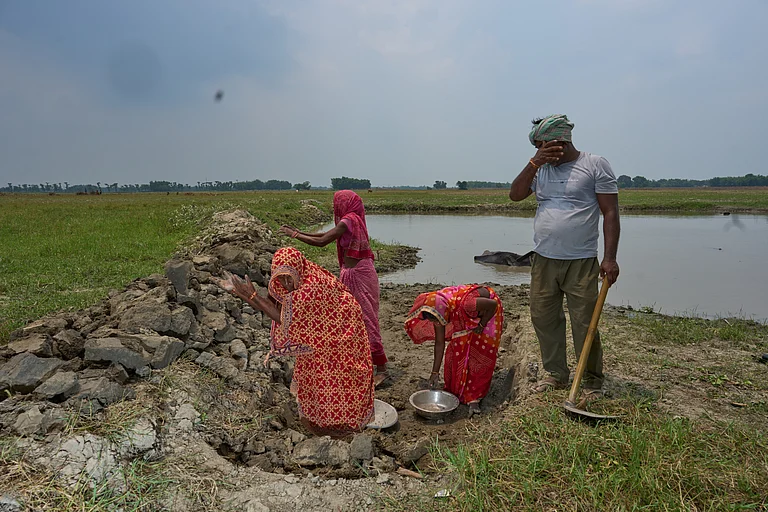
The new Act involves expenditure sharing between Centre and states (60:40), unlike MGNREGA where the Centre funded wages fully — what impact could this have on poorer states and fiscal federalism?
It’s worse than 60:40. The 60:40 sharing formula applies only within the so-called “state-wise normative allocations” set by the Centre. Beyond that, the states will have to pay 100% of the costs, and still follow the prescriptions of the Centre. It is unlikely that many states will want to do that. In that case, the normative allocation becomes a de facto ceiling. The combined effect of this ceiling and 60:40 sharing below it is likely to be a decline in employment. This new financial formula is also an infringement of fiscal federalism since it amounts to the unilateral imposition of a legally binding financial burden on the states without consultation.
Advertisement
Given that MGNREGA has been praised as a major anti poverty tool, what are your views on the social justice implications of replacing rather than reforming it?
The contribution of MGNREGA to social justice went beyond its role as an anti-poverty tool. MGNREGA also gave some bargaining power to rural workers. For instance, many bonded labourers have used MGNREGA as an escape from slavery. Similarly, MGNREGA empowered rural women by giving them a rare opportunity to earn their own income in a dignified manner. Further, MGNREGA helped unorganised workers to organise. Where this happened, it was a truly liberating experience for many. All this is being compromised under the new Act because it does not prioritise workers’ rights anymore. Instead, it prioritises the objectives and convenience of the Central Government. The right to work itself can be withdrawn at the discretion of the Central Government. The VB-G RAM G workforce is being turned into handy manpower for centrally-notified schemes.
Incidentally, the VB-G RAM G Act also undermines the representation of disadvantaged groups at the helm. MGNREGA prescribed reservation for women and disadvantaged communities in the Central Employment Guarantee Council and State Employment Guarantee Councils. The VB-G RAM G Act drops this prescription for the Central Council. Further, it creates new Steering Committees at the national and state levels, without any reservation norms. Except for sections copy-pasted from MGNREGA, the VB-G RAM G Act pays no more attention to social justice than to workers’ rights.
Advertisement
MGNREGA was demand-driven and this ensured work whenever people needed it. With pre-determined budget caps under VB-G RAM G, does this mean that the 125-day promise is a smokescreen?
This promise is just a way of sweetening the pill. The government has used it with good effect to create an impression that VB-G RAM G is an improvement over MGNREGA, when in fact, it is a big setback for employment guarantee. Raising the employment ceiling is little more than symbolic when 98 per cent of rural households get less than 100 days of MGNREGA work in the first place. And the new financial framework is unlikely to sustain this promise.
Does the VB-G RAM G Act undermine cooperative federalism and as a result decision making under Panchayats?
The VB-G RAM G Act conforms with the general trend towards centralization. The gram panchayats are still important actors in principle, but in practice, they are likely to see their powers and freedoms reduced. For instance, Section 5(4) of Schedule I of the VB-G RAM G Act makes it clear that all works are to be executed in convergence with schemes notified by the Central Government. This is the Pradhan Mantri Awas Yojana model, if you like. In this approach, MGNREGA employment is just the labour component of a centrally-sponsored scheme controlled from Delhi. I think that this approach is likely to loom large over VB-G RAM G.
What the VB-G RAM G Act calls “participatory planning” is more like a local integration of schemes notified by the Central Government, with VB-G RAM G employment acting as an adjunct of these schemes. At every step, gram panchayats will be expected to follow the instructions and methodologies prescribed by the Central Government.
Will the new law increase administrative discretion, opening more space for exclusion, favouritism, or political targeting?
It certainly increases the discretion of the Centre, in a massive way. And this discretion could indeed be used for political targeting. There is a precedent in the form of discontinuation of MGNREGA funds for West Bengal in the last three years. The Central Government is yet to provide a convincing justification for this extreme step. Even in the Rajya Sabha, on 6 December 2023, then Minister for Rural Development Giriraj Singh was unable to go beyond the vaguest possible generalities on this subject. Under the VB-G RAM G Act, discontinuation of funds could become a routine affair. Short of discontinuation, we may see favouritism in the allocation of funds, since the Act allows the Central Government to determine state-wise financial allocations. These allocations are supposed to be based on “objective parameters”, but needless to say, the Central Government will be the arbiter of objectivity. Other provisions of the new Act, such as the insistence on convergence of all works with centrally-notified schemes, could also be used in an arbitrary manner.
What are the other issues with the new VB-G RAM G Act?
There are many other issues. One is the “switch-off clause” that allows the Central Government to decide where and when the work guarantee applies. This defeats the purpose of an employment guarantee. Another is the blind promotion of sophisticated digital technology, including biometric authentication and artificial intelligence, without paying attention to the long record of counter-productive technocracy in MGNREGA. The new name of the Act, with its partisan ring, is also objectionable, even if the name is less important than the substance.
The main issue, however, is the entire framework of this Act. The VB-G RAM Act is essentially a takeover and demotion of MGNREGA by the Central Government. It enables the Central Government to wash its hands of the employment guarantee, by telling state governments “take some money, match it if you can, follow our instructions, and if workers ask for more work than we provide for, that’s your problem”. Under this Act, as I said, the Central Government has all powers and no obligations. This is an inversion of the original vision of MGNREGA, where state governments or local institutions were in charge and the Central Government played an enabling role.
What could the government have done instead to improve the MGNREGA law?
What is to be done depends on whose interests one is trying to pursue. The VB-G RAM G Act is very focused on the Central Government’s concerns. Workers’ rights and concerns need to be brought back centre stage. From their point of view, the biggest problem with MGNREGA is the absence of timely and reliable wage payments. To make things worse, MGNREGA wages are very low, after fifteen years of being frozen in real terms. Raising wages, especially in the poorer states, and ensuring timely payment without fail, is well within the power of the Central Government. Instead, the Central Government keeps rejigging the payment system, underfunding MGNREGA, and extending the wage freeze.
It so happens that timely and reliable wage payments would also help to reduce corruption. When workers are fed up with low and erratic wages, it is tempting for them to stop working by the rules and to cooperate instead with a corrupt middleman who uses their Job Cards and bank accounts to siphon off MGNREGA funds in exchange for a share of the loot. When they are paid on time, by contrast, workers have a stake in preventing corruption. Of course, other measures are also required to curb corruption. Restoring ground-level transparency, supporting social audits and taking action on the crooks would be a good start.
But rather than proposing quick fixes, I would appeal for a return to the time when there were serious consultations between Central Government, state governments, civil society and workers’ organisations on these matters. This learning process played a critical role in the initial years of MGNREGA, when implementation issues, and corruption in particular, were tackled with a fair measure of success. It is from this sort of process, rather than selective consulting, that real solutions to MGNREGA’s woes are likely to emerge.
Published At:
Tags