The Manipur Assembly adopted a resolution urging the Centre to update the NRC in the state before beginning Census
Congress and BJP both support that the NRC should take place before Census
Kuki-Zo Council opposes the move, saying this could unfairly target communities with historical and familial links across the India-Myanmar border
Manipur’s NRC Before Census Push: Why BJP, Congress Are On Same Page
The Manipur Assembly on Wednesday adopted a resolution urging the Centre to update the NRC in the state before beginning Census operations. It was the third such resolution passed by the House since 2022

Summary
In a state where the BJP and Congress disagree on nearly every major political question, the two parties have converged on one contentious demand: update the National Register of Citizens in Manipur before conducting the 2027 Census.
The agreement reflects concerns among sections of the Meitei and Naga communities over alleged illegal immigration, demographic change and the possible impact of new population figures on delimitation. Those anxieties have intensified since the ethnic conflict erupted in May 2023, displacing thousands and deepening disagreements over land, identity and political representation.
The Kuki-Zo Council, however, opposes the proposed sequence. It argues that conducting an NRC before the Census would be premature, could unfairly target communities with historical and familial links across the India-Myanmar border and would rely on allegations that have not been established through verified population data.
Assembly Passes Third ‘NRC First’ Resolution
The Manipur Assembly on Wednesday adopted a resolution urging the Centre to update the NRC in the state before beginning Census operations. It was the third such resolution passed by the House since 2022.
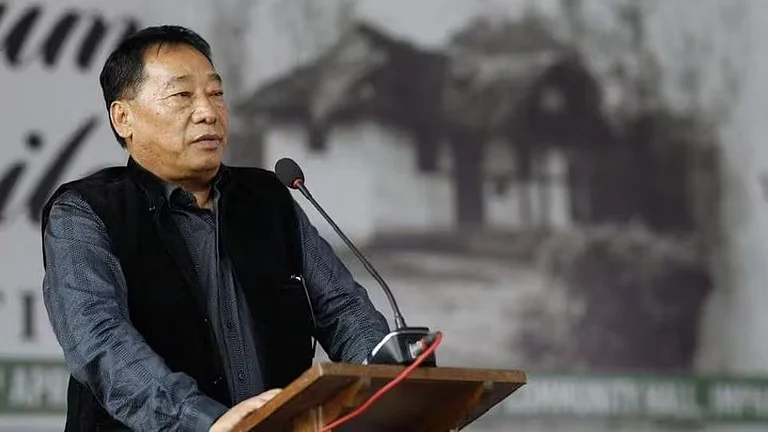
“The House once again reaffirms its previous resolution passed on August 5, 2022, and March 1, 2024, to urge the government of India to update the National Register of Citizens (NRC) in Manipur before conducting the census in the interests of the state in particular and the nation in general,” Speaker Th Satyabrata Singh said.
The resolution followed the Centre’s decision to defer Census operations in Manipur a day before the house-listing exercise was scheduled to begin. The decision was taken after Union Home Minister Amit Shah chaired a meeting in New Delhi with Governor Ajay Kumar Bhalla, Chief Minister Yumnam Khemchand Singh and Union Home Secretary Govind Mohan.
“The meeting agreed to defer the proposed Census exercise in the state considering the feelings and aspirations of the people of Manipur,” the Chief Minister’s Secretariat said in a statement. The postponement applies to Manipur and does not amount to a nationwide suspension of the Census.
Advertisement
Why Do BJP and Congress Agree?
The convergence is rooted in a shared political response to longstanding demographic concerns in Manipur.
Meitei civil society organisations in the Imphal Valley and Naga groups in the hill districts have alleged that migration from neighbouring Myanmar has altered the state’s population composition. They argue that citizenship should be verified before residents are counted, particularly because Census figures could later influence constituency boundaries.
The BJP has backed that demand through its government and successive Assembly resolutions. The Congress has also adopted a similar position.
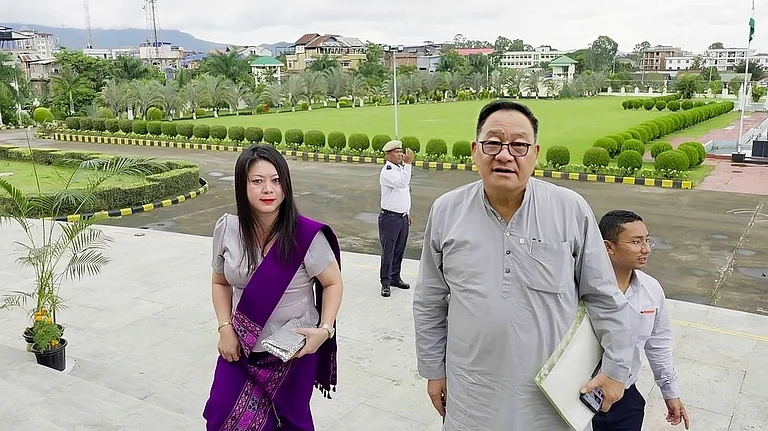
Manipur Congress president and former chief minister Okram Ibobi Singh said the Centre could complete an NRC exercise within two or three months if it had the political commitment to do so.
“If the Central government wants, the implementation of NRC in Manipur is not an issue,” Ibobi said, adding that the citizenship register should be updated before the Census. He also suggested that the Constitution could be amended if required.
Advertisement
The overlap does not represent a wider political alliance. It is an issue-specific convergence shaped by pressure from influential Meitei and Naga organisations and by the widespread perception among these groups that demographic verification has become inseparable from Manipur’s security and political future.
How Is an NRC Different From a Census?
The Census counts the population and records demographic and socio-economic information such as age, sex, education, occupation, language and living conditions. It is a statistical exercise covering people residing in the country; it does not determine or confer citizenship.
An NRC, by contrast, is intended to identify Indian citizens. It involves scrutiny of documents, family linkages and other records to determine whether a person qualifies for inclusion in the citizenship register.
The legal framework for preparing a National Register of Indian Citizens flows from the Citizenship Act, 1955, and the Citizenship (Registration of Citizens and Issue of National Identity Cards) Rules, 2003.
Advertisement
This distinction lies at the heart of the sequencing dispute. NRC supporters argue that counting the population first could include alleged undocumented migrants in figures later used for public policy and delimitation. Opponents respond that the Census is meant to establish verified demographic information and should not be treated as a citizenship test.

Why Is 1951 Being Proposed as the Cut-Off?
The United Naga Council has demanded an NRC using 1951 as the base year, followed by the Census and then delimitation. Its stated position is: “NRC first: No Census, No Delimitation Before Implementation of NRC in Manipur.”
The year carries historical significance because India’s first post-Independence Census was conducted in 1951, alongside the preparation of the original NRC.
Supporters believe records from that period could provide a baseline for identifying families settled in Manipur before the later waves of migration they allege occurred from across the international border.
Advertisement
However, 1951 has been demanded by civil society organisations; it has not been formally approved by the Centre as Manipur’s NRC cut-off. Any such exercise would require a clearly defined legal framework covering eligible documents, citizenship rules, appeals and protections for genuine citizens lacking old records.
The issue is particularly sensitive in remote and border communities, where families may have historical connections across boundaries that were formalised after older patterns of movement and settlement had already developed.
How Did the 2023 Conflict Intensify the Demand?
Calls for an NRC in Manipur predate the violence that began in May 2023.
In June 2022, the Coordinating Committee on Manipur Integrity, representing sections of Meitei civil society, and the United Naga Council jointly demanded an NRC and a State Population Commission. The Assembly adopted its first resolution supporting both proposals in August that year and reaffirmed it in March 2024.
The 2023 conflict nevertheless gave the issue a sharper ethnic and security dimension.
Thousands of people remain displaced from their original homes. Meitei organisations argue that conducting the Census under these circumstances could record the demographic consequences of displacement rather than Manipur’s underlying population distribution.
Migration from Myanmar has added to these concerns. Fighting following the country’s 2021 military coup drove people from Chin State and adjoining areas into India. Many share ethnic and familial connections with Kuki-Zomi communities in Manipur.
The state government linked the influx to new settlements, encroachment and poppy cultivation. Kuki organisations disputed this narrative, arguing that established Indian communities were being conflated with more recent arrivals from Myanmar.
Demographic statistics cited in political debates also do not, by themselves, establish illegal immigration. Population growth can be influenced by differences in fertility, migration within India, enumeration and administrative boundaries.
Why Does the Census Matter for Delimitation?
Delimitation redraws the boundaries of parliamentary and Assembly constituencies to reflect changes in population.
Under the Constitution, population for this purpose is drawn from the latest published Census figures. The current constitutional framework freezes the wider readjustment of seats until figures from the first Census conducted after 2026 are published.
Manipur has not implemented a comprehensive fresh delimitation since the 1970s. New population data could therefore affect the relative weight of constituencies in the valley and hill districts, making the Census politically consequential.
The Election Commission explains that delimitation is intended to redraw territorial constituencies so populations are distributed as evenly as practicable.
Groups demanding an NRC first fear that population figures influenced by alleged undocumented migration could affect future representation. The counterargument is that Census data—not unverified claims—must form the basis of any fair delimitation.

Why Are Kuki-Zo Groups Opposed?
The Kuki-Zo Council has called the demand for an NRC before the Census “premature and unjustified”. It maintains that an NRC is a national exercise and cannot be initiated independently by a community or state government.
“Regarding the NRC, KZC reiterates that it is a national exercise and that there is no provision for any community or state government to unilaterally initiate or conduct a separate NRC in a particular state at its own discretion,” the council said.
It has argued that demographic claims should first be tested against reliable Census data and warned against using the issue for communal victimisation.
“Demanding an NRC before the completion and publication of Census 2027 results is premature and unjustified,” it said.
For Kuki-Zo groups, the concern is that an NRC conducted amid continuing ethnic divisions could disproportionately scrutinise their community, particularly because of its cross-border ethnic links. They also argue that legitimate Indian citizens could struggle to establish ancestry through records dating back several decades.

What Happens Next?
The Centre’s decision to defer the Census has paused the immediate confrontation but has not resolved it.
A shutdown called in Manipur’s valley districts showed that NRC supporters want more than postponement: they are seeking a definite commitment, legal framework and timetable for updating the register before population enumeration begins.
The Assembly’s third resolution increases political pressure on New Delhi, but the Centre must still decide whether an NRC will be undertaken in Manipur, what legal mechanism would govern it and whether 1951 could serve as a viable base year.
The dispute is ultimately about more than the order of two administrative exercises. It concerns who is recognised as belonging to Manipur, how a conflict-displaced population should be counted and how those figures could reshape political power in the state for decades.
Published At: