Lohagad Fort murder case intensified focus on rising intimate partner crimes in India.
Raja Raghuvanshi and Twisha Sharma cases exposed planned killings and marital abuse allegations.
Investigators identified forced marriages, affairs, and domestic pressure as recurring motives.
Lohagad, Meghalaya, Meerut: The Disturbing Rise of Spousal Murder Cases and What They Reveal
Lohagad Fort murder case is one of the many incidents occured recently that highlight increasing brutality and planning involved in violence within intimate relationships

Summary
The Lohagad Fort murder case has intensified scrutiny over a growing pattern of high-profile spousal killings across India, where domestic disputes are increasingly turning into premeditated crimes.
Recent cases from multiple states involve allegations ranging from dowry harassment and domestic abuse to extramarital affairs and hired killings.
The recurring nature of these incidents has raised concerns about the increasing brutality and planning involved in crimes within intimate relationships.
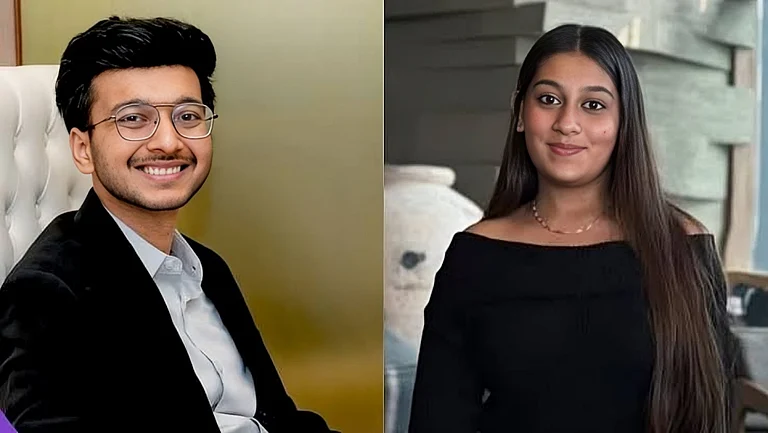
Lohagad Fort Murder Case
In the Lohagad Fort case, 20-year-old Siya Goyal and her alleged lover, Chetan Chaudhary (22), are accused of pushing 26-year-old businessman Ketan Agarwal into a gorge at Lohagad Fort.
According to Maharashtra Police, Goyal allegedly conspired with Chaudhary to kill her fiancé ahead of their scheduled marriage in November. Investigators also claim this was not the first attempt on Agarwal’s life, pointing to what they describe as deliberate and repeated planning.

Twisha Sharma Case
The murder of 33-year-old actor and model Twisha Sharma in May has also raised concerns about domestic violence and dowry-related harassment in urban settings.
Sharma was found dead at her marital home just five months after her wedding. Her family alleged sustained torture and dowry harassment. The Central Bureau of Investigation (CBI) later took over the case and arrested her mother-in-law, a retired judge, while her husband was also taken into custody. The investigation has highlighted concerns around abuse within influential and high-profile families.
Raja Raghuvanshi Honeymoon Murder
In another widely reported case, Raja Raghuvanshi was allegedly murdered during his honeymoon in Meghalaya.
Raghuvanshi married Sonam Raghuvanshi in May 2025, and the couple soon travelled to Meghalaya. They went missing after checking out of a homestay near Nongriat village in Cherrapunji. Police allege that Sonam, along with her partner Raj and hired contract killers, orchestrated the murder.
Advertisement
Reports suggest that Raj stayed in Indore to establish an alibi, while Sonam allegedly shared Raja’s live location with the attackers. The killing is said to have taken place during a trek, leading to a nationwide investigation.
Maya Devi Case
In Uttar Pradesh, the Maya Devi case involved allegations that a woman, along with her lover and accomplices, murdered her husband, a retired Army soldier.
Investigators claim the body was dismembered and disposed of in an attempt to destroy evidence. Authorities also allege that a false missing-person report was filed to mislead the investigation. The case has been cited for its level of brutality and coordinated planning.
A Growing Pattern
In Lohagad murder case and Raja Raghuvanshi murder case, investigators point a recurring pattern of the accused allegedly forced or being forced to marry against their will.
The police official told PTI that during the investigation in the Lohagad murder case, one of the accused Chetan said that Siya was not in favour of calling off the engagement and eloping with Chetan, as she thought doing so would bring disrespect to her family.
Advertisement
Similarly in Raja Raghuvanshi Murder case Sonam Raghuvanshi revealed that she “was forced to marry” her husband and never accepted the wedding.
However, this is not the only recurring motive as the Twisha Sharma case is centered on dowry harassment, domestic abuse, and sustained mental pressure within the marriage.
Published At: